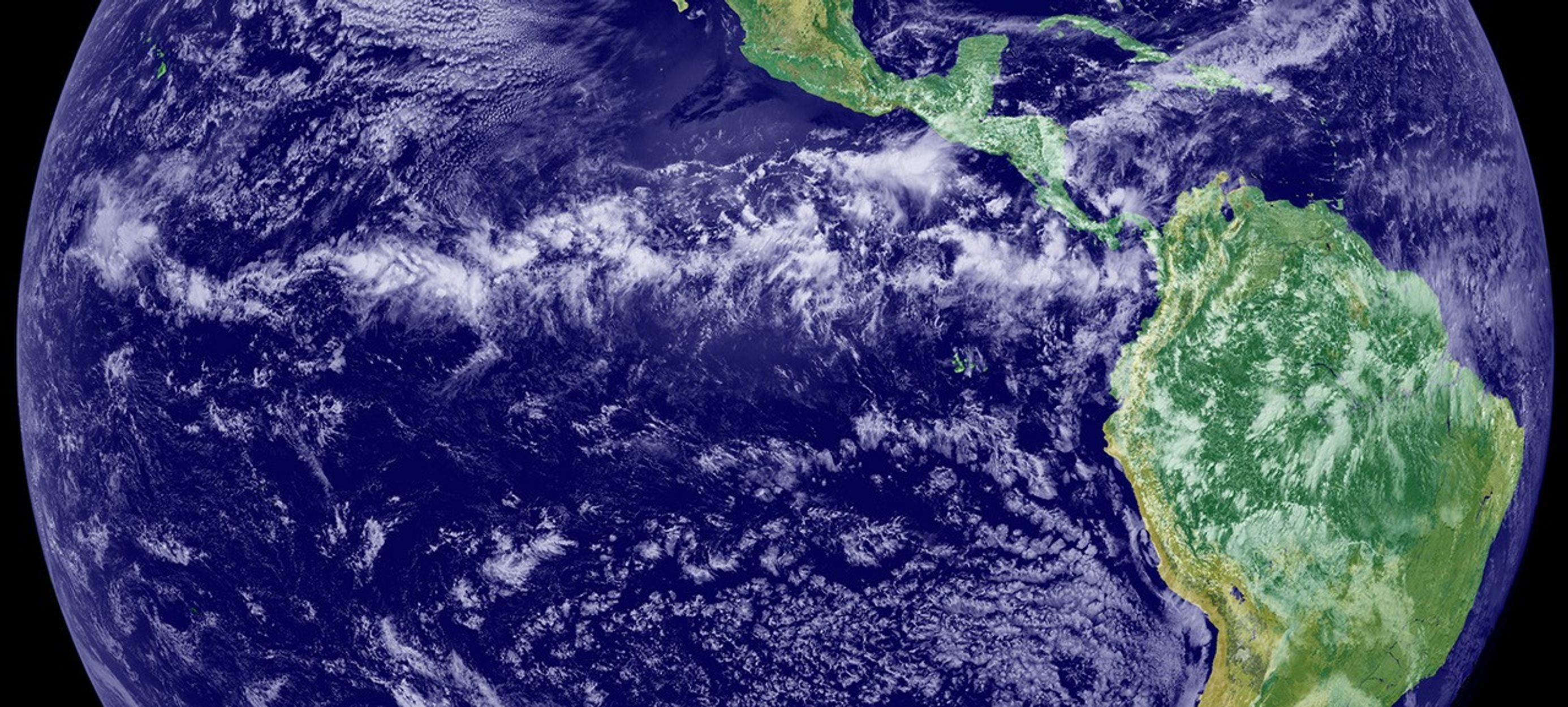



















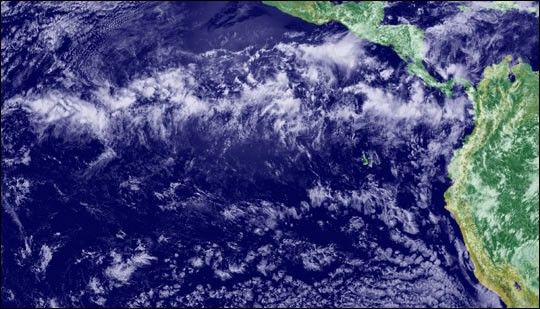
The Intertropical Convergence Zone, or ITCZ, is the region that circles the Earth, near the equator, where the trade winds of the Northern and Southern Hemispheres come together. The intense sun and warm water of the equator heats the air in the ITCZ, raising its humidity and making it buoyant. Aided by the convergence of the trade winds, the buoyant air rises. As the air rises it expands and cools, releasing the accumulated moisture in an almost perpetual series of thunderstorms.
Seasonal shifts in the location of the ITCZ drastically affects rainfall in many equatorial nations, resulting in the wet and dry seasons of the tropics rather than the cold and warm seasons of higher latitudes. Longer term changes in the ITCZ can result in severe droughts or flooding in nearby areas.
This image is a combination of cloud data from NOAA’s newest Geostationary Operational Environmental Satellite (GOES-11) and color land cover classification data. The ITCZ is the band ofbright white clouds that cuts across the center of the image.
For more GOES images, visit theGOES Project Science site.
References & Resources
Image Courtesy GOES Project Science Office