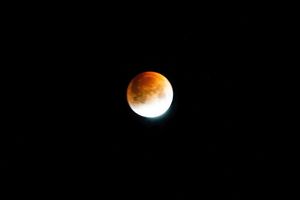















Solar eclipses occur when the Moon passes between the Earth and Sunso that the Moon’s shadow falls on the Earth. Although solareclipses are rarely seen at any given location on Earth, they can beobserved somewhere on the Earth’s surface at least twice and as oftenas five times per year. Eclipses can be observed by most Earth-orbitingsatellites that have wide fields of view. Therefore, scientists workingwith data sets derived from these satellite sensors should be aware of thereduced solar irradiance within the area of the Moon’s shadow.
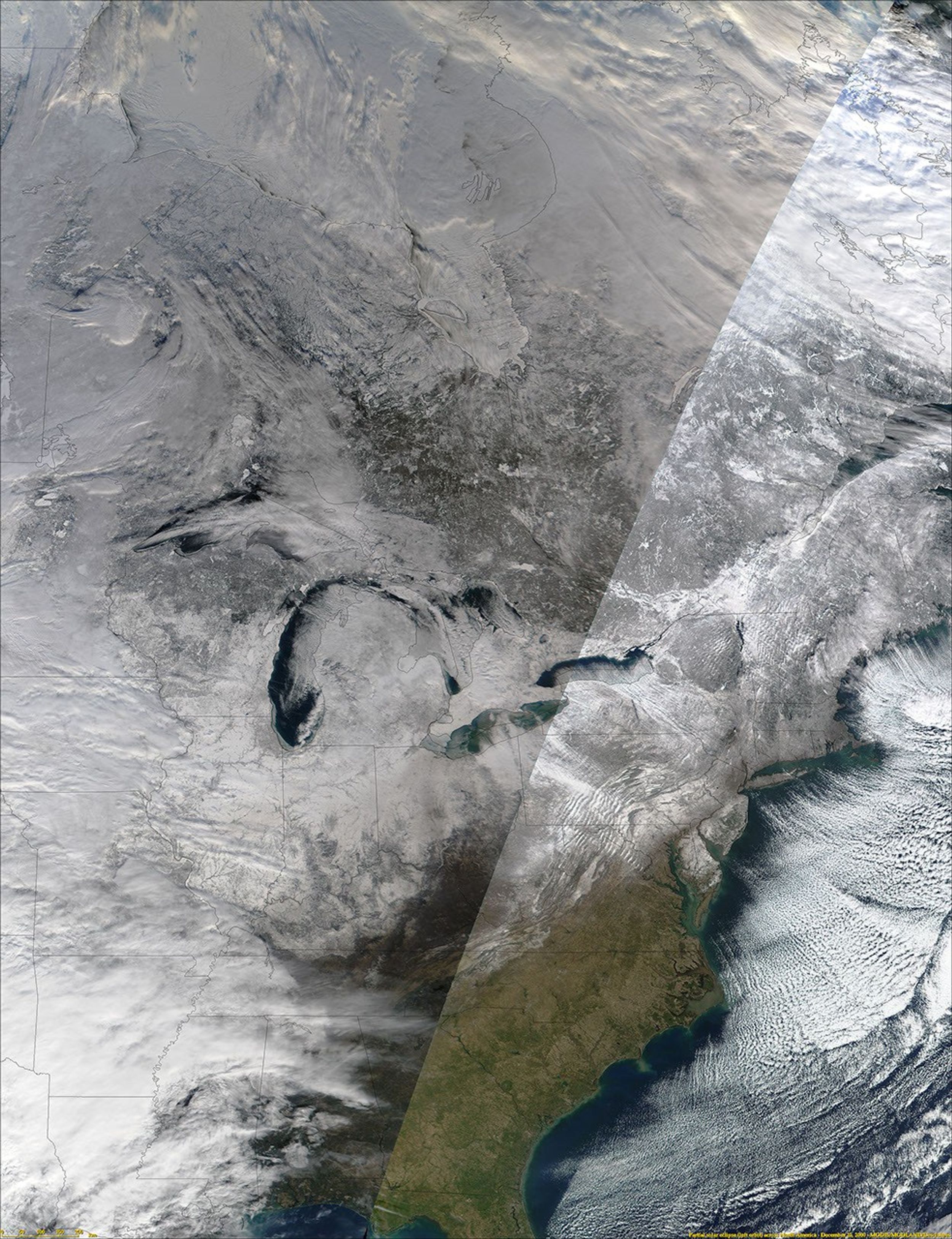
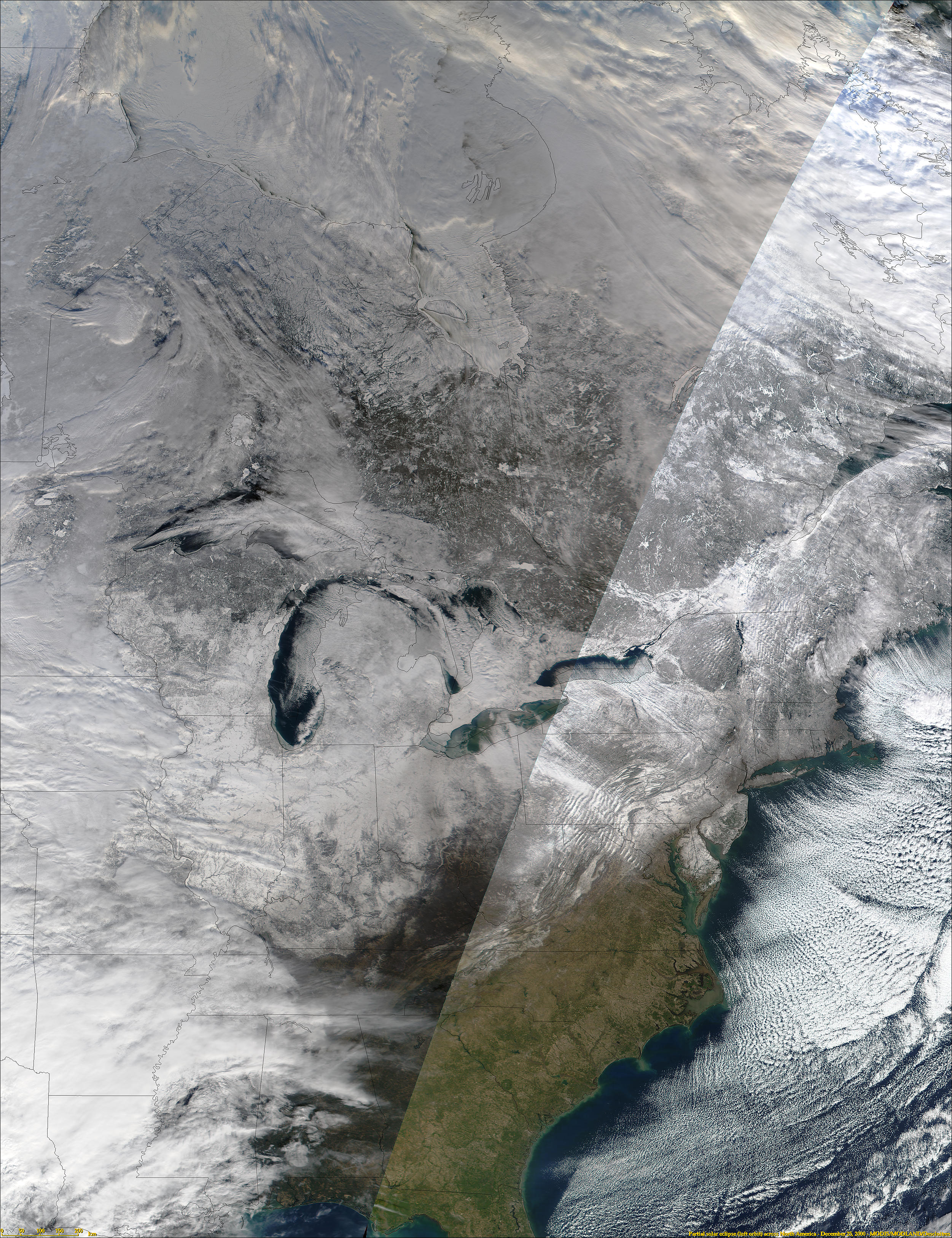
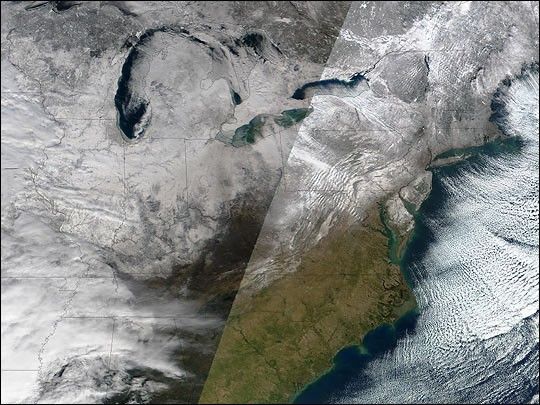
This true-color Moderate-resolution Imaging Spectroradiometer (MODIS)image shows a composite of two adjacent viewing swaths acquired onDecember 25, 2000 in two consecutive overpasses. The scene covers an areafrom the Great Lakes in the north to Georgia toward the south. (The full scene coversfrom Northern Quebec to Florida). Notice thatthe swath on the left side of the image [acquired at 17:30 UTC (12:30 EST)] isconsiderably darker than the swath on the right [acquired at 15:50 UTC (10:50 EST)_eclips]due to the Moon’s shadow.
This eclipse was partial (there was no place on Earth where the Sun wascompletely hidden behind the Moon). The greatest eclipse occurred in BaffinIsland, north of this image, with a maximum eclipse magnitude of 0.72 (72% ofthe Sun was screened by the Moon at that location). The Moon’s shadow(penumbra) extended as far as Nicaragua, much further south of this image. Thepenumbra covered an area of more than 12000 km diameter on Earth.
References & Resources
Image courtesy Jacques Descloitres, MODIS Land Group, NASA Goddard Space Flight Center