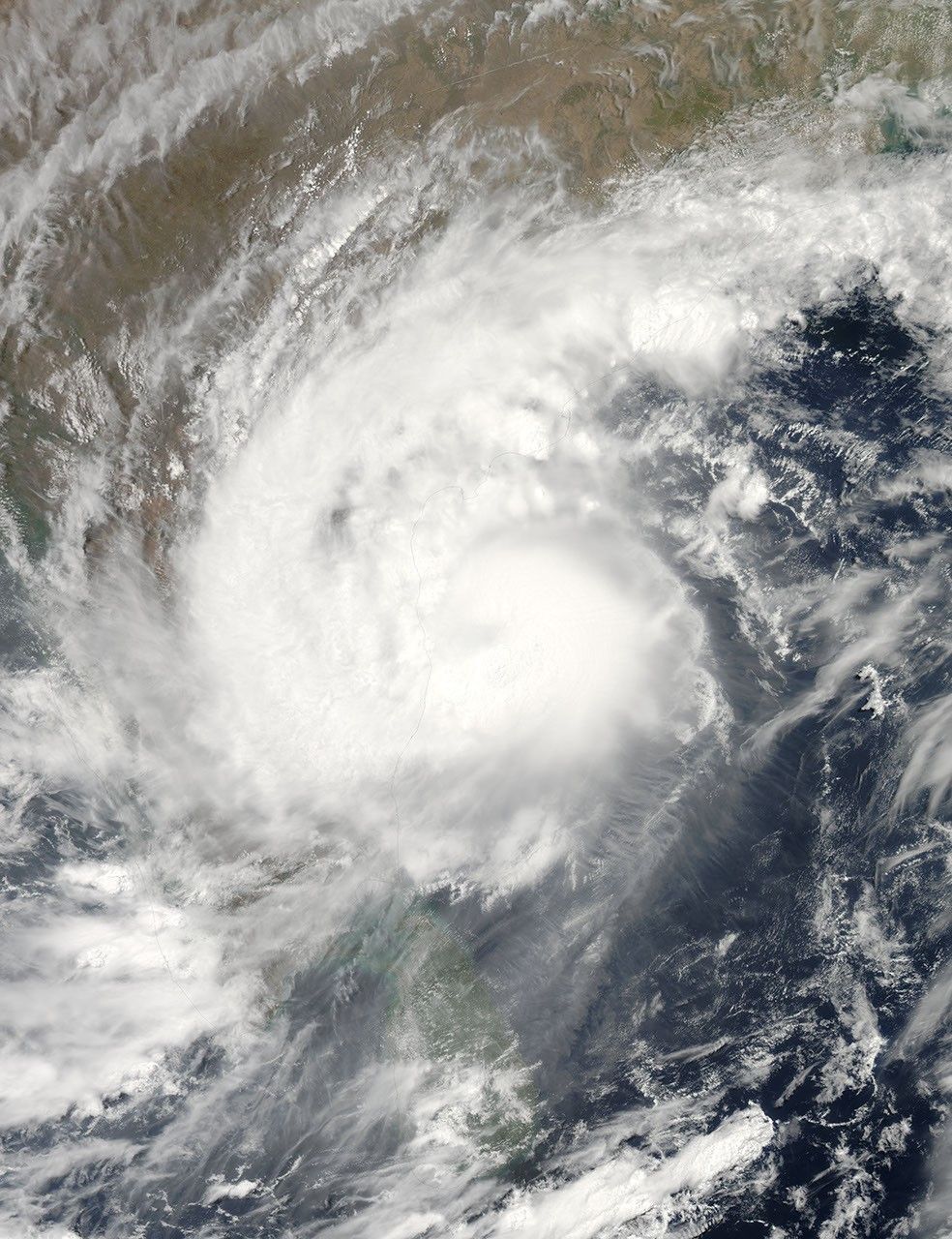

























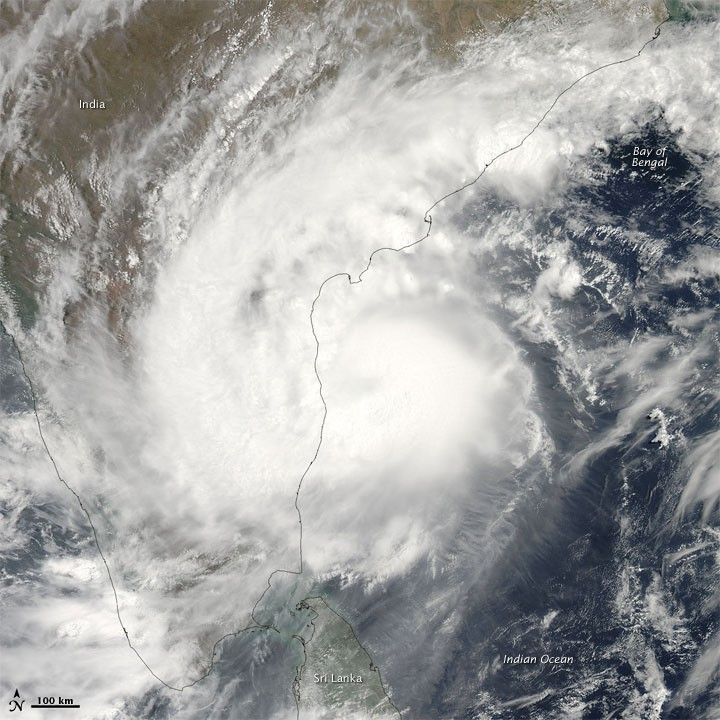
Tropical Cyclone Laila hovered over the eastern coastline of India and the Bay of Bengal and skirted Sri Lanka on May 19, 2010. The Moderate Resolution Imaging Spectroradiometer (MODIS) on NASA’s Aqua satellite captured this natural-color image the same day. Spanning hundreds of kilometers, the storm extends a spiral arm toward the northeast, covering much of India’s coast. In the south, the storm spans most of southern India.
On May 19, 2010, the U.S. Navy’s Joint Typhoon Warning Center (JTWC) reported that Tropical Cyclone Laila had maximum sustained winds of 65 knots (120 kilometers per hour) and gusts up to 80 knots (150 kilometers per hour). Roughly 80 nautical miles (150 kilometers) northeast of the coastal city of Chennai (Madras), the storm had moved toward the north-northwest over the previous several hours.
As Laila traveled along the Indian coastline, both the United Nations Office for the Coordination of Humanitarian Affairs and the Dartmouth Flood Observatory reported severe flooding, including some casualties, in India and Sri Lanka. Some of the flooding, however, occurred before Laila developed into a named storm, and was associated with other weather fronts.
References & Resources
- Dartmouth Flood Observatory. Current events. Accessed May 19, 2010.
- Joint Typhoon Warning Center. (2010, May 19). Tropical Cyclone 01B (Laila) Warning. Accessed May 19, 2010.
- United Nations Office for the Coordination of Humanitarian Affairs. (2010, May 19). Sri Lanka Flood Situation Update No. 2. ReliefWeb. Accessed May 19, 2010.
NASA image by Jeff Schmaltz, MODIS Rapid Response Team at NASA GSFC. Caption by Michon Scott.