



















Tropical Storm Harvey is more remarkable for being the eighth named storm of the Atlantic hurricane season than for any particular hazard it has posed. Harvey is the earliest recorded eighth storm in a season. This and a number of other factors have led forecasters to predict that the 2005 hurricane season may be the most active recorded, with projections calling for three to five more hurricanes (two of the previous eight storms reached hurricane status, Dennis and Emily), as well as a number of tropical storms.
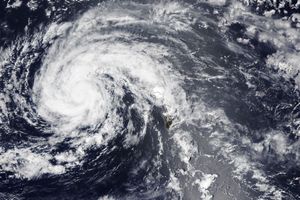
This image shows Tropical Storm Harvey as recorded by the Moderate Resolution Imaging Spectroradiometer (MODIS) on NASA’s Terra satellite at 14:30 UTC (around 10:30 a.m. local time in Bermuda) on August 4, 2005. The storm has formed the characteristic spiral shape of a hurricane, but with winds around 100 kilometers per hour (65 miles per hour), it is not quite hurricane strength. As of August 5, Tropical Storm Harvey was not predicted to make landfall nor become any stronger, though it was forecasted to remain a strong storm in the northern Atlantic for several days.
References & Resources
NASA image created by Jesse Allen, Earth Observatory, using data obtained from the MODIS Rapid Response team.