





















- August 25 image (440 KB)
- Quicktime (.mov) format (2.8 MB)
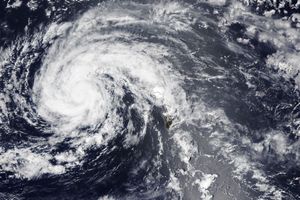
The Tropical Rainfall Measuring Mission or TRMM satellite continues to provideits unique perspective on tropical cyclones as shown by these images of SuperTyphoon Chaba. The images and data help to provide valuable information onstorm intensity and location especially over remote parts of the open ocean.The image displayed was taken at 09:44 UTC on 21 August 2004. At the time of thisimage, Chaba was a Category 1 typhoon located east of the Northern MarianaIslands with winds estimated at 70 knots (81 mph) by the Joint Typhoon WarningCenter. The image shows a horizontal map of the near surface rainfall intensityobtained from the TRMM satellite. Rain rates in the center portion of the swathare from the TRMM Precipitation Radar or PR, the first and only precipitationradar in space. The PR is able to provide fine resolution rainfall data anddetails on its vertical structure. Rain rates in the outer swath are from theTRMM Microwave Imager or TMI. The rain rates are overlaid on infrared (IR) datafrom the TRMM Visible Infrared Scanner (VIRS). In this image, a large,closed eye is apparent. Areas of heavy to intense rain (dark red areas) areembedded within a loose ring of moderate rainfall (green areas) surrounding theeye. Rainfall is a good indication of condensation. As water vapor condensesinto tiny cloud droplets, heat is released. This heat known as latent heat iswhat helps to drive the storm's circulation. It is most effective when itoccurs near the center of the storm.
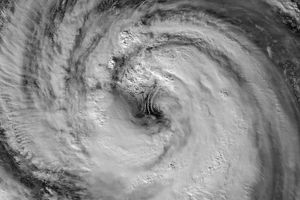
In contrast to the first image, the second image (link below August 21 image), was taken approximatelyfour days later at 07:36 UTC on the 25th when Chaba was over the north centralPhilippine Sea, shows a much more intense cyclone. In this image, the eye ismuch smaller and tighter and more symmetrical. At this particular moment,intense rainfall is occurring right along the western edge of the eyewall (darkred semicircle). At the time of this second image, Chaba was estimated to havesustained winds of 145 knots (167 mph) making it a powerful Category 5 supertyphoon. Chaba is expected to weaken as it heads for the southern islands ofJapan. The storm originally began as a tropical depression back on the 18th ofAugust just northeast of Enewetak Atoll in the Marshall Islands.
TRMM is a joint mission between NASA and the Japanese space agency JAXA.
References & Resources
NASA images produced by Hal Pierce (SSAI/NASA GSFC) and caption by Steve Lang (SSAI/NASA GSFC), NASA's Tropical Rainfall Measuring Mission.