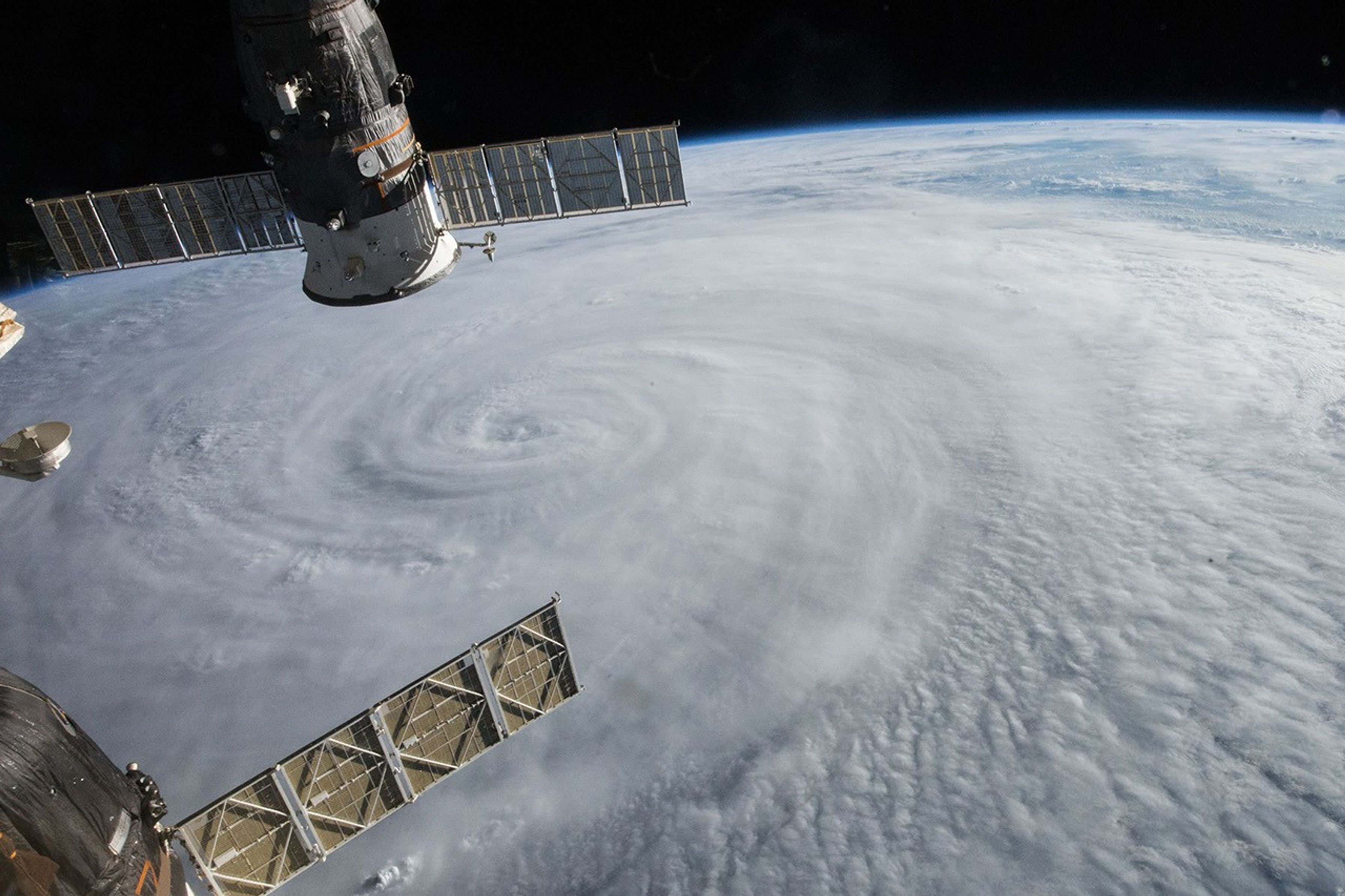











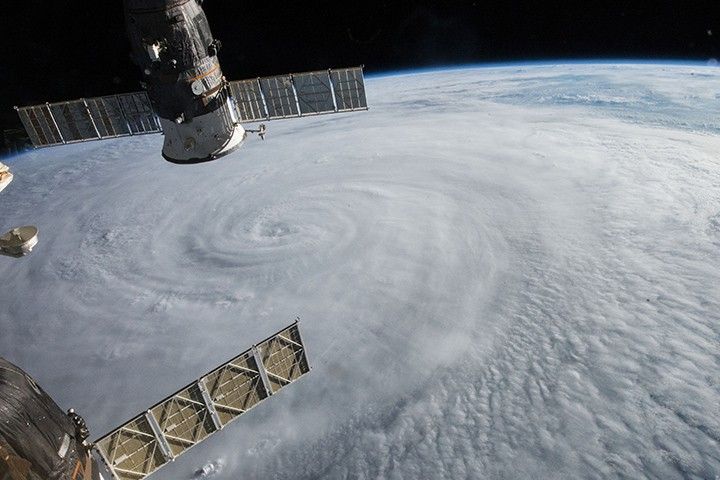
This photograph was from the International Space Station (ISS) taken at 08:44 UTC (4:44 p.m. local time) on August 5, 2015, as Typhoon Soudelor advanced on Taiwan. Forecasters project that the typhoon will make landfall in central Taiwan early on August 8 as a category 3 storm. Sustained winds of around 160 kilometers (100 miles) per hour are expected for the northern half of Taiwan. NASA astronaut Scott Kelly tweeted additional photographs of the storm on August 6 and August 5.
References & Resources
Astronaut photograph ISS044-E-30716 was acquired on August 5, 2015, with a Nikon D4 digital camera using an 24 millimeter lens, and is provided by the ISS Crew Earth Observations Facility and the Earth Science and Remote Sensing Unit, Johnson Space Center. The image was taken by a member of the Expedition 44 crew. The image has been cropped and enhanced to improve contrast, and lens artifacts have been removed. The International Space Station Program supports the laboratory as part of the ISS National Lab to help astronauts take pictures of Earth that will be of the greatest value to scientists and the public, and to make those images freely available on the Internet. Additional images taken by astronauts and cosmonauts can be viewed at the NASA/JSC Gateway to Astronaut Photography of Earth. Caption by Adam Voiland.