


















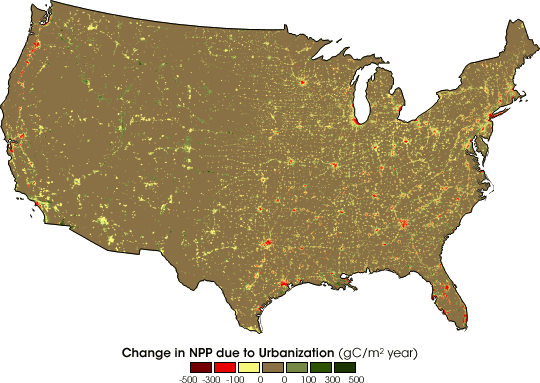
Urbanization in the United States historically followed the spread of agriculture. As a result, some of the country’s best farmland is occupied by cities. New NASA research estimates the loss of potential production from the homes, office buildings, roads, and other structures that have covered rich farmland.
The map above compares modern annual Net Primary Productivity (NPP) in the United States to a computer-derived estimate of what the annual NPP would be in the absence of urbanization. NPP measures plant growth by describing the rate at which plants use carbon from the atmosphere to build new organic matter through photosynthesis. Units are in grams of carbon per square meter per year. Urban areas were mapped by observing city lights with Defense Meteorological Satellite Program (DMSP) spaceborne instruments. Yellow and red indicate urban regions that have lowered local productivity, while green indicates cities with raised productivity. In general, urbanization in temparate climates reduces productivity, while urbanization in arid climates increases productivity.
For more information, read: Cities Built on Fertile Lands Affect Climate.
References & Resources
Image made using DMSP data provided by Marc Imhoff, NASA Goddard Space Flight Center