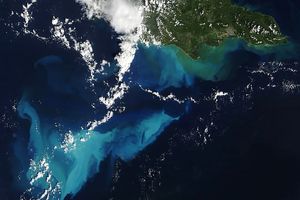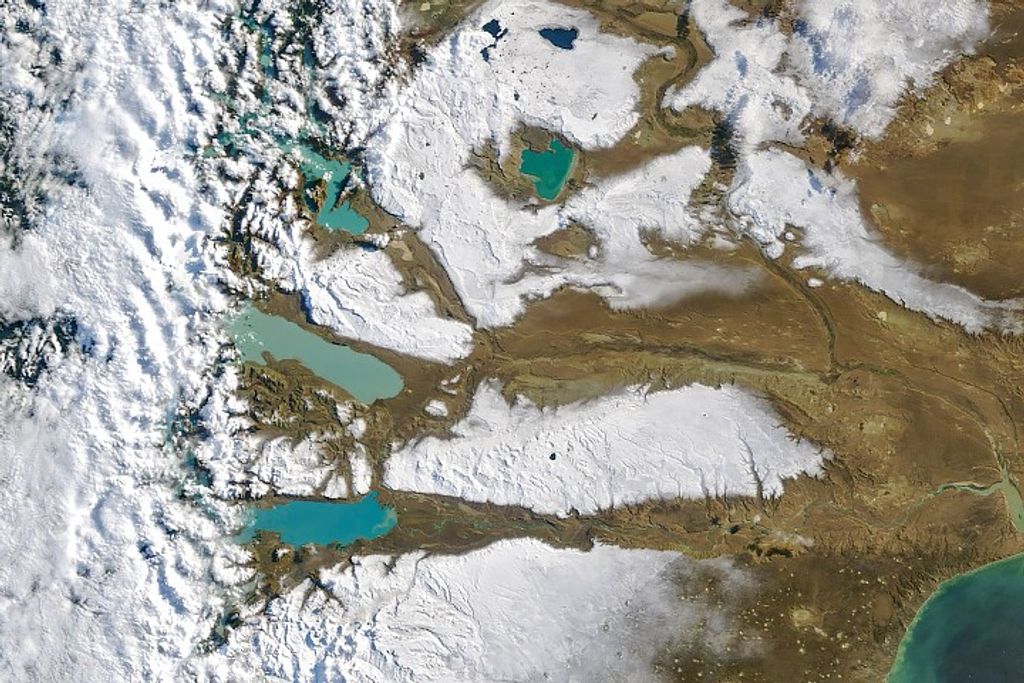


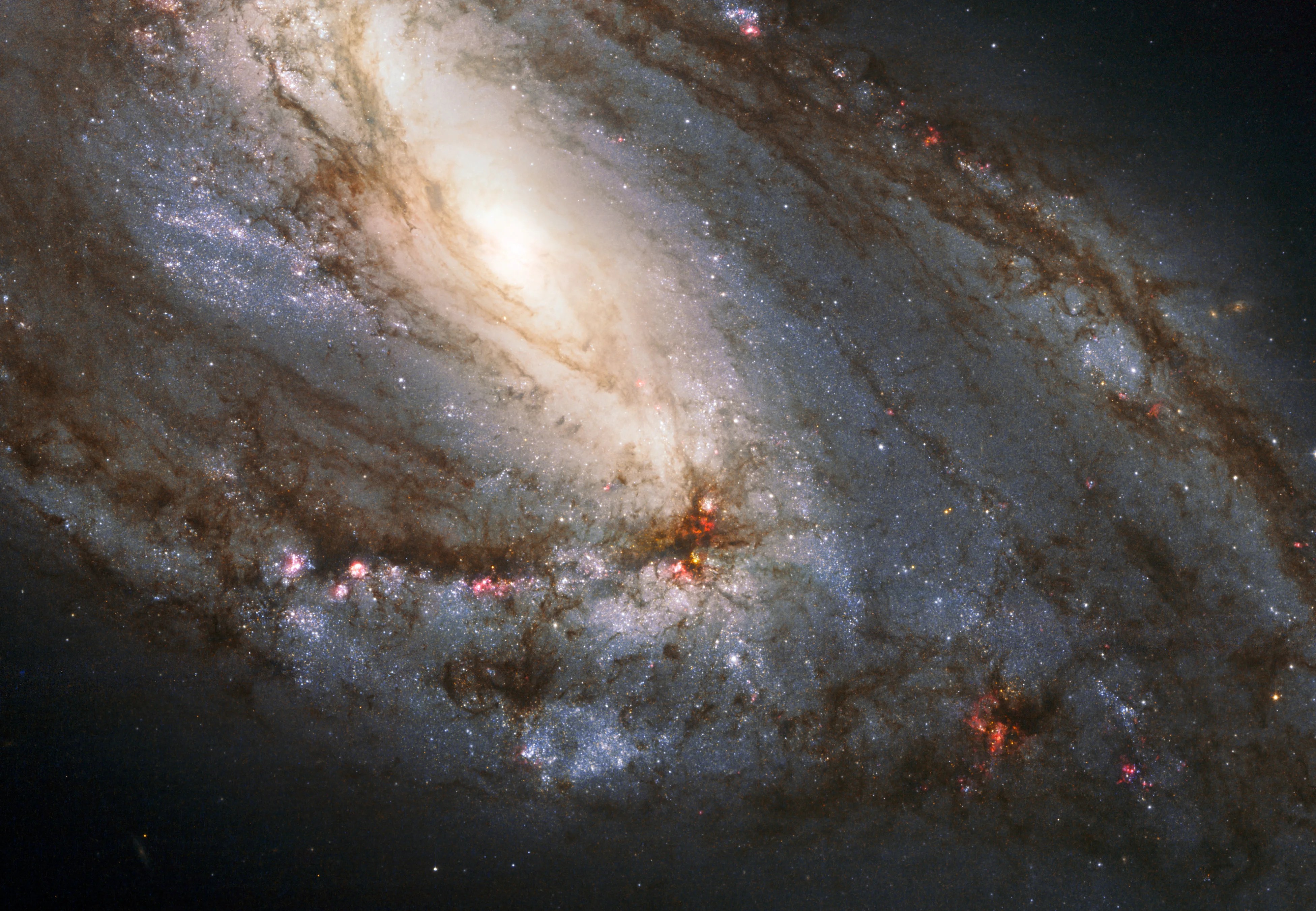
















This set of images from the Multi-angle Imaging SpectroRadiometerhighlights coastal areas of four states along the Gulf of Mexico:Louisiana, Mississippi, Alabama and part of the Florida panhandle. Theimages were acquired on October 15, 2001 and represent an area of 345kilometers x 315 kilometers.
The two smaller images at the top are (left) a natural color viewcomprised of red, green, and blue band data from MISR’s nadir(vertical-viewing) camera, and (right) a false-color view comprised ofnear-infrared, red, and blue band data from the same camera. Thepredominantly red color of the false-color image is due to the presenceof vegetation, which is bright at near-infrared wavelengths. Citiesappear as grey patches, with New Orleans visible at the southern edge ofLake Pontchartrain, along the left-hand side of the images. The LakePontchartrain Bridge runs approximately north-south across the middle ofthe lake. The distinctive shape of the Mississippi River Delta can beseen to the southeast of New Orleans. Other coastal cities are visibleeast of the Mississippi, including Biloxi, Mobile and Pensacola.
The large image is similar to the true-color nadir view, except thatred band data from the 60-degree backward-looking camera has beensubstituted into the red channel; the blue and green data from the nadircamera have been preserved. In this visualization, green hues appearsomewhat subdued, and a number of areas with a reddish color arepresent, particularly near the mouths of the Mississippi, Pascagoula,Mobile-Tensaw, and Escambia Rivers. Here, the red color is highlightingdifferences in surface texture. This combination of angular and spectralinformation differentiates areas with aquatic vegetation associated withpoorly drained bottomlands, marshes, and/or estuaries from thesurrounding surface vegetation. These wetland regions are not as welldifferentiated in the conventional nadir views.
Variations in ocean color are apparent in all three views, andrepresent the outflow of suspended sediment from the seabed shelf to theopen waters of the Gulf of Mexico. Major features include theMississippi Delta, where large amounts of land-derived sediments havebeen deposited in shallow coastal waters. These deltaic environmentsform a complex, interconnected web of estuarine channels and extensivecoastal wetlands that provide important habitat for fisheries. The cityof New Orleans is prone to flooding, with about 45% of the metropolitancore situated at or below sea level. The city is protected by levees,but the wetlands which also function as a buffer from storm surges havebeen disappearing.
References & Resources
Image courtesy NASA/GSFC/LaRC/JPL, MISR Team.