




















The footprint of warehouses in the Los Angeles area is associated with higher levels of fine particulate pollution (PM2.5) in the air, recent research shows.
Scientists analyzed patterns and trends in atmospheric PM2.5 concentrations and found that ZIP codes with more or larger warehouses had higher levels of PM2.5 and elemental carbon than those with fewer warehouses. Elemental carbon is a type of PM2.5 that is produced by heavy-duty diesel engines. The NASA-funded study was published in September 2024 in GeoHealth.
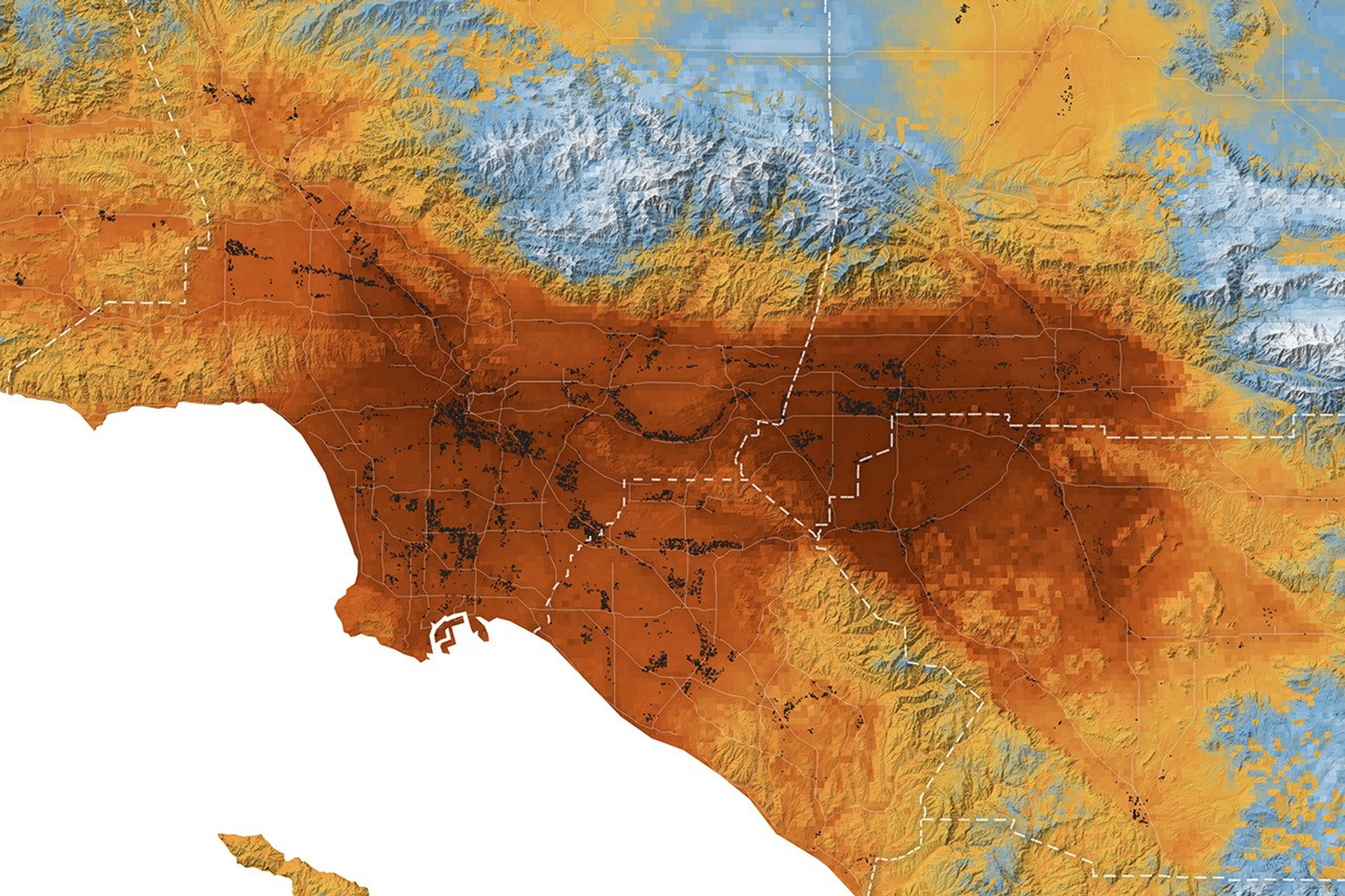
This visualization shows the average concentration of PM2.5 pollution in the Los Angeles region from 2000 to 2018, along with the locations of nearly 11,000 new or existing warehouses during the same period. Areas with higher concentrations of PM2.5 are shown in dark orange, and locations of warehouses are indicated by small black dots (many of them clustered closely together).
The PM2.5 data came from models based on satellite observations, including from NASA’s MODIS (Moderate Resolution Imaging Spectroradiometer) and ASTER (Advanced Spaceborne Thermal Emission and Reflection Radiometer) instruments. The warehouse locations were derived from a commercial real estate database.
PM2.5 particles measure 2.5 micrometers or less and can be inhaled into the lungs and absorbed into the bloodstream. Particulate pollution has been linked to respiratory and cardiovascular diseases, some cancers, and adverse birth outcomes, including premature birth and low infant birth weight. As the e-commerce boom of recent decades has spurred warehouse construction, pollution in nearby neighborhoods has become a growing area for research.
References & Resources
- NASA’s Jet Propulsion Laboratory (2024, October 9) Particulate Pollution and Warehouses in the Los Angeles Region. Accessed October 17, 2024.
- Yang, B. et al., (2024) Impact of Warehouse Expansion on Ambient PM2.5 and Elemental Carbon Levels in Southern California’s Disadvantaged Communities: A Two-Decade Analysis. GeoHealth, 8(9), e2024GH001091.
NASA Earth Observatory image by Wanmei Liang , using data from Yang, Binyu, et al. (2024) , county boundaries from the California Open Data Portal , state highways from The California Department of Transportation . Story by Andrew Wang, NASA’s Jet Propulsion Laboratory, adapted for NASA Earth Observatory.