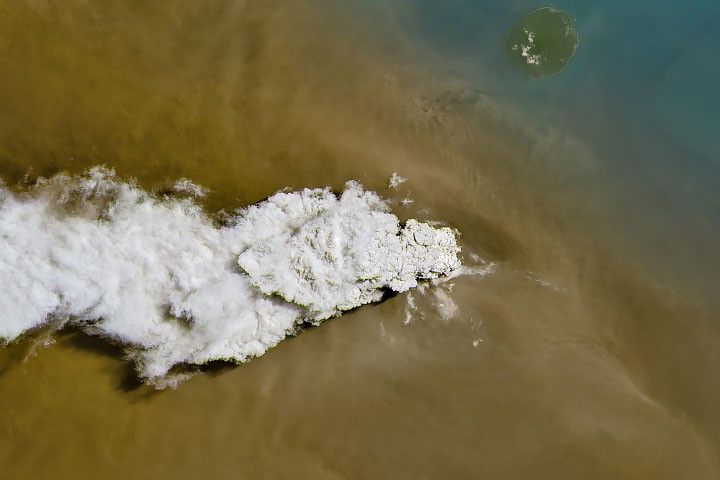













Plumes coming from Santa María volcano in Guatemala usually have volcanic origins. But it was a wildfire burning on Santa María’s northeast slope that created this plume in late March 2018.
The Moderate Resolution Imaging Spectroradiometer (MODIS) on NASA’s Terra satellite acquired this image on March 22, 2018. Red outlines indicate hot spots where MODIS detected warm surface temperatures.
A growing lava dome at the base of Santa María’s crater has puffed gas and ash nearly continuously since 1922, with 15 to 20 small explosions occurring every day.
Editor’s Note: When first published, this story incorrectly attributed the plume to volcanic activity.
References & Resources
- Global Volcanism Program Santa Maria. Accessed March 23, 2018.
- Magma Cum Laude (2012, October 26) October 25, 1902: Santa Maria Erupts! Accessed March 23, 2018.
- Magma Cum Laude (2009, March 27) Santiaguito lava dome complex. Accessed March 23, 2018.
- National Geographic (2017, January 27) Why a Volcano Has Erupted Almost Every Hour for 94 Years. Accessed March 23, 2018.
- Climat Guatemala (2018, March 22) @ClimaenGuate. Accessed March 23, 2018.
- Volcano Discovery (2018, March) Volcano news: Santa Maria (Guatemala). Accessed March 23, 2018.
NASA Earth Observatory images by Jeff Schmaltz, using MODIS data from LANCE/EOSDIS Rapid Response . Caption by Adam Voiland.