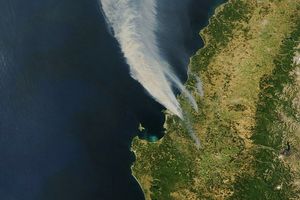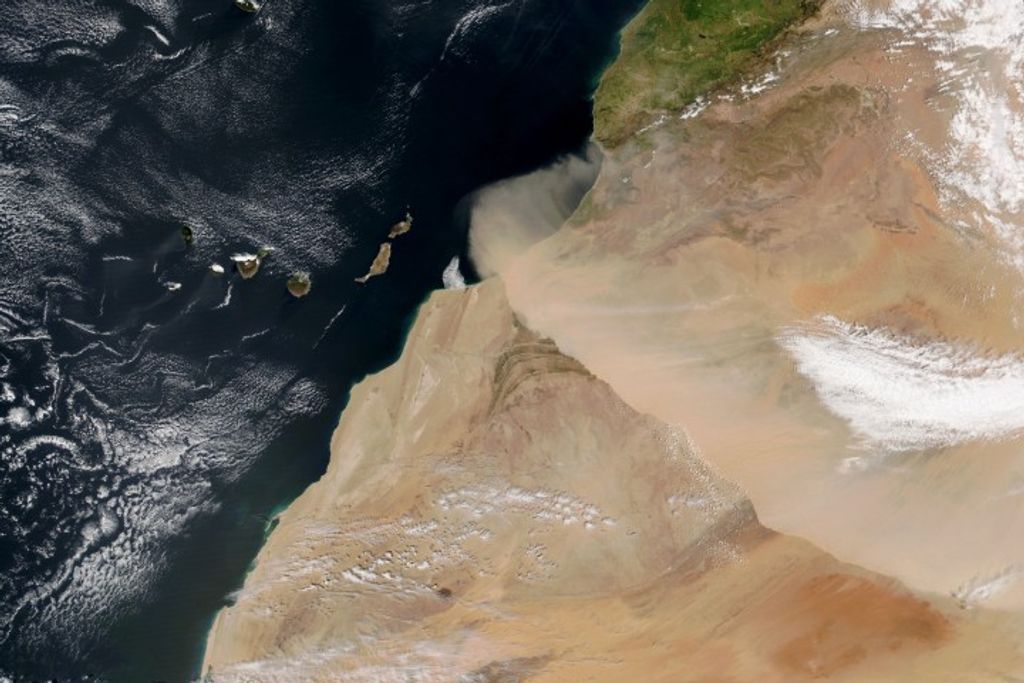



















Amid dry weather and strong winds, thousands of firefighters raced to put out fires that burned through forests in coastal South Korea in early March 2022.
In NASA satellite data, the first signs of the fires began to appear on March 3-4, 2022, in the coastal areas of Uljin and Samcheok. The Moderate Resolution Imaging Spectroradiometer (MODIS) on NASA’s Aqua satellite captured the natural-color image shown above on March 5. At the time, strong westerly winds sent smoke plumes streaming toward southern Japan. By March 7, smoke had thinned some as winds slackened and the weather turned foggy, but the satellites continued to detect fire activity.
The blazes have destroyed more than 300 homes, forced more than 7,000 people to evacuate, and charred nearly 17,000 hectares (66 square miles), according to news reports. At times, flames neared a nuclear power plant and gas facilities, though firefighters succeeded in fending them off. Around 18,000 people and dozens of helicopters have been mobilized to fight the fires.
Most forest fires in South Korea (58 percent) occur in the spring when forests tend to be the driest and vegetation is primed to burn, according to research published in Applied Sciences.
References & Resources
- ABC (2022, March 5) Wildfire on South Koreaâs east coast threatens nuclear and liquefied natural gas plants. Accessed March 7, 2022.
- Arirang (2022, March 7) Wildfire in eastern S. Korea still not under control as firefighters contend with bad weather. Accessed March 7, 2022.
- Global Disaster Alert and Coordination System (2022, March 4) Forest Fire in Republic of Korea. Accessed March 7, 2022.
- Kang, et al. (2020) Developing a New Hourly Forest Fire Risk Index Based on Catboost in South Korea. Applied Sciences, 10 (22), 8213.
- The Korea Times (2022, March 7) All-out battle under way to extinguish east coast wildfires. Accessed March 7, 2022.
- Yonhap News Agency (2022, March 4) Firefighters battling wildfire in eastern coastal county of Uljin. Accessed March7, 2022.
NASA Earth Observatory image by Lauren Dauphin, using MODIS data from NASA EOSDIS LANCE and GIBS/Worldview . Story by Adam Voiland .