


























APOD
Astronomy Picture of the Day
Discover the cosmos! Each day a different image or photograph of our fascinating universe is featured, along with a brief explanation written by a professional astronomer.
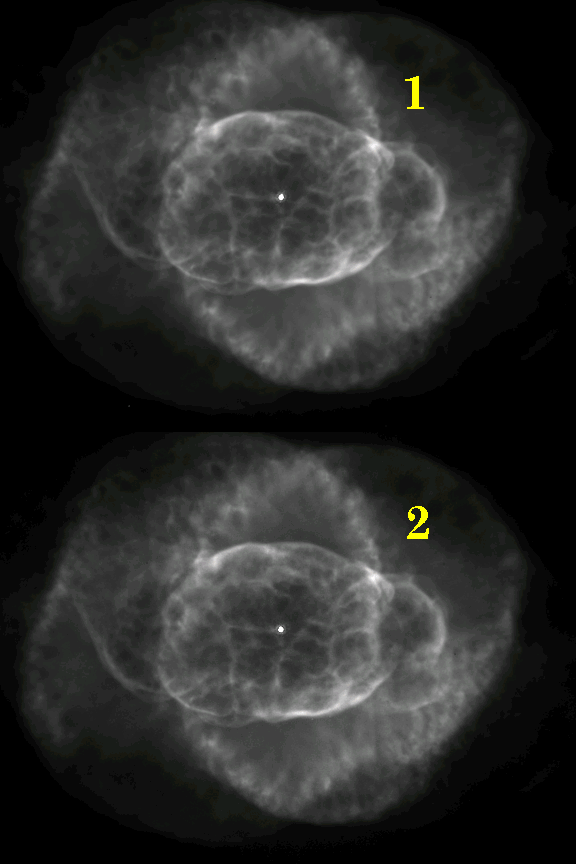
The Incredible Expanding Cat's Eye
Explanation: Watch closely. As this animation blinks between two Hubble Space Telescope images of NGC 6543 - the first from 1994 and the second from 1997 - the intricate filaments of this nebula are seen to shift. The shift is due to the actual expansion of this gaseous shroud shed by a dying star ! NGC 6543 is more popularly known as the Cat's Eye Nebula. Classified as a “planetary nebula”, its complex, interwoven shells of expanding gas have been castoff by the central star as it evolves from a red giant to its final white dwarf phase. The planetary nebula phase of a star's life is known to be relatively brief, lasting 10,000 years or so. In fact, combined with other data , this nebula's detectable shift over a three year period allows the expansion age of its bright inner shells to be estimated at only around 1,000 years while its distance can be gauged at about 3,000 light-years.
| Date | September 16, 1999 |
|---|---|
| Credit | Credit: Arsen R. Hajian (USNO), Yervant Terzian (Cornell) |
| Authors & editors: | Robert Nemiroff (MTU) & Jerry Bonnell (UMCP) |
| A service of: |
ASD at NASA / GSFC, NASA Science Activation & Michigan Tech. U. |