





















APOD
Astronomy Picture of the Day
Discover the cosmos! Each day a different image or photograph of our fascinating universe is featured, along with a brief explanation written by a professional astronomer.

HFG1 & Abell 6: Planetary Nebulae
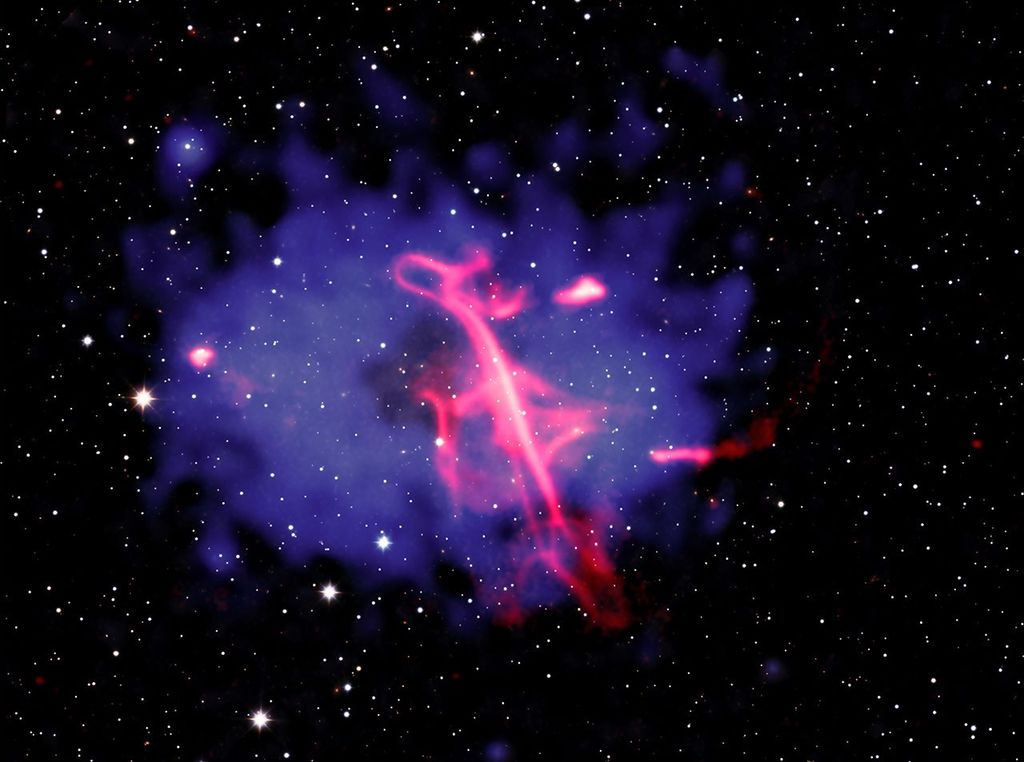
Explanation: Planetary nebulae like Heckathorn-Fesen-Gull 1 (HFG1) and Abell 6 in the constellation Cassiopeia are remnants from the last phase of a medium sized star like our Sun . In spite of their shapes, planetary nebulae have nothing in common with actual planets . Located in the bottom left part of the featured photo , HFG1 was created by the binary star system V664 Cas, which consists of a white dwarf star and a red giant star . Both stars orbit their center of mass over about half an Earth day . Traveling with the entire nebula at a speed about 300 times faster than the fastest train on Earth, V664 Cas generates a bluish arc shaped shock wave . The wave interacts most strongly with the surrounding interstellar medium in the areas where the arc is brightest. After roughly 10,000 years , planetary nebulae become invisible due to a lack of ultraviolet light being emitted by the star s that create them. Displaying beautiful shapes and structures, planetary nebulae are highly desired object s for astrophotographers.
| Date | February 12, 2024 |
|---|---|
| Credit | Image Credit & Copyright: Julien Cadena & Mickael Coulon ; Text: Natalia Lewandowska ( SUNY Oswego ) |
| Authors & editors: | Robert Nemiroff (MTU) & Jerry Bonnell (UMCP) |
| A service of: |
ASD at NASA / GSFC, NASA Science Activation & Michigan Tech. U. |