























APOD
Astronomy Picture of the Day
Discover the cosmos! Each day a different image or photograph of our fascinating universe is featured, along with a brief explanation written by a professional astronomer.
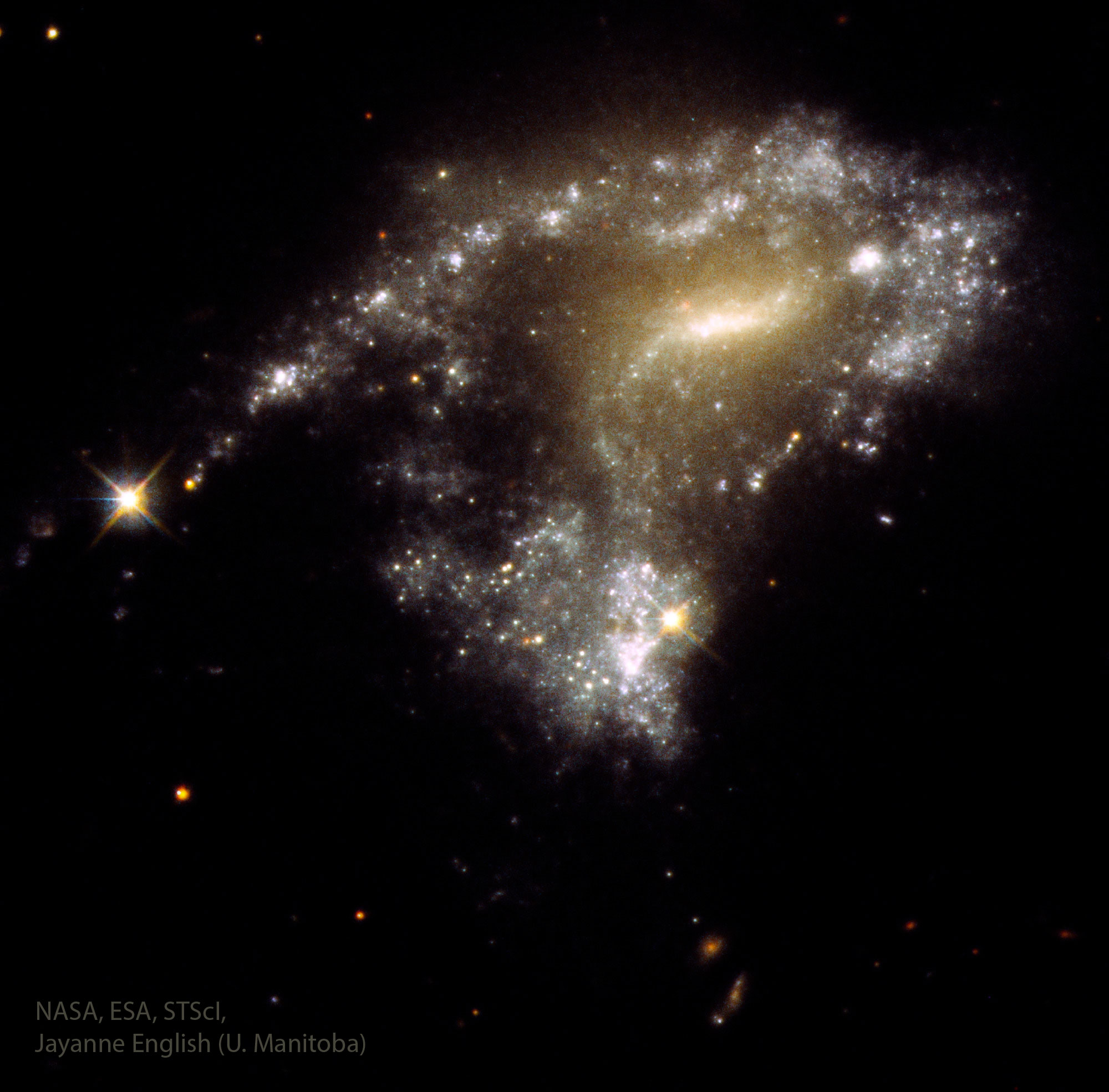
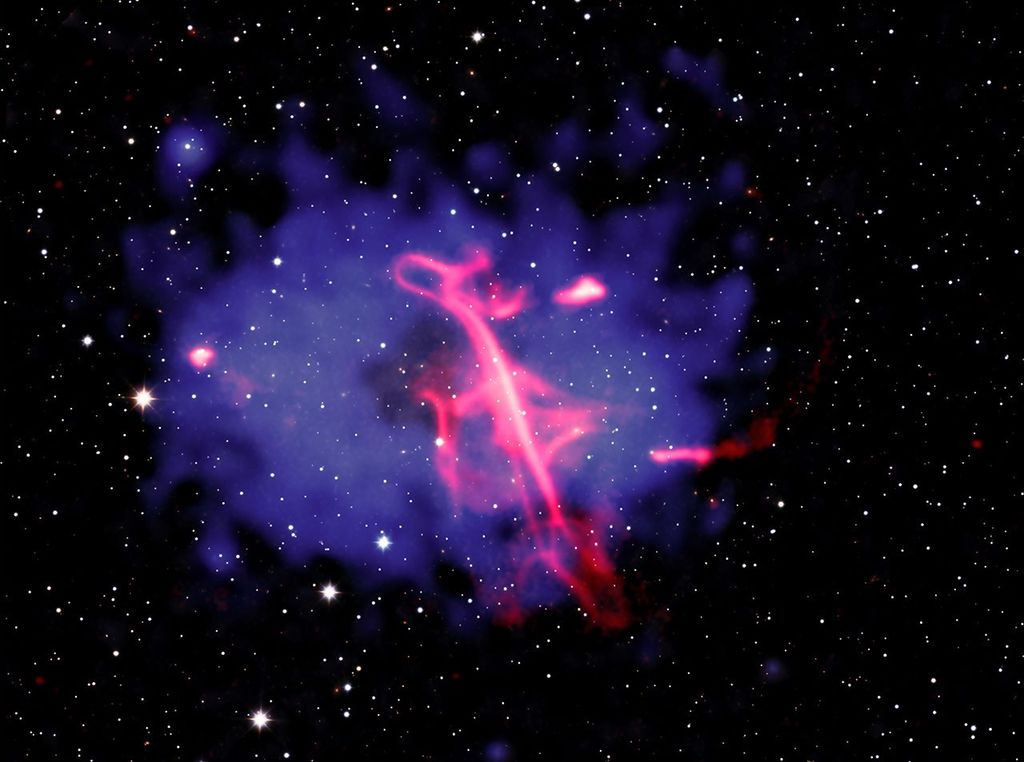
AM1054: Stars Form as Galaxies Collide
Explanation: When galaxies collide, how many stars are born? For AM1054-325, featured here in a recently released image by the Hubble Space Telescope , the answer is millions. Instead of stars being destroyed as galaxy AM1054-325 and a nearby galaxy circle each other , their gravity and motion has ignited stellar creation . Star formation occurs rapidly in the gaseous debris stretching from AM1054-325 's yellowish body due to the other galaxy's gravitational pull. Hydrogen gas surrounding newborn stars glows pink . Bright infant stars shine blue and cluster together in compact nurseries of thousands to millions of stars . AM1054-325 possesses over 100 of these intense-blue, dot-like star clusters , some appearing like a string of pearls . Analyzing ultraviolet light helped determine that most of these stars are less than 10 million years old: stellar babies . Many of these nurseries may grow up to be globular star clusters , while the bundle of young stars at the bottom tip may even detach and form a small galaxy .
| Date | February 20, 2024 |
|---|---|
| Credit |
Image Credit: NASA , ESA , STScI ; Processing: J. English ( U. Manitoba ); Science: M. Rodruck ( Penn State U. & Randolph-Macon C. ) et al. ; Text: Jayanne English ( U. Manitoba ). |
| Authors & editors: | Robert Nemiroff (MTU) & Jerry Bonnell (UMCP) |
| A service of: |
ASD at NASA / GSFC, NASA Science Activation & Michigan Tech. U. |