























Crab Nebula (M1) – 2024
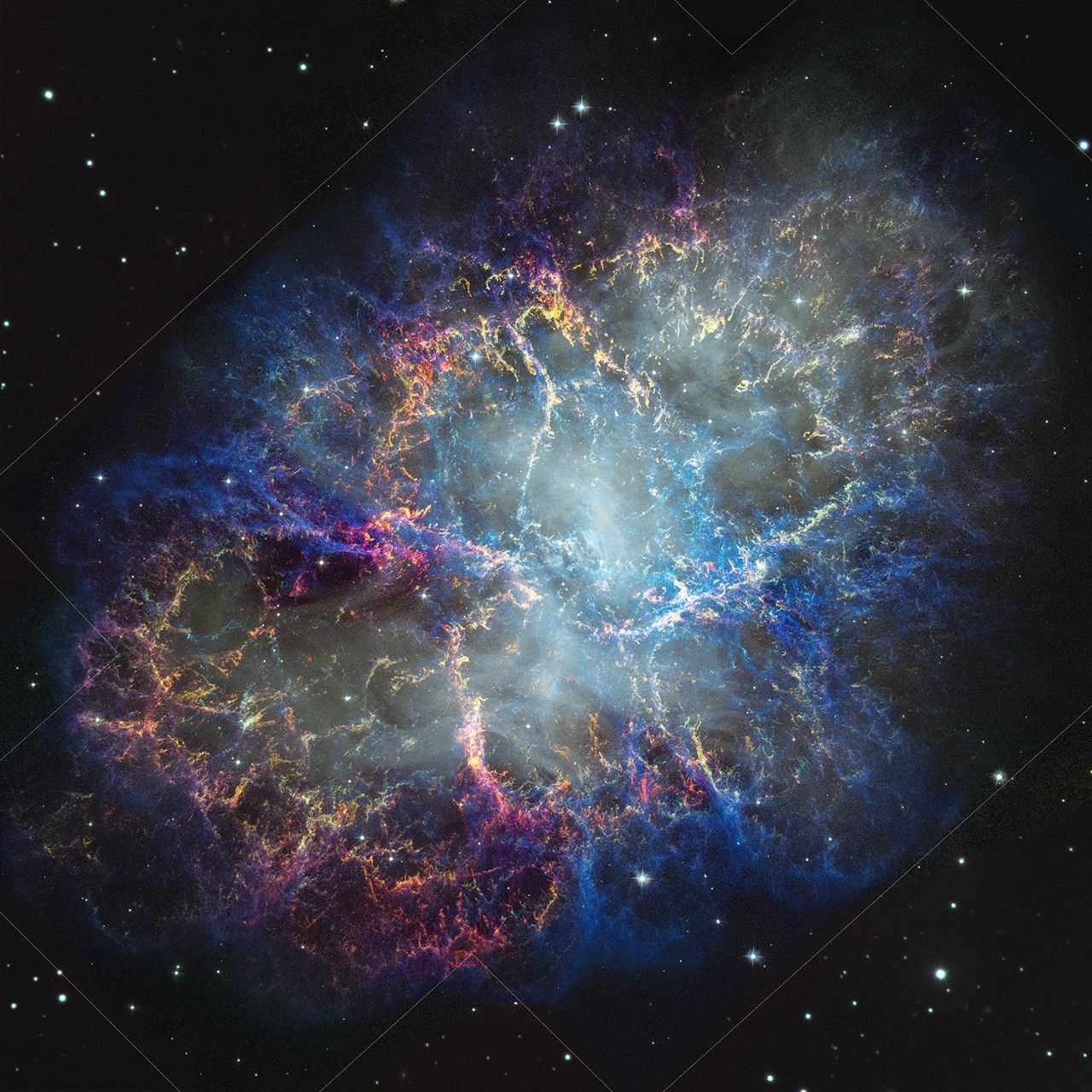
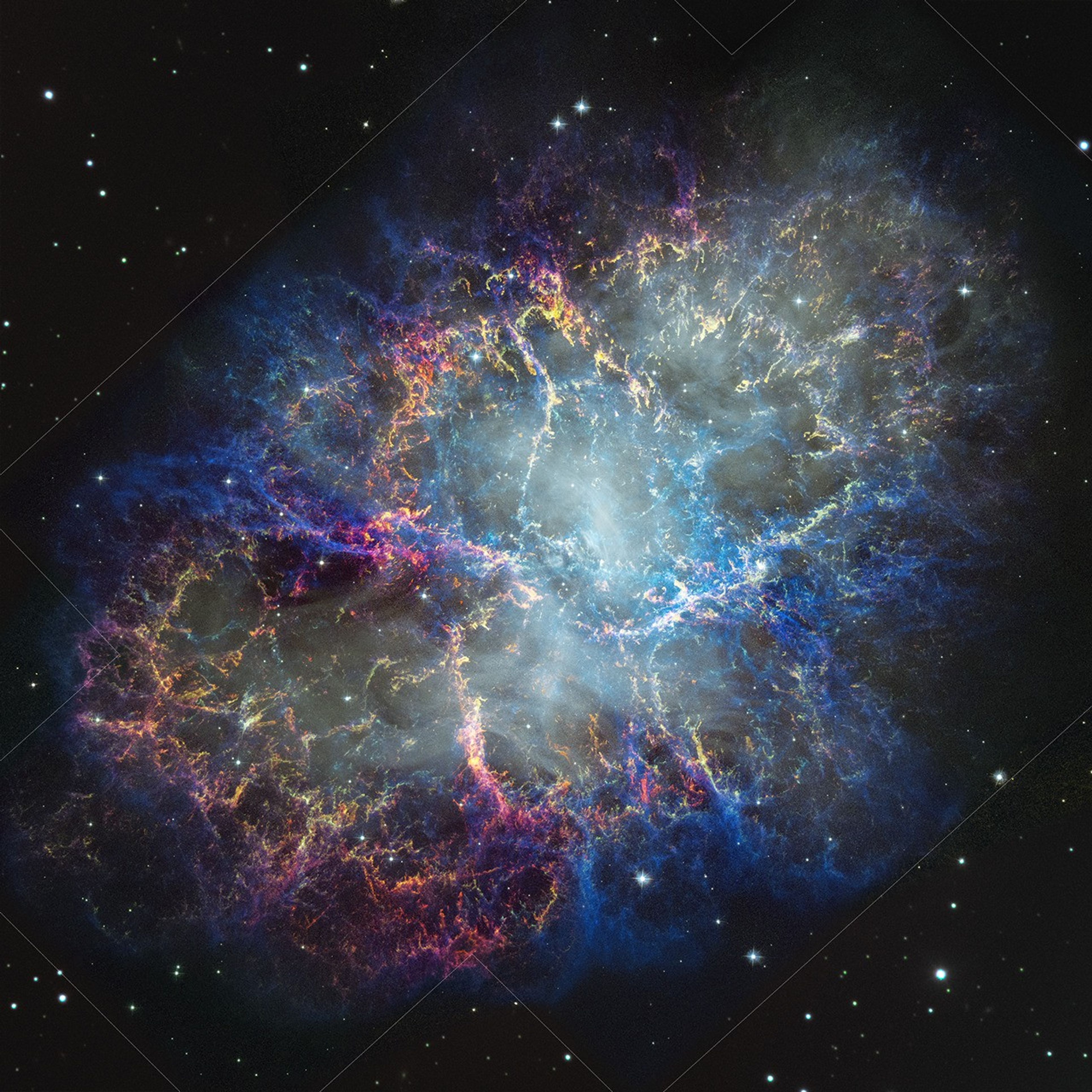
NASA’s Hubble Space Telescope captured the intricate detail of the Crab Nebula (also known as Messier 1 or NGC 1952) with its Wide Field Camera 3. The colors in the image trace Hubble’s detection of oxygen and sulfur gases in the nebula at varying densities and energies. The blue areas are the hottest and lowest density. While there is not a lot of green in the image, showing dense neutral oxygen, there is quite a lot of yellow, which appears where green and the red of energized sulfur are near to each other and similarly bright. The white haze in the central region is synchrotron radiation, which is produced by interaction between the magnetic field of the central pulsar and the Crab’s nebulous material. This emission heats the surrounding filaments, causing them to glow. Synchrotron radiation is also powering the nebula’s ongoing expansion, distinguishing the Crab from other well-known young supernova remnants. The Crab Nebula is the closest supernova remnant of this kind to Earth, making it invaluable to astronomers using Hubble to study its evolution in unparalleled detail.
Image Credit: NASA, ESA, STScI, William Blair (JHU); Image Processing: Joseph DePasquale (STScI)
- X
https://science.nasa.gov/image-detail/amf-fe7f4472-24e2-4695-abba-cec4799827b3/
Image CreditNASA, ESA, STScI, William Blair (JHU); Image Processing: Joseph DePasquale (STScI)
Size3864x3864px