





















A new theoretical framework for globular cluster science with the Roman Wide-Field Imager
Wide-Field Science – Regular
Robyn Sanderson / University of Pennsylvania, PI
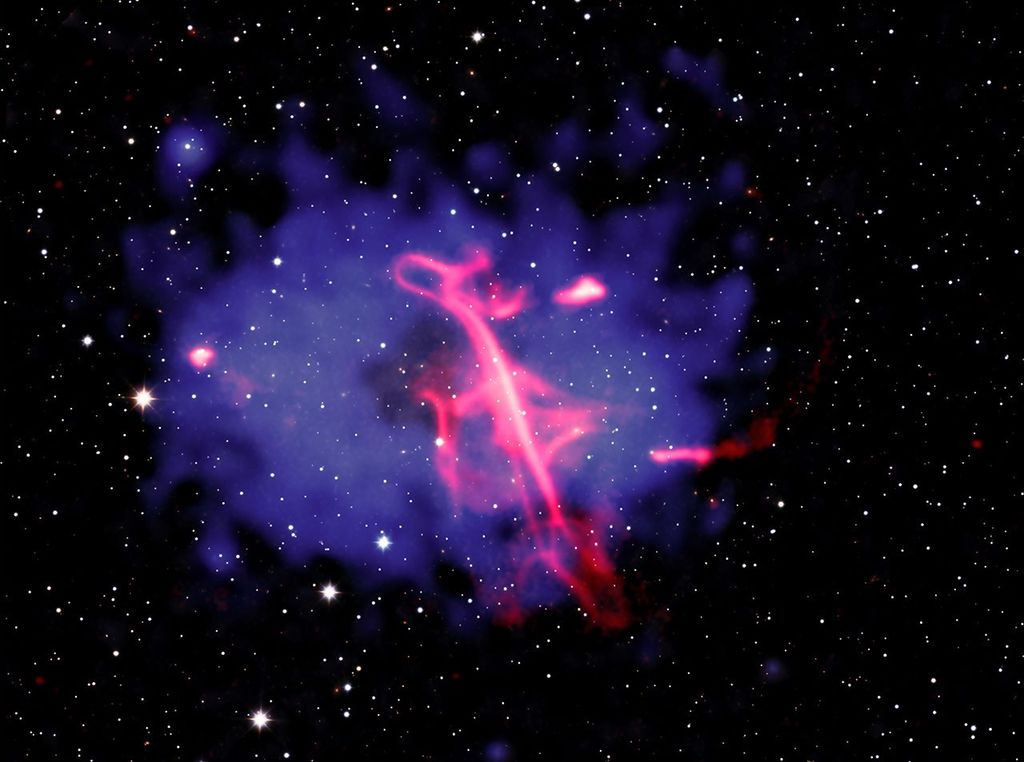
The Roman Space Telescope will be an excellent tool for finding thin stellar streams, i.e. those formed from globular clusters, in external galaxies for the first time. To date, we only know of globular cluster tidal streams within our own Milky Way. In combination with the population of still intact globular clusters, these tidal streams have provided unique insights into the early formation and accretion history of our Galaxy, as well as the shape of its dark matter potential and constraints on the clumpiness of dark matter. Despite their demonstrated power in our own Galaxy, however, there are currently no theoretical predictions of the expected number of GC streams in nearby galaxies, or how many Roman will be able to find, severely limiting our ability to interpret Roman observations. Studying the formation of GC streams in cosmologically-evolving galaxies is computationally challenging, and previous work has been forced to oversimplify models either for the formation and evolution of GCs or for the galactic tidal field.
In this proposal we will, for the first time, include all components of globular cluster formation and evolution in a cosmologically evolving galaxy. Our project will build upon an existing model for the formation of globular clusters based on zoomed cosmological-hydrodynamical simulations, and explore variations on these initial conditions. We will then build a stream formation model that will inject test particles of the growing streams into the same cosmological simulations used to determine the cluster population, optimized to reproduce the changing potential of the full halo and galaxy environment at all cosmic times. The result will be the first predictions for the population of thin streams and globular clusters around galaxies in a self-consistent and fully cosmological context.
These results will let us answer crucial questions related to globular cluster and galaxy formation science for the first time. We will predict the mass and metallicity distributions of surviving and destroyed globular clusters and the morphology of thin stellar streams, and explore their dependence on the violence of the host galaxy’s formation, the cluster formation model, and the presence or absence of dark matter substructure and satellite galaxies. Most importantly, however, we will use tools already developed by our team to produce full Roman synthetic observations of thin stellar streams, their morphology, and their stellar populations, in their cosmologically-motivated host halos, connecting the detectable set of clusters and streams to the origin and evolution of the full underlying population of globular clusters.