








High-Latitude Time-Domain Survey
TECHNICAL Facts
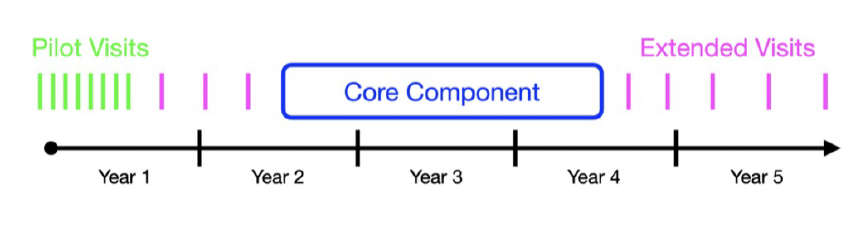
The Core Component will serve as the primary source of discovery and characterization of Type Ia supernovae and other transients.
The Pilot Component provides collection of template images for difference imaging, collection of reference prism data for host galaxy subtraction/modeling, and measurement of SNe Ia rate above z~1.

The Extended Component provides deep imaging tier observations (from the Core Component) over 8 epochs with a cadence of 120 days.
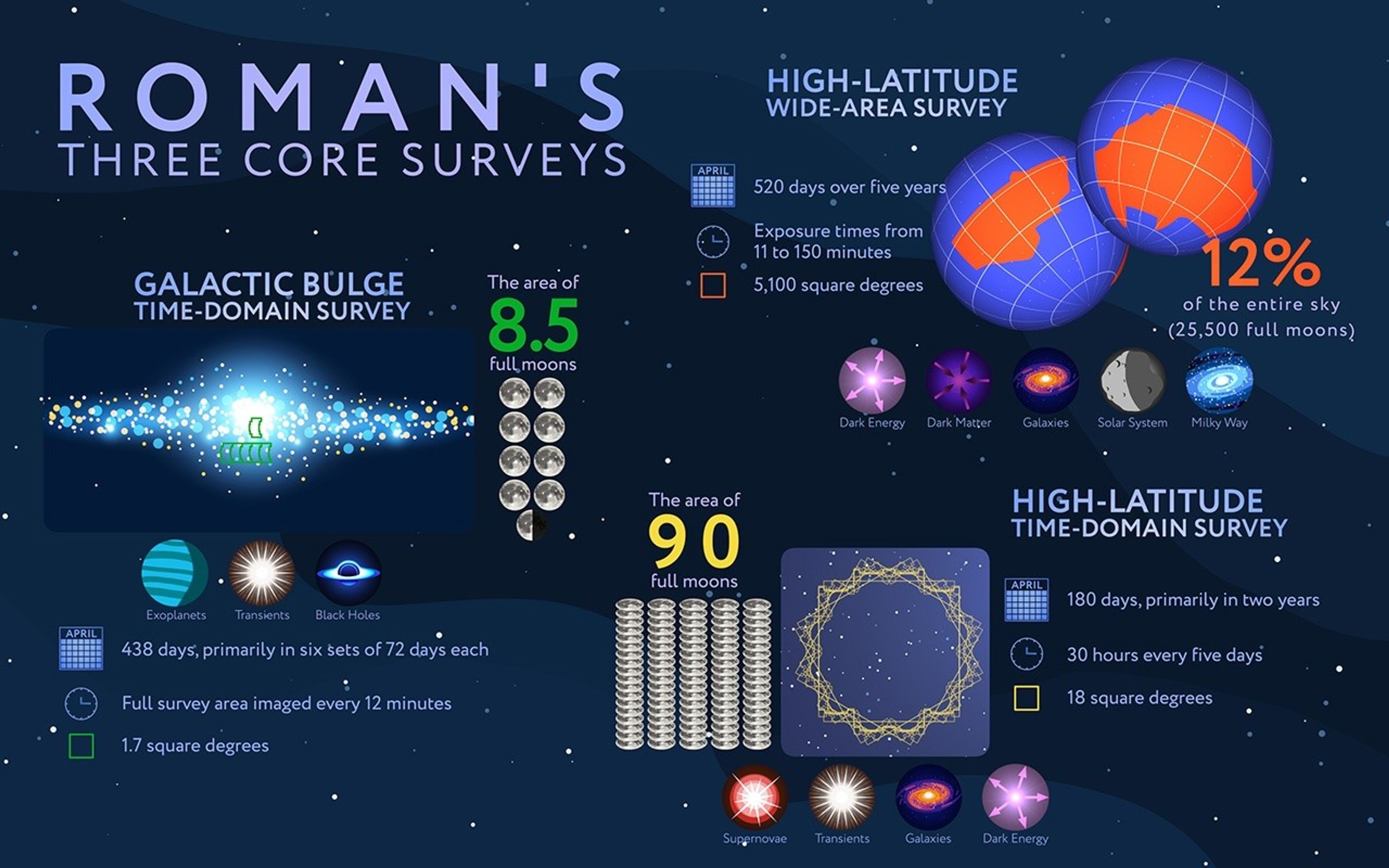
A time domain imaging and spectroscopic survey of high-latitudes of the Milky Way Galaxy to measure the expansion history of the Universe, enabling a wide range of extragalactic time-domain and transient science investigations.
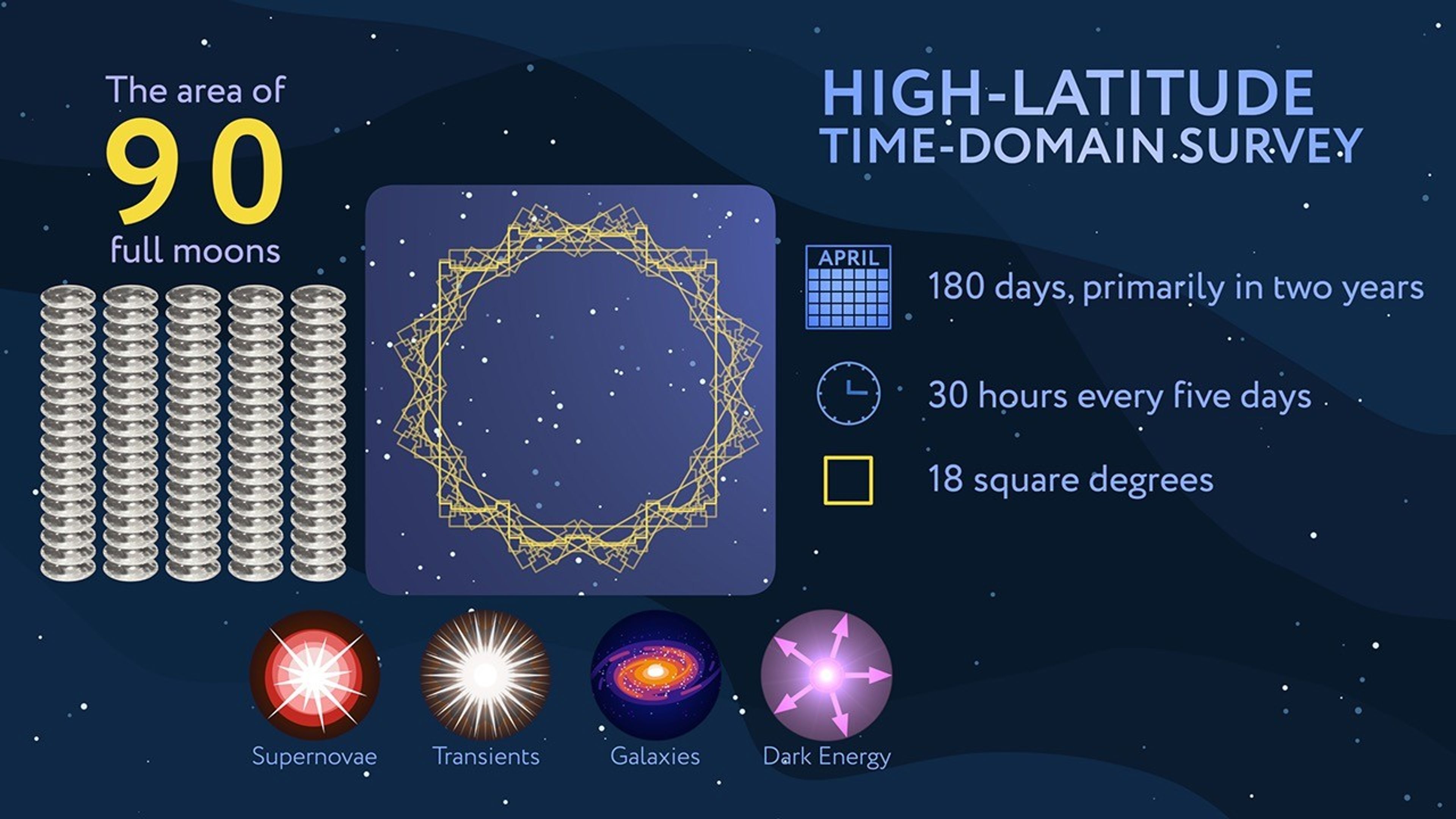
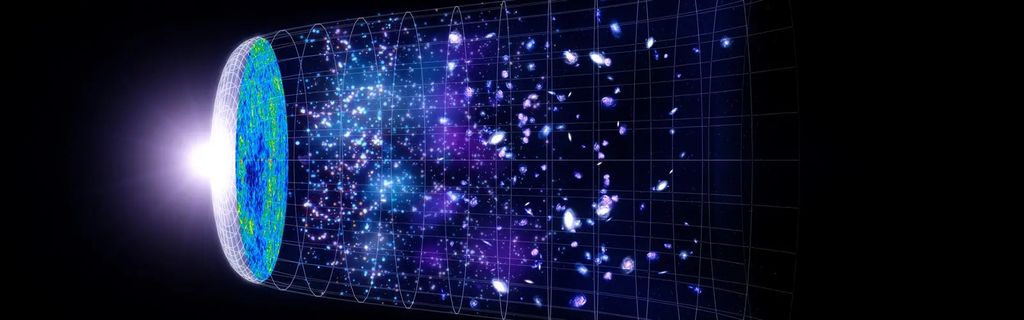
The High-Latitude Time-Domain Survey is designed to probe the origin of cosmic acceleration by using supernovae Ia to make precision measurements of the cosmic expansion history. The survey will also provide deep co-added imaging and spectroscopy over areas 1–2 orders of magnitude larger than any comparably deep Hubble imaging.
The High-Latitude Time-Domain Survey is composed of Core, Pilot, and Extended Components. The Core Component will serve as the primary source of discovery and characterization of Type Ia supernovae and other transients. It will feature Roman/WFI Wide and Deep imaging over filters and prism spectroscopy. The Pilot Component will be identical to the Core Component, but occur only over 8 epochs with a 20-day cadence as early possible in Roman’s mission to serve as a collection of template images for difference imaging, a collection of reference prism data for host galaxy subtraction/modeling, and measurement of supernovae Ia rates above z~1. The Extended Component will conduct Deep Imaging Tier observations over 8 epochs with a 120-day cadence to provide temporal coverage over Roman’s 5-year mission for long-duration transients and variables. This survey is allocated ~6 months of time.
Core Component
- Primary source of discovery and characterization of Type Ia supernovae and other transients
- ~2 year duration in the ~middle of Roman’s prime mission
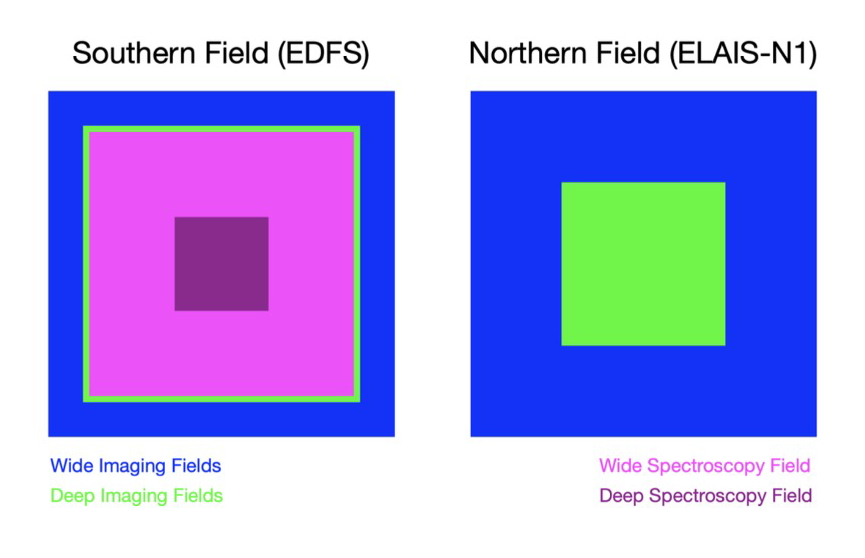
- Imaging Tiers: interlaced 10-day cadence; filter subsets every 5 days; Northern and Southern Fields
| Wide Imaging: | Deep Imaging: |
|---|---|
| - 18.3 deg2 total (10.68 deg2 in the North; 7.59 deg2 in the South) - F062 (R), F087 (Z), F106 (Y), F129 (J), F158 (H) filters (one sequence of F062, F087, and F106 or F062, F129, and F158 every 5-days) | - 6.5 deg2 total (1.97 deg2 in the North; 4.5 deg2 in the South) - F087 (Z), F106 (Y), F129 (J), F158 (H), F184 (F) filters (one sequence of F087, F106, and F129 or F087, F158, and F184 every 5-days) |
- Spectroscopy Tiers: 5-day cadence with Roman/WFI’s prism; Southern Field alone
Wide Spectroscopy : 4.5 deg2
Deep Spectroscopy: 0.56 deg2
Pilot Component
- Provides collection of template images for difference imaging, collection of reference prism data for host galaxy subtraction/modeling, and measurement of SNe Ia rate above z~1
- Early as possible in the mission
- Identical to Core Component but over 8 epochs with a cadence of 20 days
Extended Component
- Provides temporal coverage over Roman’s 5-year mission for long-duration transients and variables
- Only Deep Imaging Tier observations (from the Core Component) over 8 epochs with a cadence of 120 days