
















Nationwide Eclipse Ballooning Project
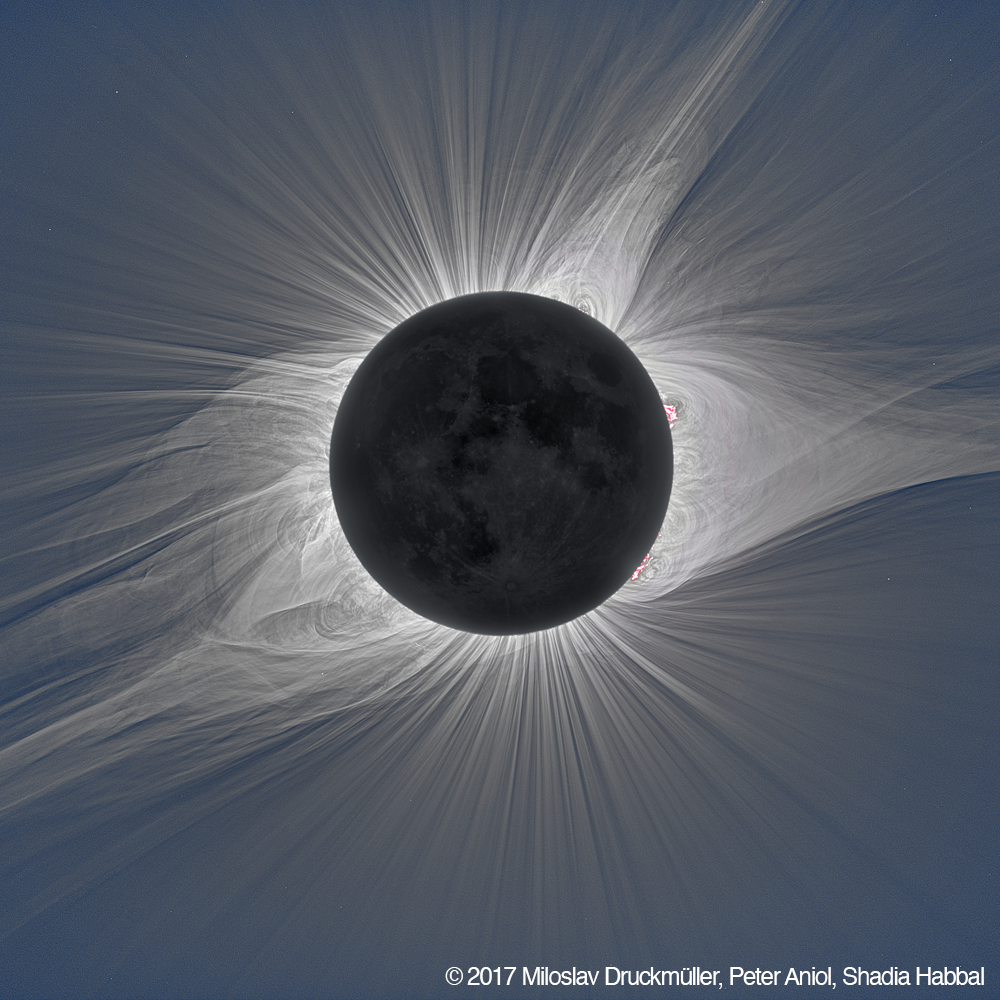
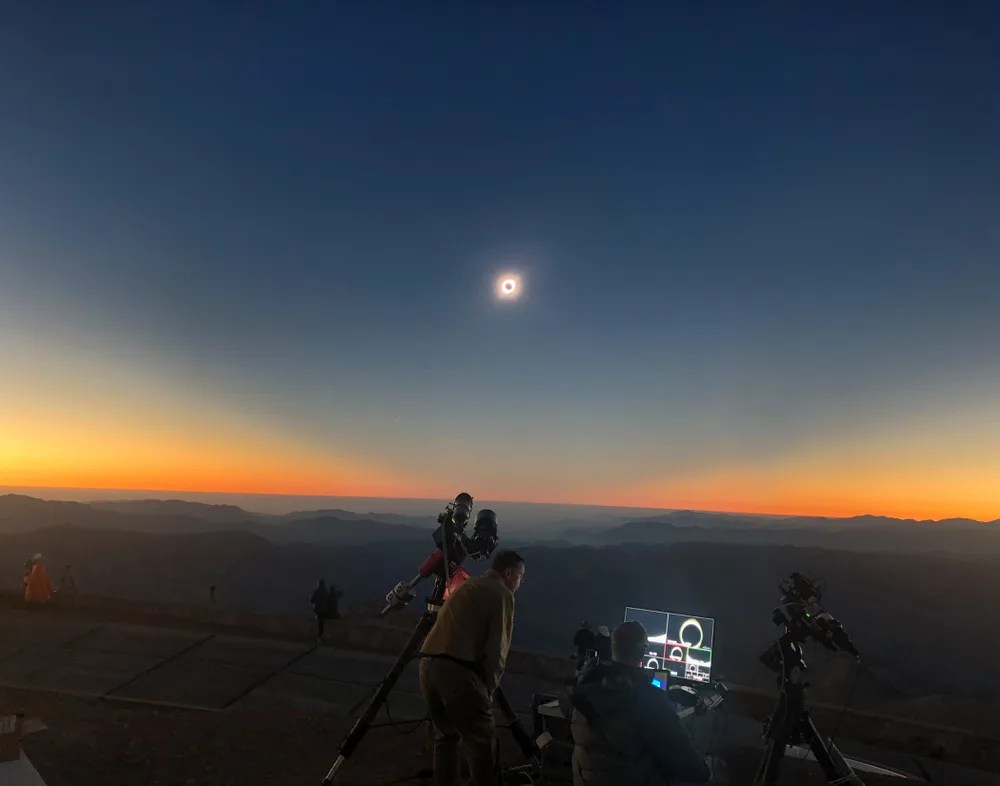
When a total solar eclipse suddenly turns daytime skies dark, our atmosphere changes in ways we don’t yet fully understand.
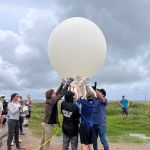
The NASA-supported Nationwide Eclipse Ballooning Project (NEBP) immerses students from several U.S. universities, led by Montana State University, to launch scientific balloons before, during, and after annular and total solar eclipses to better understand those changes.

Team Mission
Building on highly successful NASA- and National Science Foundation-sponsored NEBP events during past total solar eclipses, the project aims to broaden participation of STEM (Science, Technology, Engineering, & Mathematics) learners in an innovative NASA-mission-like adventure. Previous balloon flights during solar eclipses in October 2023 and April 2024 showed that the boundary layer, the part of the atmosphere that touches the ground, collapsed (or decreased in thickness) in locations with clear skies but didn’t where there were cloudy skies. The next phase of balloon flights will send teams across the globe to launch balloons equipped with cameras and instruments to measure ozone layers in the atmosphere and to track how eclipses affect Earth’s boundary layer.
The Eclipse Ballooning Project was a major boost in my confidence for what I am capable of, on a team or individually. I was able to go on to the career I truly wanted.

NEBP 2017 Participant
NASA’s NEBP includes development and implementation of two learner-centered activity tracks – engineering and atmospheric science. At sites along the eclipse path, student teams in the engineering track use innovative larger balloon systems to capture images and videos, to observe in situ perturbations in atmospheric phenomena, and conduct individually designed experiments. Atmospheric science track teams make frequent observations by launching hourly radiosondes on helium-filled weather balloons. Student participants work with atmospheric science experts throughout the project and submit results in peer-reviewed journals.
The NEBP provides a learning environment that uses evidence and equity-based practices to make certain the participants are (and feel) supported, engaged, and valued. In addition, NEBP provides infrastructure tools and best practices to help participating institutions build collaborations that could continue far beyond the scope of this project.
What does your team hope to achieve?
The following goals and objectives will allow NEBP to broaden participation of STEM learners by immersing teams in an innovative NASA-mission-like adventure with scientific ballooning during annular and total solar eclipses.
Goal 1: Enable inclusive STEM education for participating students
- Objective 1.1: Promote the development of participants’ STEM career skills by engaging them in equitable, accessible, learner-centered educational experiences
- Objective 1.2; Increase opportunities for participants to develop their STEM identities as learners and practitioners
- Objective 1.3: Advance participants’ understanding of the importance of internal, external, organizational, and worldview diversity in education and the workplace
- Objective 1.4: Grow learners’ awareness of cultural perspectives of science
Goal 2: Advance learners’ understanding of the process of science
- Objective 2.1: Advance learners’ abilities to conduct rigorous, relevant research using scientific data they collect during eclipse campaigns as well as relevant NASA data
- Objective 2.2: Increase participation in community of STEM activities, including publishing results and sharing knowledge
- Objective 2.3: Grow learners’ understanding of and interest in STEM careers as well as access to and interaction with diverse subject matter experts
Goal 3: Create, enhance, and sustain networks and partnerships
- Objective 3.1: Grow the number of institutions that engage learners in research involving remote sensing platforms, especially at minority serving institutions and community colleges, and grow collaborations amongst the programs
- Objective 3.2: Increase capacities among participants, leaders, and SMEs to offer inclusive, equitable STEM education by leveraging best practices and the expertise of the NEBP Education Advisory Board, Space Grant network, NASA’s Science Activation program (SciAct) collaborators, and industry partners
- Objective 3.3: Advance equitable, accessible national eclipse education capabilities through collaboration with the SciAct Heliophysics Education Activation Team (HEAT) and SciAct Eclipse Soundscapes: Citizen Science Project
- Objective 3.4: Create connections with other STEM networks to grow in new directions