

























Science Activation Highlights
These highlights illustrate the range of activities conducted by the Science Activation collaborative network that reach learners of all ages using NASA Science-funded experts, content, or authentic experiences.
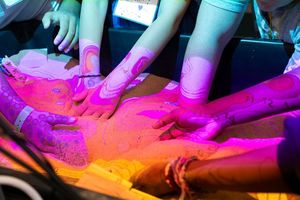
More than 1,000 visitors explored NASA sea level science firsthand during World Ocean Day at the University of Georgia Aquarium on Skidaway Island on June 6, 2026.
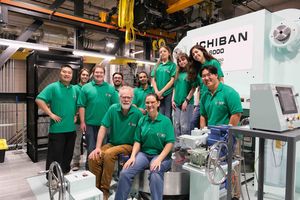
FORCE is a world-class laboratory that uses high-pressure experimental equipment to recreate the extreme conditions found deep within Earth and other planetary bodies, enabling researchers to better understand how planets form, evolve, and behave under immense pressures.
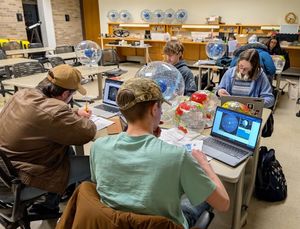
Teaching the beautiful and inspirational science of astronomy using only the conceptual framework offered by a traditional textbook – without incorporating the wealth of incredible resources, images and activities from NASA – falls short of the more modern, active learning…
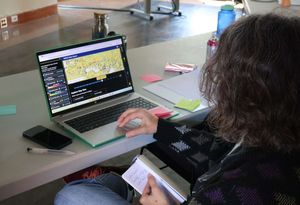
The NASA Science Activation Program’s Cosmic Storytelling with NASA Data (CosmicDS) project, led by Harvard University in Cambridge, Massachusetts, works to bring authentic NASA data into the hands of educators and learners. From July 27–29, 2026, the CosmicDS team partnered…
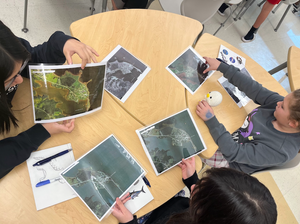
For the Pleasant Point Passamaquoddy Reservation, or Sipayik, the ocean has always been a teacher. Situated in what is known as Downeast Maine, along the shores of Passamaquoddy Bay, generations of Indigenous people have lived along the coast, learning from…
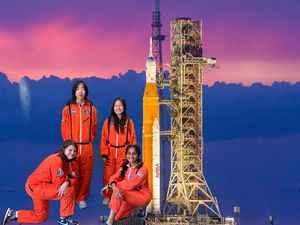
The Northwest Earth and Space Science Pathways (NESSP) project recently concluded its 2025–2026 ROADS (Rover Observation And Discoveries in Space) from Earth to Venus National Challenge, a NASA Science Activation program student challenge that engaged more than 500 students on…

During the 2025-2026 school year, educators from the NASA Science Activation Program’s GLOBE (Global Learning and Observation to Benefit the Environment) Mission Earth project participated in a specialized Community of Practice led by NASA Langley Research Center to refine how…
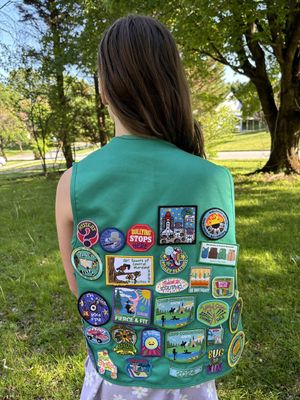
In early May 2026, NASA employees, contractors, and volunteers helped to bring Heliophysics to girls of all ages in a fun-filled weekend of hands-on science activities and experiments.
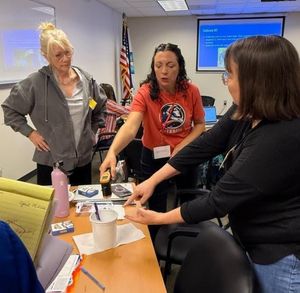
Thirty-eight science educators representing seven school districts across Virginia’s Tidewater region joined forces with community organizations, such as the Elizabeth River Project, to deepen their instructional practice through a dynamic collaboration between NASA eClips and the GLOBE (Global Learning and…

A new Sun-centered and science-focused coloring book produced by NASA in partnership with the University of Alaska Fairbanks (UAF) is now available for people to learn while showing their artistic side.