
















Didymos & Dimorphos

Overview
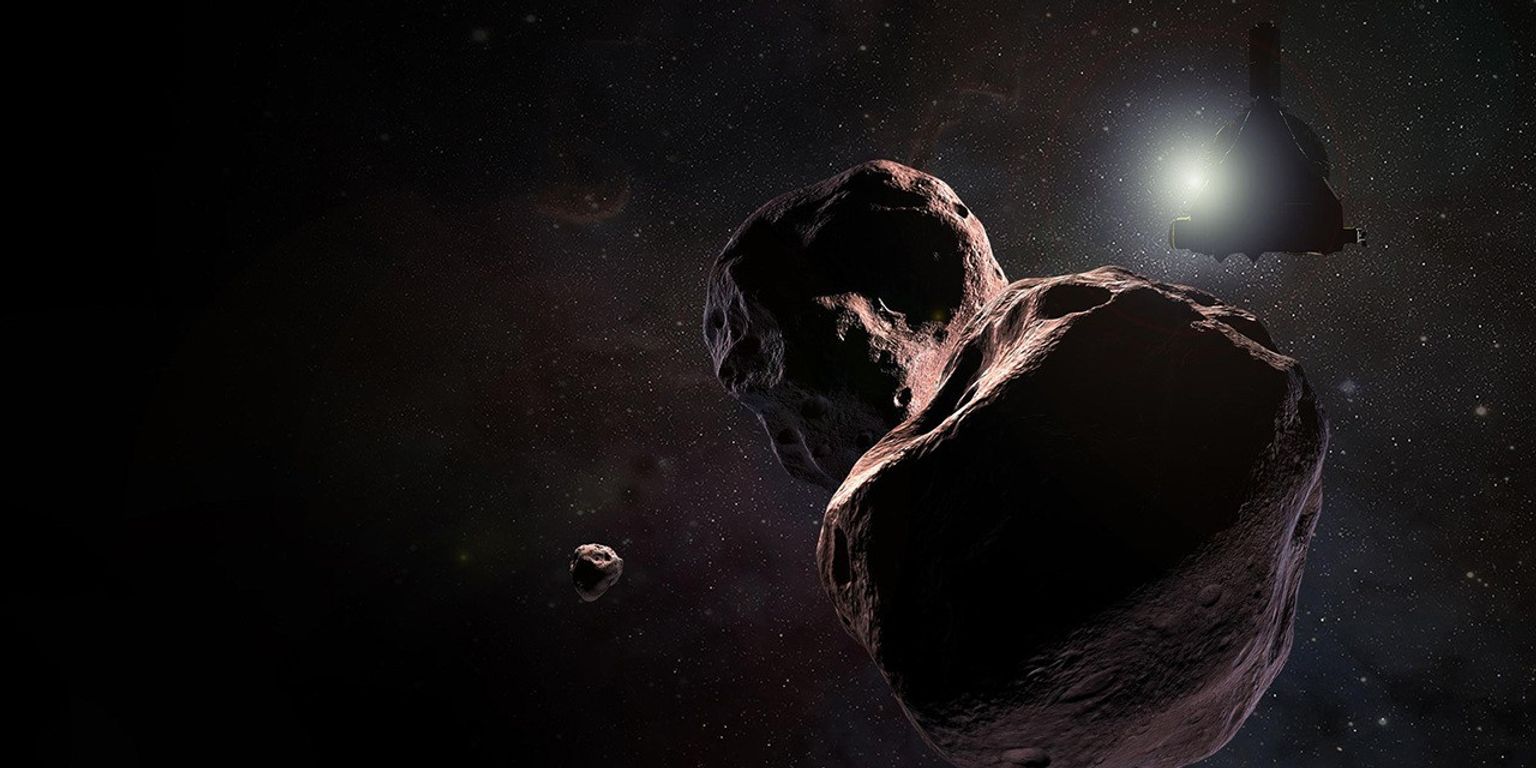
Asteroid Didymos and its moonlet Dimorphos make up what's called a binary asteroid system — meaning they orbit each other around a shared center of mass.
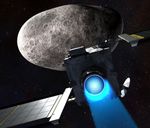
The two asteroids are not a threat to Earth, but because they pass relatively close to our planet, they were chosen as the target for NASA's Double Asteroid Redirection Test (DART) mission. DART was the agency's first mission to test planetary defense technology. This technology could one day be used to deflect hazardous asteroids on a collision course with Earth.
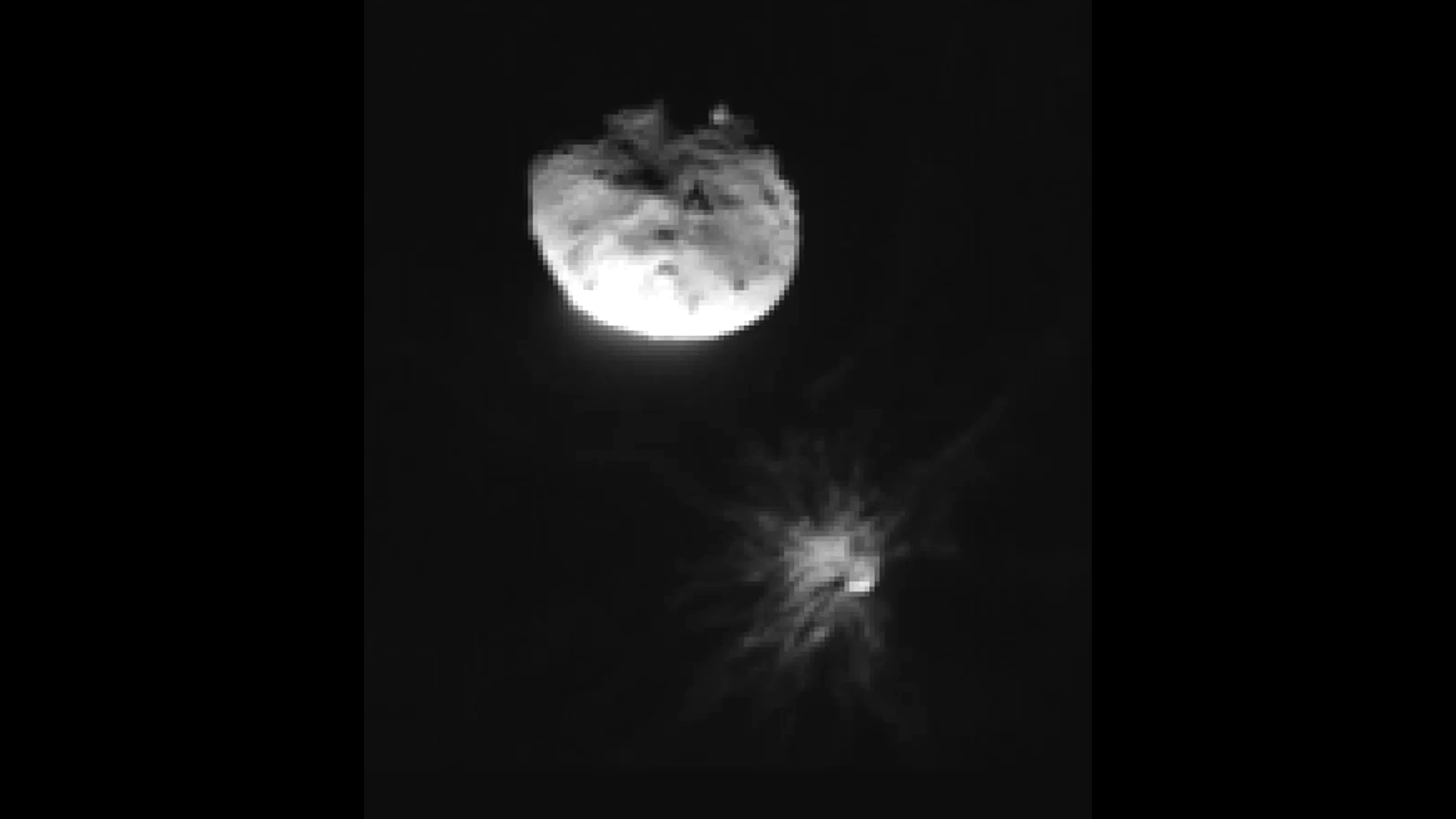
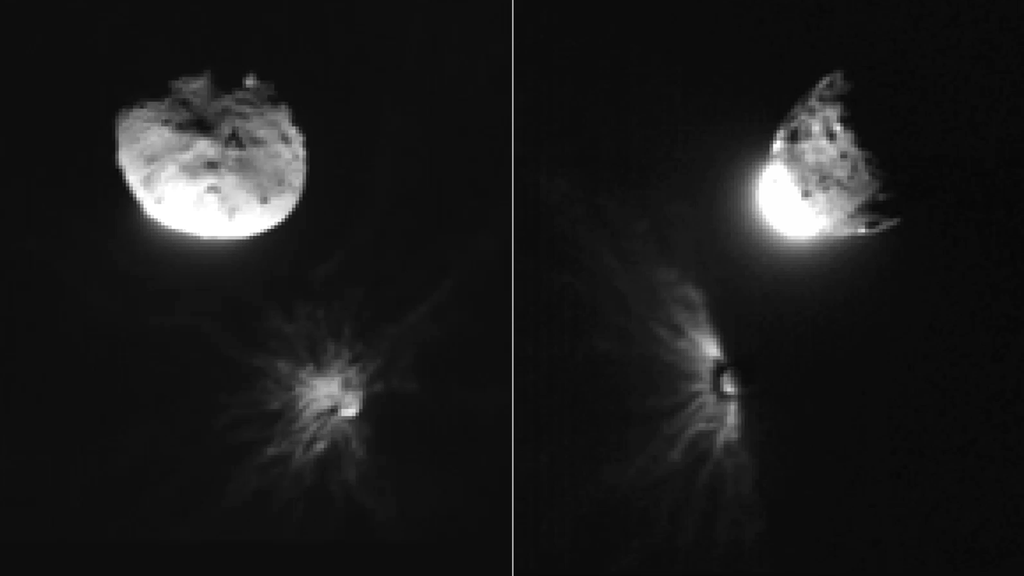
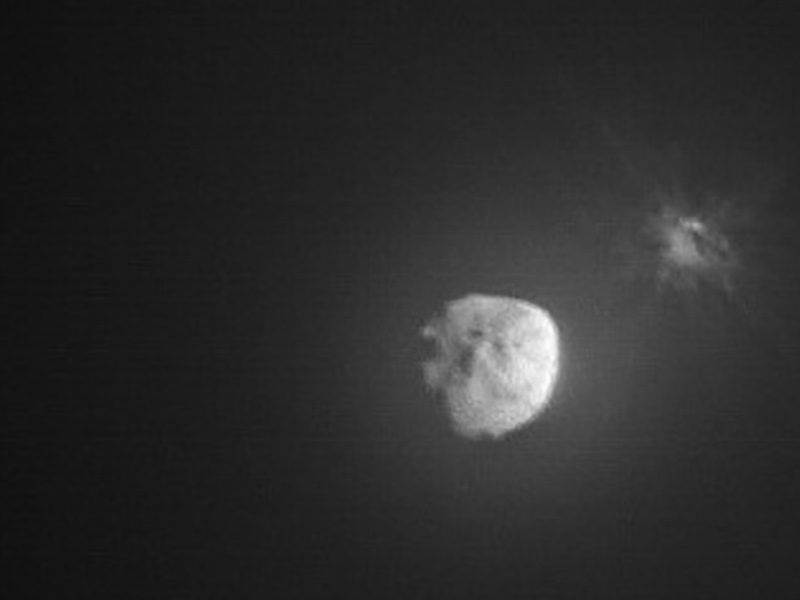
DART deliberately impacted Dimorphos on Sept. 26, 2022. NASA announced on Oct. 11, 2022, that an analysis of data obtained by DART's investigation team showed the spacecraft's kinetic impact with Dimorphos successfully altered the smaller asteroid's orbit. This marked the first time humanity had purposely changed the motion of a celestial object, and it was the first full-scale demonstration of asteroid deflection technology.
In March 2026, research indicated that DART's impact didn't just change the motion of Dimorphos around Didymos; it also shifted the orbit of both asteroids around the Sun.
Exploration
Didymos — which means "twin" in Greek — was discovered on April 11, 1996, by researcher Joseph Montani of Spacewatch at Kitt Peak National Observatory southwest of Tucson, Arizona. Montani also suggested the name.
Scientists first suspected Didymos might have a moon after spotting multiple echoes in data from NASA's Goldstone Solar System Radar, located in the Mojave Desert near Barstow, California. The moon was confirmed by analyzing optical light curves — telescopic observations showing the brightness of an object over a period of time — along with radar images taken at the Arecibo Observatory in Puerto Rico on Nov. 23, 2003.
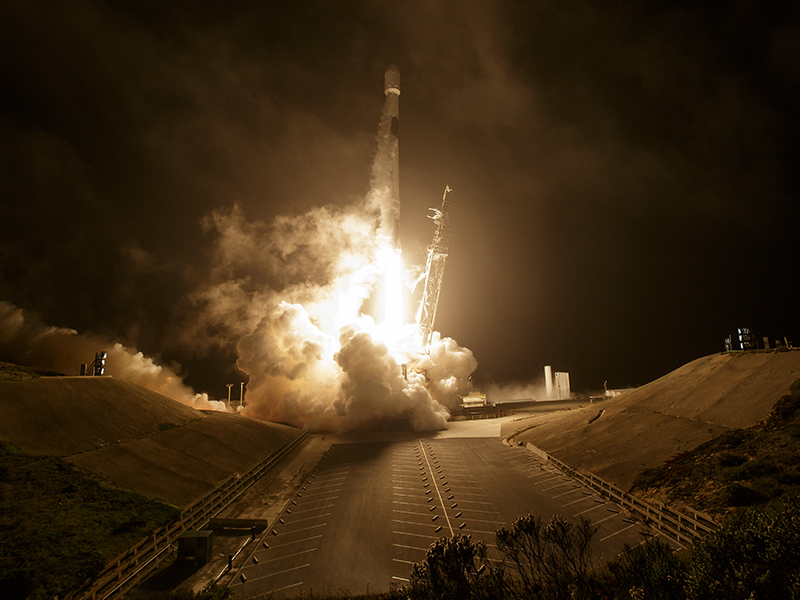
DART launched from Vandenberg Space Force Base in California at 1:21 a.m. EST on Nov. 24, 2021, on a SpaceX Falcon 9 rocket.
The spacecraft struck Dimorphos at 7:14 p.m. EDT on Sept. 26, 2022, at a speed of about 3.8 miles (6.1 kilometers) per second. Dimorphos was about 6.8 million miles (11 million kilometers) from Earth at the time of DART's impact.
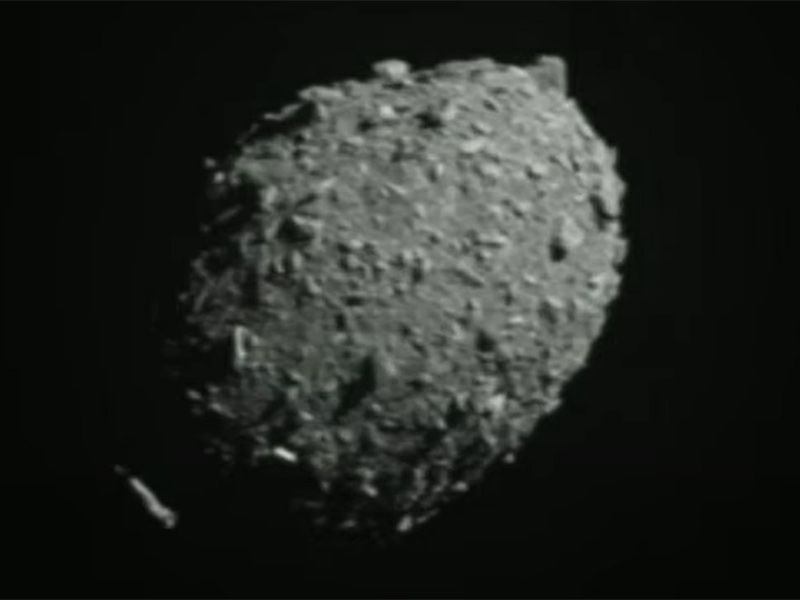
The goal of the mission was to determine how much DART's impact altered the moonlet's velocity in space by measuring the change in its orbit around Didymos.
Prior to DART's impact, it took Dimorphos about 12 hours to orbit Didymos. After DART's intentional collision with Dimorphos on Sept. 26, 2022, astronomers used telescopes on Earth to measure how much that time had changed. The investigation team confirmed the spacecraft's impact shortened Dimorphos' orbital period around Didymos by 33 minutes.
Before the impact, NASA had defined mission success as shortening Dimorphos' orbital period by at least 73 seconds. The early data showed DART surpassed this minimum benchmark by more than 25 times.
A study published March 6, 2026, in the journal Science Advances indicated that the asteroid pair's 770-day orbital period around the Sun changed by a fraction of a second after the DART spacecraft's impact on Dimorphos.
“This is a tiny change to the orbit, but given enough time, even a tiny change can grow to a significant deflection,” said Thomas Statler, lead scientist for solar system small bodies at NASA Headquarters in Washington. “The team's amazingly precise measurement again validates kinetic impact as a technique for defending Earth against asteroid hazards and shows how a binary asteroid might be deflected by impacting just one member of the pair.”
DART streamed images live back to Earth as the spacecraft plunged into Dimorphos. The camera was DART's only onboard instrument. Called DRACO (Didymos Reconnaissance and Asteroid Camera for Optical navigation), the high-resolution imager was based on the New Horizons spacecraft's LORRI instrument. Before impact, DRACO helped DART navigate to the Didymos system.
DART also had a passenger — a small spacecraft contributed by the Italian Space Agency (ASI). The shoebox-sized LICIACube (Light Italian CubeSat for Imaging of Asteroids) separated from DART 15 days before DART's impact with the moonlet. LICIACube captured images of the impact and material (ejecta) kicked up from the moonlet.
Size and Distance
Didymos, the larger asteroid of the binary pair (also called Didymos A), is about a half mile (805 meters) in diameter. The moonlet, Dimorphos (Didymos B), is about 560 feet (170 meters) in diameter.
As the asteroid pair orbits the Sun, it occasionally passes relatively close to Earth. In 2003, the pair passed about 4.5 million miles (7.2 million kilometers) from Earth. At its farthest, when Didymos is on the opposite side of the Sun from Earth, a bit beyond the orbit of Mars, it is about 280 million miles (450 million kilometers) from Earth.
Orbit and Rotation
Didymos' distance from the Sun ranges from about 94 million miles (152 million kilometers) to about 211 million miles (340 million kilometers), beyond the orbit of Mars. Its orbit is tilted by about 3 degrees relative to the plane of Earth's orbit, called the ecliptic. It takes 2.11 years to complete an orbit around the Sun.
Didymos spins rapidly — rotating about once every 2.26 hours. The DART investigation team confirmed the spacecraft's Sept. 26, 2022, impact altered Dimorphos' orbit around Didymos by 33 minutes.
Structure
Didymos is shaped like a spinning top with a raised ridge running along its equator — a shape that's common among binary asteroids. Scientists think the asteroid’s rapid spin drives material toward the equator, causing a bulge in the middle.
Before DART's impact, Didymos' moonlet, Dimorphos, had a roughly symmetrical shape, like a squashed ball that is wider than it is tall. Analysis indicates the impact reshaped the moonlet into something more like an oblong watermelon. These observations, along with observations of debris after the impact, also indicate Dimorphos is a loosely packed "rubble pile" similar to asteroid Bennu.
Formation
Whether binary asteroids like Didymos and Dimorphos all form the same way or by many different processes isn't yet known. The rapid spin of Didymos suggests that the moonlet may have been formed through a process called rotational fission, in which material is shed from the asteroid due to its fast rotation. Didymos is thought to have started spinning faster because infrared light was emitted unevenly from its Sun-warmed surface, resulting in a twisting force, or torque. Over millions of years, this process could have built up enough angular momentum to release material from the surface, which then gathered into the moonlet. But other possibilities haven't been conclusively ruled out.
Surface
Images captured by DART and LICIACube showed boulders of varying sizes on Dimorphos. Didymos had smoother terrain at lower elevations and rockier terrain at higher elevations, with more craters than its moonlet.
Studies by the DART mission's science team suggest that both Didymos and Dimorphos have weak surface materials. Researchers estimated that Didymos' surface is 40–130 times as old as Dimorphos — about 12.5 million years compared to less than 300,000 years. Scientists also think Dimorphos likely formed from material spun off from Didymos in a large mass shedding event. The low surface strength of Dimorphos likely contributed to DART’s significant impact on its orbit.
Researchers also found similarities between boulders on Dimorphos and those on other rubble-pile asteroids, including Bennu and Ryugu. These similarities suggest these asteroids formed and evolved in a similar fashion.
Moons
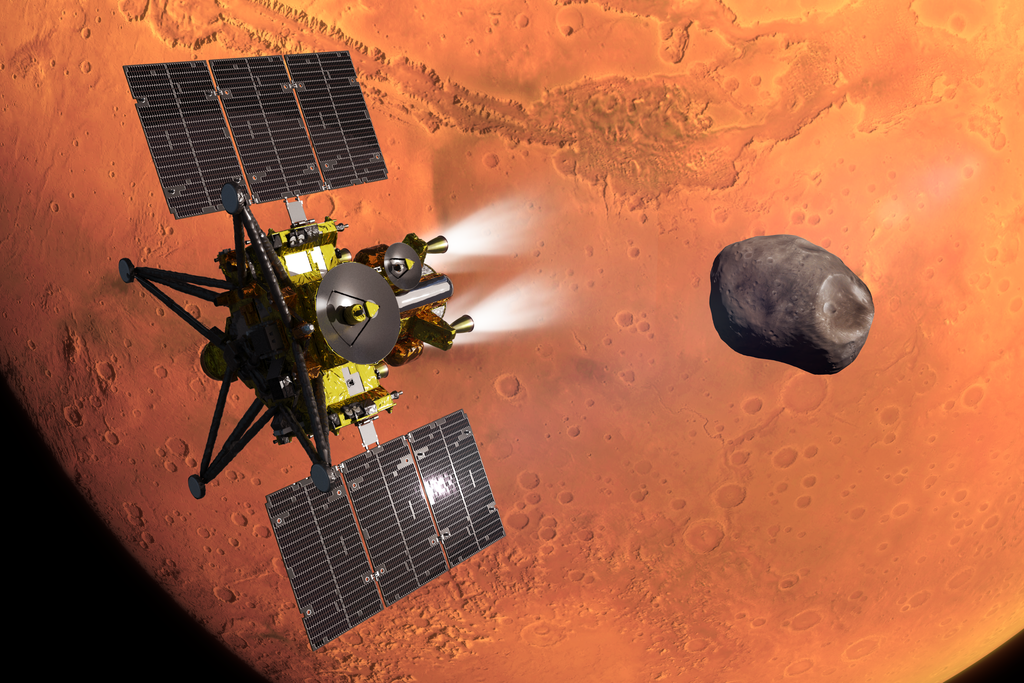
Didymos has one moon called Dimorphos.