

















Suggested Searches

Comet 3I/ATLAS Image Gallery

NASA missions are working together to track and study this rare, interstellar comet as it passes through our solar system.
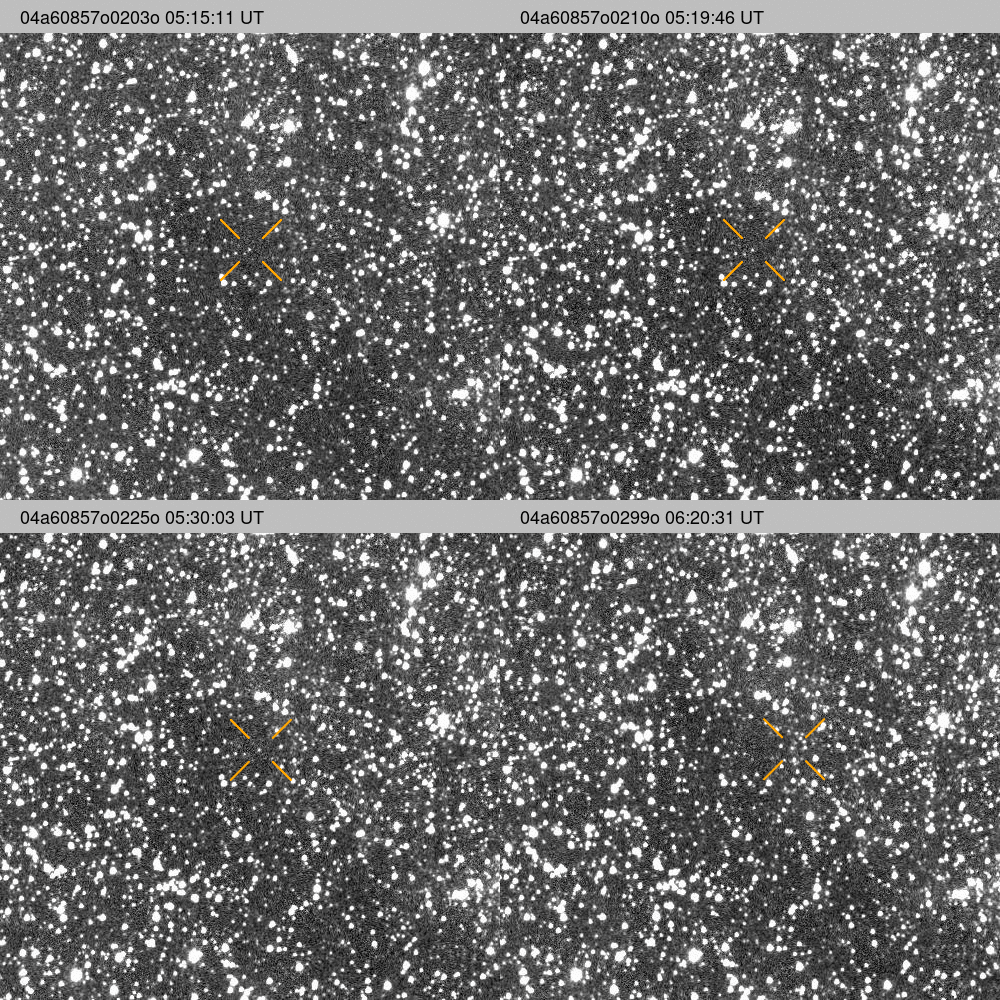
This animation shows the observations of comet 3I/ATLAS when it was discovered on July 1, 2025. The NASA-funded ATLAS survey telescope in Chile first reported that the comet originated from interstellar space.

NASA 3I/ATLAS Images

Below are a variety of images and videos of the interstellar comet 3I/ATLAS, as observed by NASA missions. Click through for more information and to view and download.
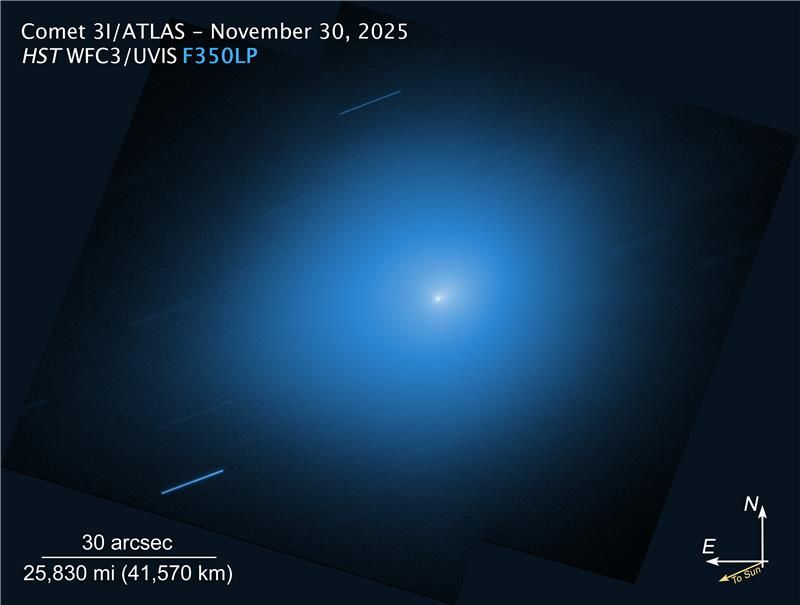
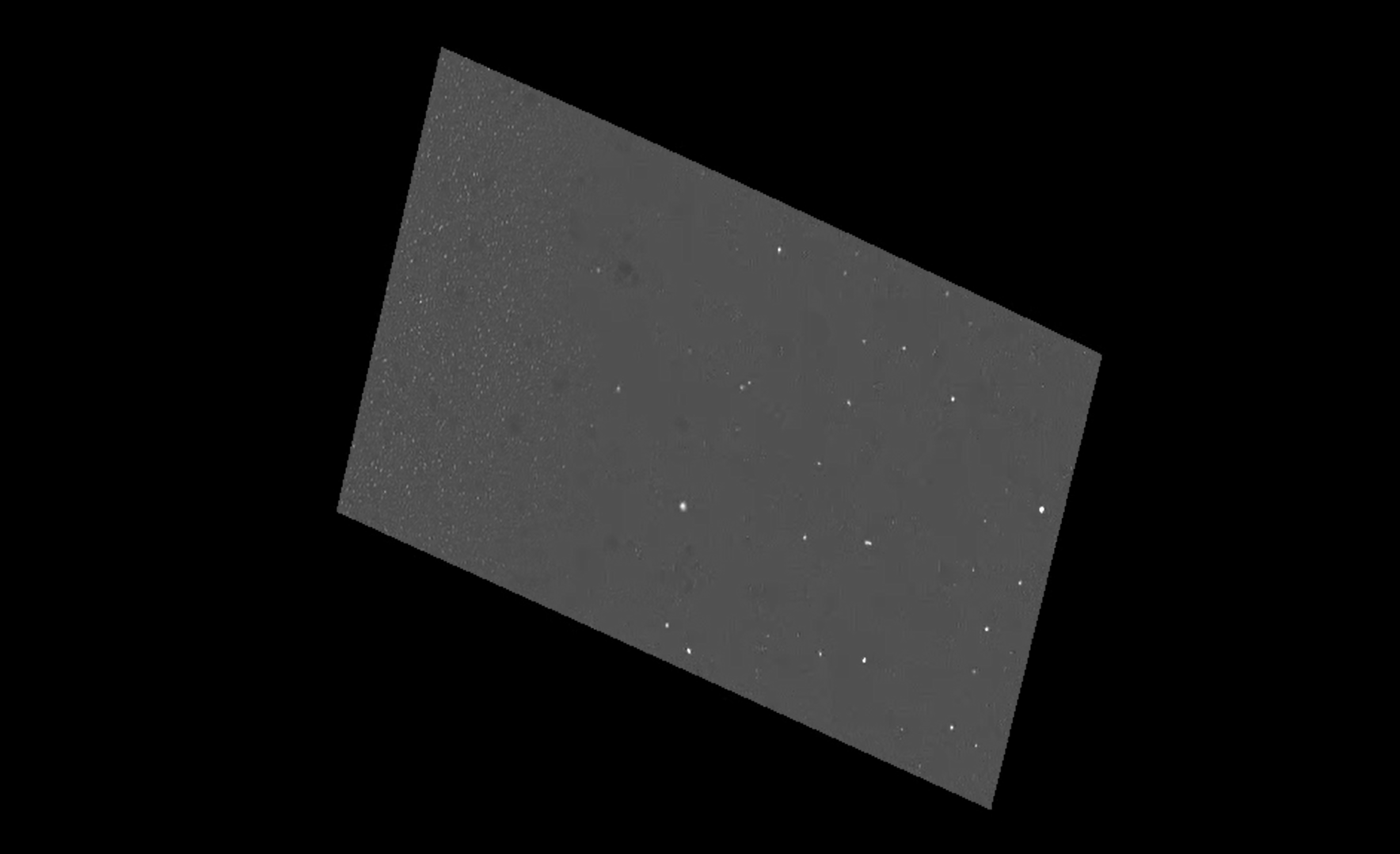
An image from NASA’s Hubble Space Telescope showing the interstellar comet 3I/ATLAS. The comet is a small white dot in the center of the image, with a light blue halo of light that takes up most of the image. Other stars are shown streaking across the image as diagonal blue-white lines.

Nov. 30, 2025: Hubble Looks Again

NASA’s Hubble Space Telescope reobserved interstellar comet 3I/ATLAS Nov. 30, with its Wide Field Camera 3 instrument.
An image from NASA’s Hubble Space Telescope showing the interstellar comet 3I/ATLAS. The comet is a small white dot in the center of the image, with a light blue halo of light that takes up most of the image. Other stars are shown streaking across the image as diagonal blue-white lines.

Nov. 30, 2025: Hubble Looks Again

NASA’s Hubble Space Telescope reobserved interstellar comet 3I/ATLAS Nov. 30, with its Wide Field Camera 3 instrument.
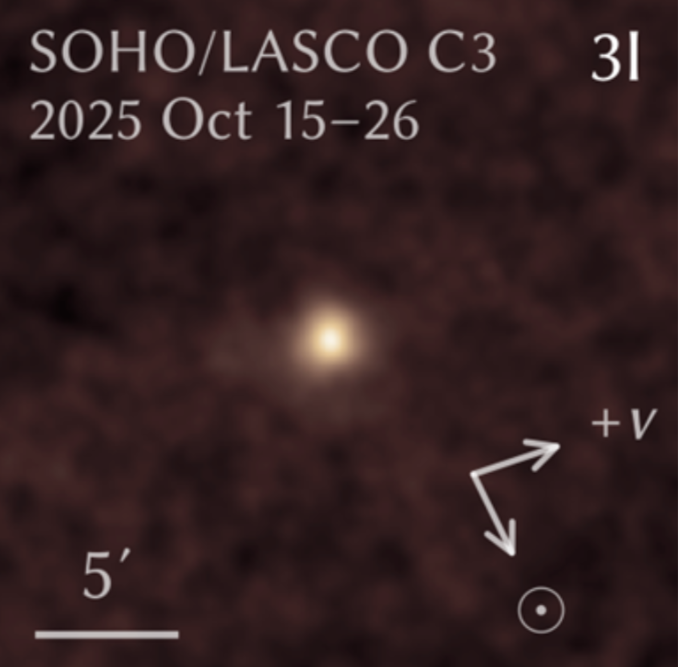
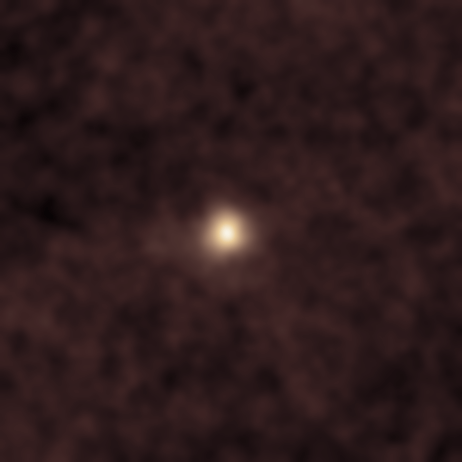
A faint, slightly yellowish point of light—Comet 3I/ATLAS—appears near the center of a grainy, brown-toned background captured by the SOHO/LASCO C3 coronagraph between October 15–26, 2025. The comet is only marginally brighter than the surrounding noise, making it difficult to distinguish.

Oct. 15-26, 2025: SOHO

The ESA/NASA SOHO mission caught a glimpse of the interstellar comet.

A faint, slightly yellowish point of light—Comet 3I/ATLAS—appears near the center of a grainy, brown-toned background captured by the SOHO/LASCO C3 coronagraph between October 15–26, 2025. The comet is only marginally brighter than the surrounding noise, making it difficult to distinguish.

Oct. 15-26, 2025: SOHO

The ESA/NASA SOHO mission caught a glimpse of the interstellar comet.

A square, pixelated image with a dark background. At the center is a roughly circular cluster of bright pixels, transitioning from white at the very center to light blue, then darker blue and purple as it spreads outward. The edges and corners of the image are mostly dark purple and black pixels.

Oct. 9, 2025: MAVEN

Instruments on the MAVEN spacecraft at Mars show the halo of gas and dust, or coma, surrounding 3I/ATLAS.

A square, pixelated image with a dark background. At the center is a roughly circular cluster of bright pixels, transitioning from white at the very center to light blue, then darker blue and purple as it spreads outward. The edges and corners of the image are mostly dark purple and black pixels.

Oct. 9, 2025: MAVEN

Instruments on the MAVEN spacecraft at Mars show the halo of gas and dust, or coma, surrounding 3I/ATLAS.
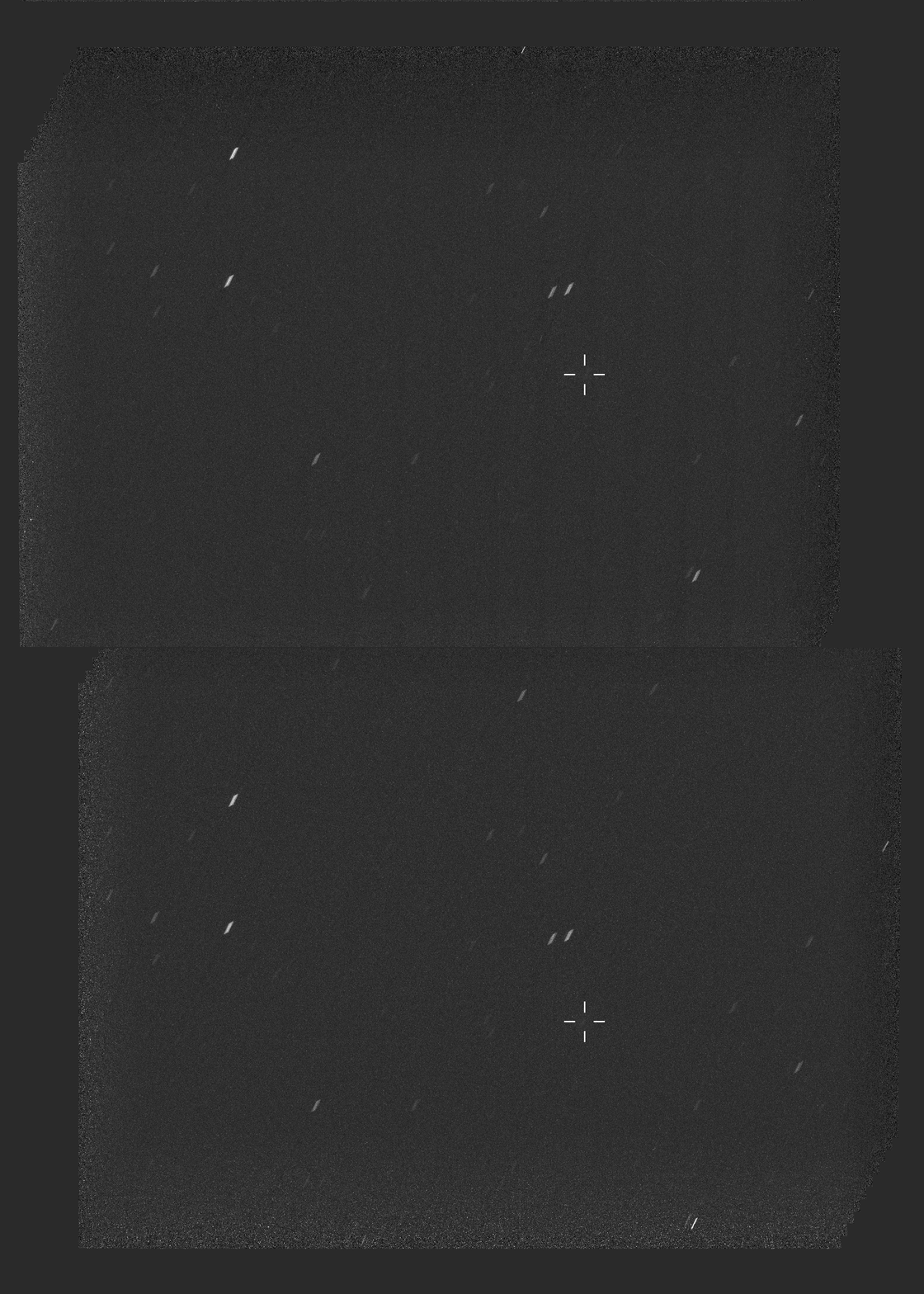
A predominantly black view of space is dotted with stars, seen as short white streaks, in an animated image that consists of two observations. In the right half of the image, interstellar comet 3I/ATLAS is a barely visible white smudge that becomes slightly more distinct in the second observation.

Oct. 4, 2025: Perseverance (.gif)

Perseverance paused from its exploration of Mars and used its mastcam to take a picture of the comet.
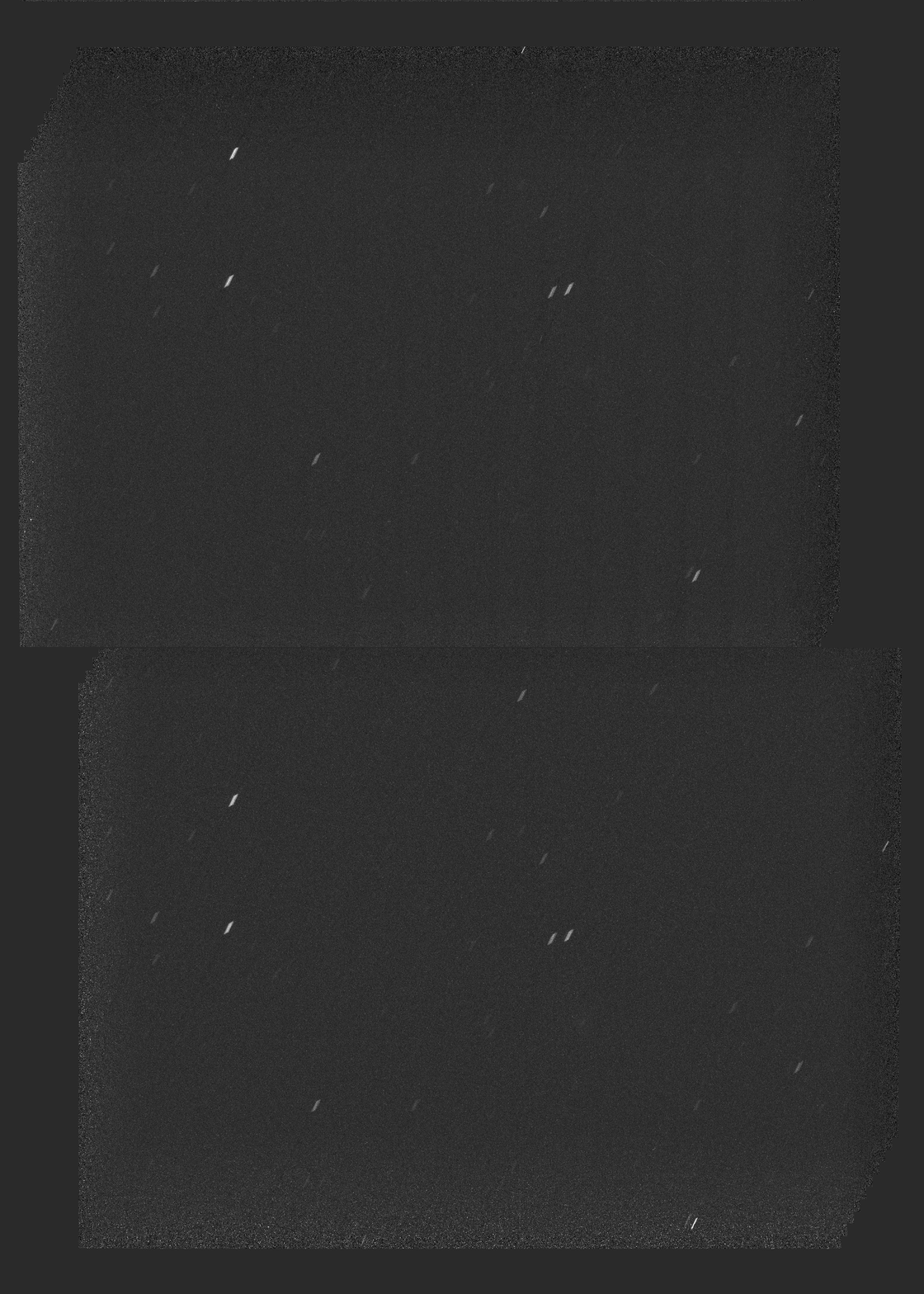
A predominantly black view of space is dotted with stars, seen as short white streaks, in an animated image that consists of two observations. In the right half of the image, interstellar comet 3I/ATLAS is a barely visible white smudge that becomes slightly more distinct in the second observation.

Oct. 4, 2025: Perseverance (.gif)

Perseverance paused from its exploration of Mars and used its mastcam to take a picture of the comet.

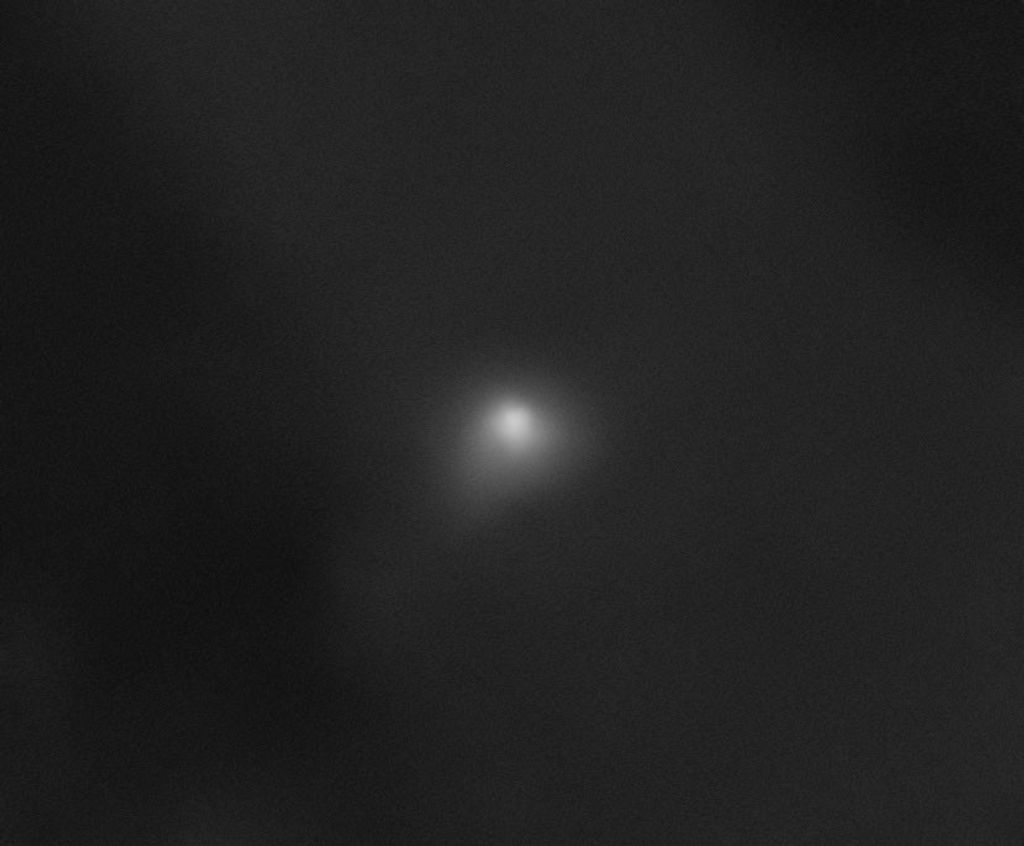
On a largely black background, interstellar comet 3I/ATLAS appears as a white smudge with a semicircular shape at its core. A transparent white cloud extends slightly from the comet toward the bottom left of the image and, to a lesser extent, toward the right side of the image. A scale bar indicates a distance of 932 miles above the comet, and an arrow pointing from the comet to the bottom left of the image is labeled “comet trajectory."

Oct. 2, 2025: MRO

The HiRISE camera on the Mars Reconnaissance Orbiter observed the comet from about 18.6 million miles away.
On a largely black background, interstellar comet 3I/ATLAS appears as a white smudge with a semicircular shape at its core. A transparent white cloud extends slightly from the comet toward the bottom left of the image and, to a lesser extent, toward the right side of the image

Oct. 2, 2025: MRO

The HiRISE camera on the Mars Reconnaissance Orbiter observed the comet from about 18.6 million miles away.

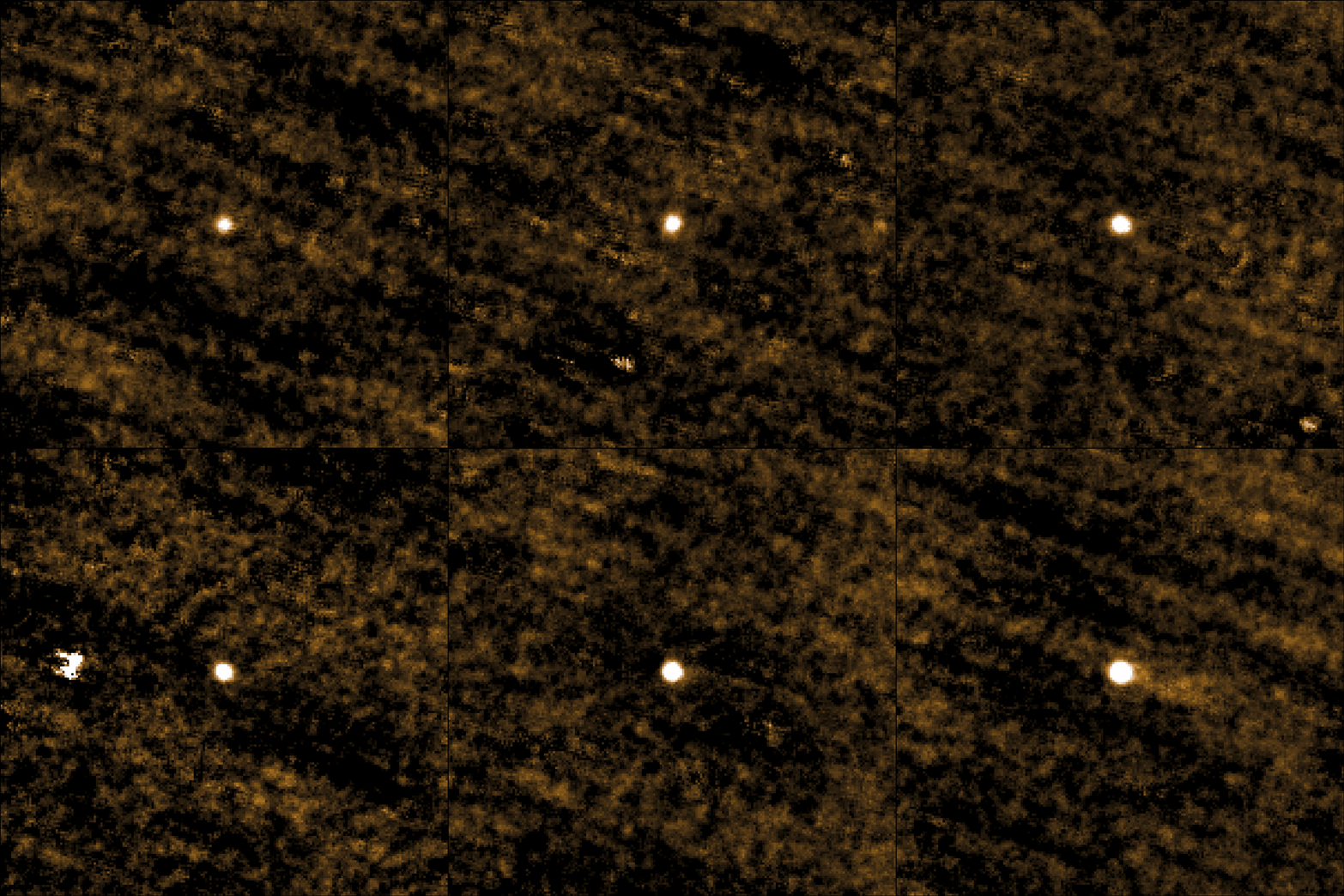
A round, white object appears to change slightly from frame to frame at the center of an animated GIF. Fuzzy, orange, parallel stripes of light streak from upper left to lower right in the background.

Sept. 28-Oct. 10, 2025: PUNCH (.gif)

Combined images from PUNCH when the comet was between 231-235 million miles from Earth.

Sept. 28-Oct. 10, 2025: PUNCH (.mp4)

Combined images from PUNCH when the comet was between 231-235 million miles from Earth.
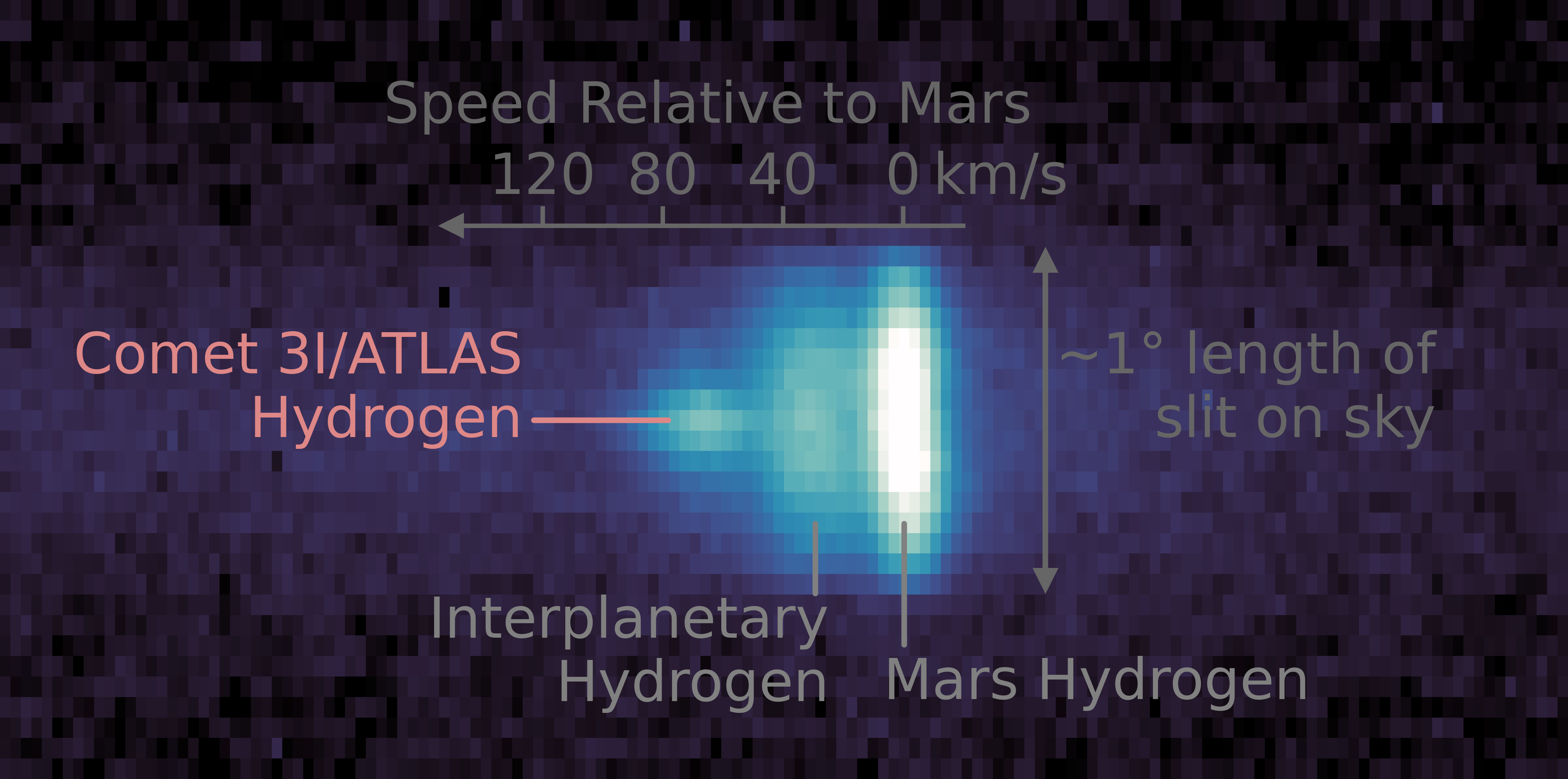
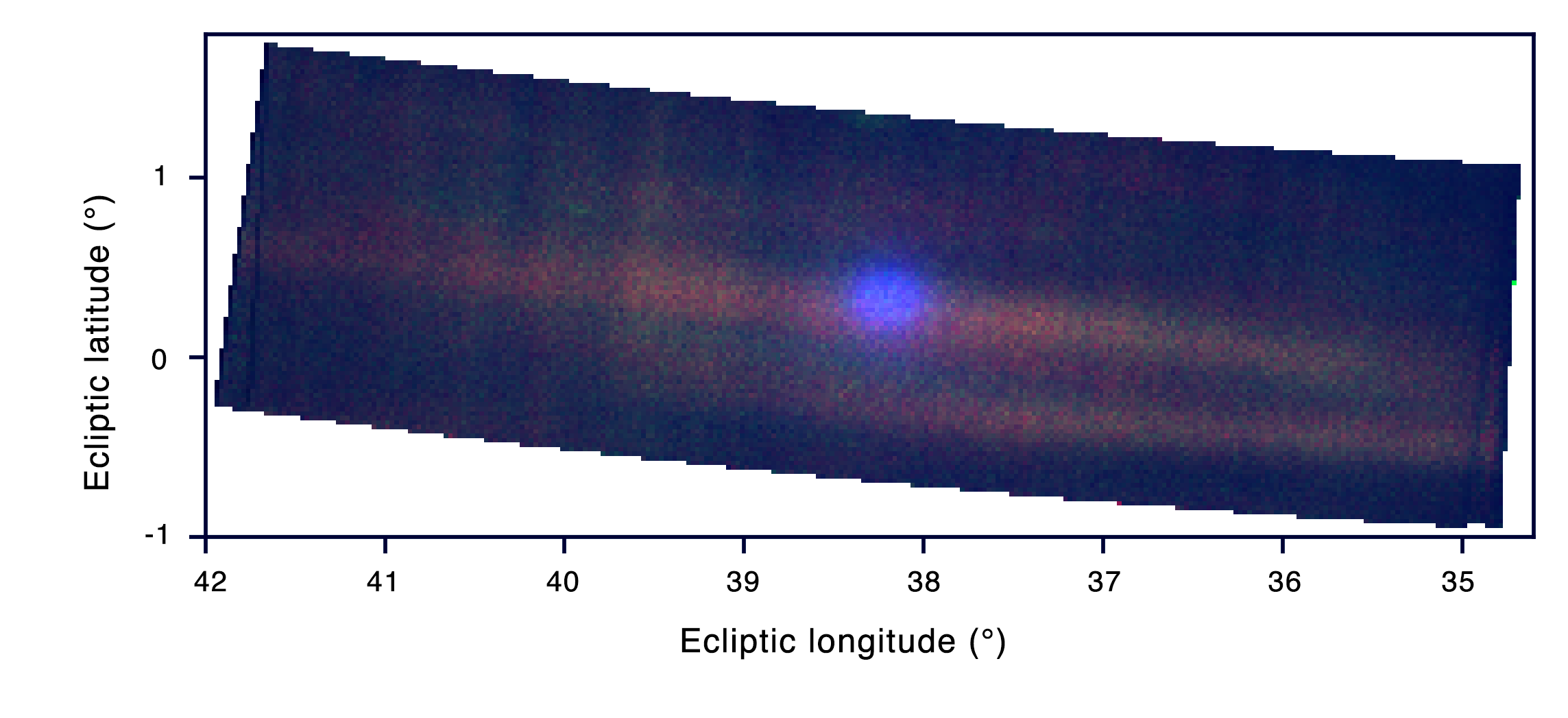
A wide, rectangular, pixelated image with a dark purple background. Near the right side, there is a bright, elongated cluster of pixels that transition from white at the center to light blue and then darker blue as they extend leftward. Fainter blue and purple pixels form a tapered shape stretching further to the left. The rest of the image is filled with dark purple and black pixels.

Sept. 28, 2025: MAVEN

MAVEN's ultraviolet instrument images the Hydrogen atoms surrounding the comet.
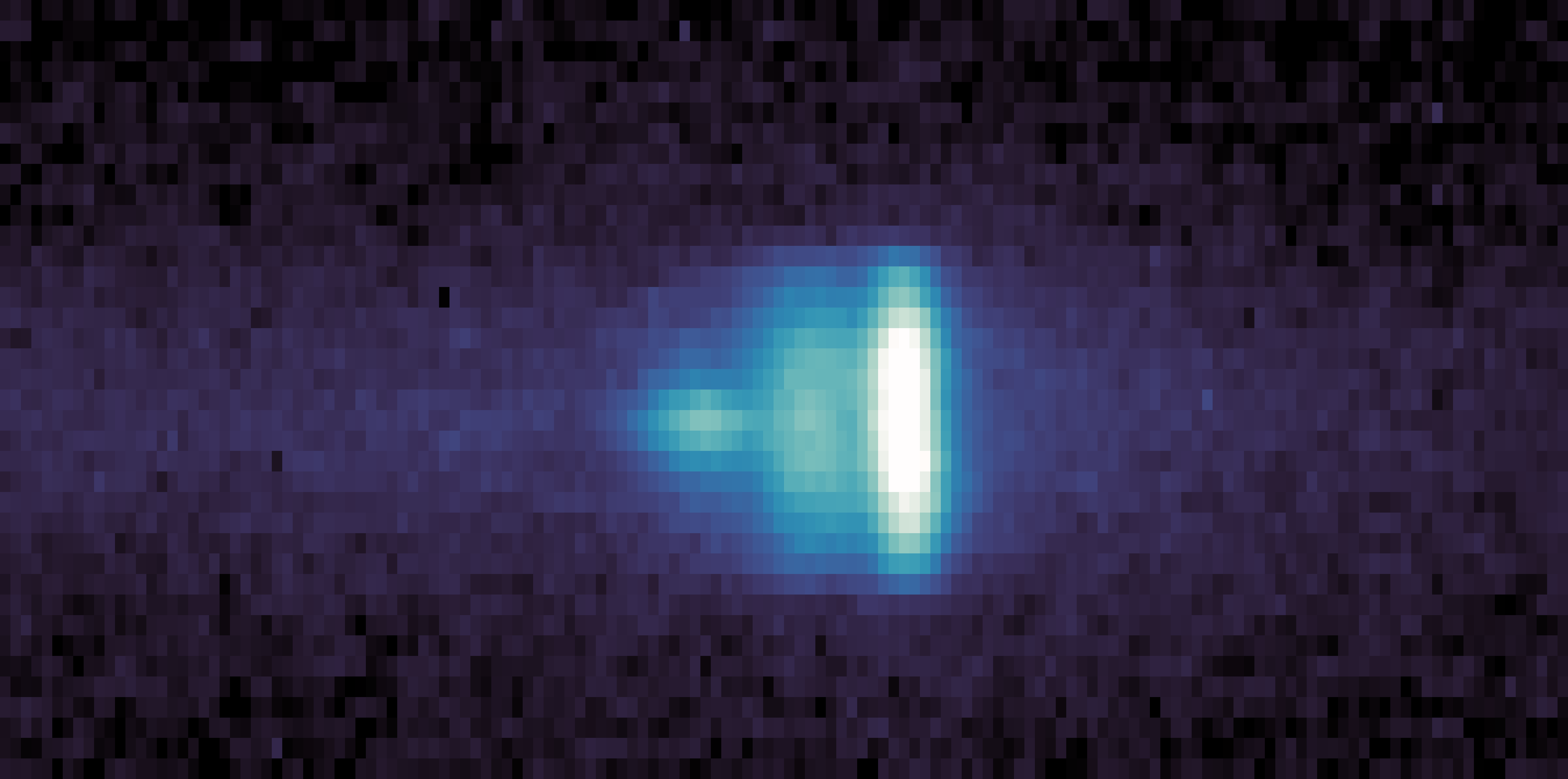
A wide, rectangular, pixelated image with a dark purple background. Near the right side, there is a bright, elongated cluster of pixels that transition from white at the center to light blue and then darker blue as they extend leftward. Fainter blue and purple pixels form a tapered shape stretching further to the left. The rest of the image is filled with dark purple and black pixels.

Sept. 28, 2025: MAVEN

MAVEN's ultraviolet instrument images the Hydrogen atoms surrounding the comet.
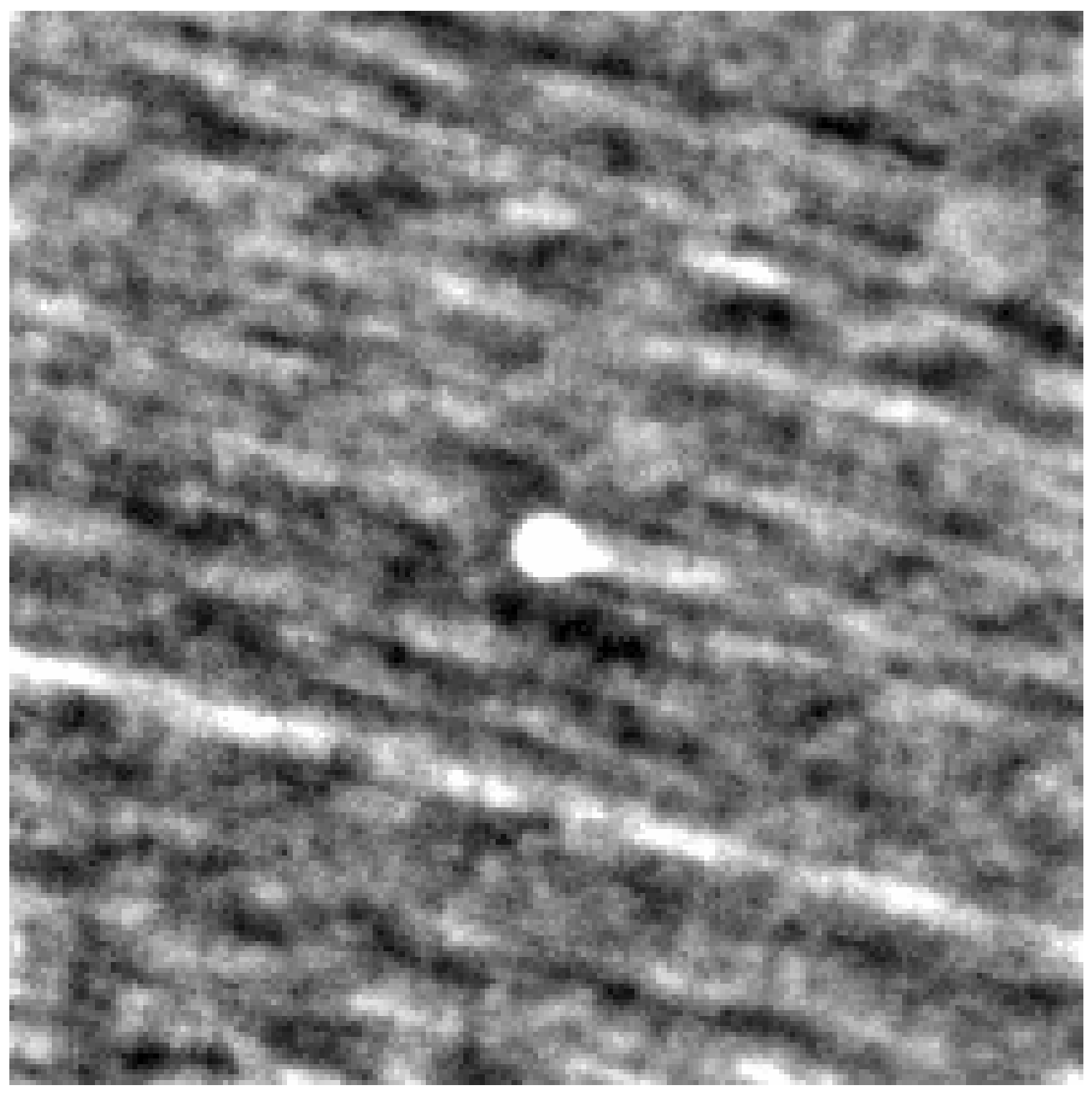
A round, white object appears at the center of a black-and-white image, with a short tail-like feature extending to the right. Fuzzy black, white, and gray diagonal, parallel stripes fill the background.

Sept. 20-Oct. 3, 2025: PUNCH

These combined images from the PUNCH mission, collected Sept. 20-Oct. 3, 2025, show the comet's tail as a short elongation to the right.
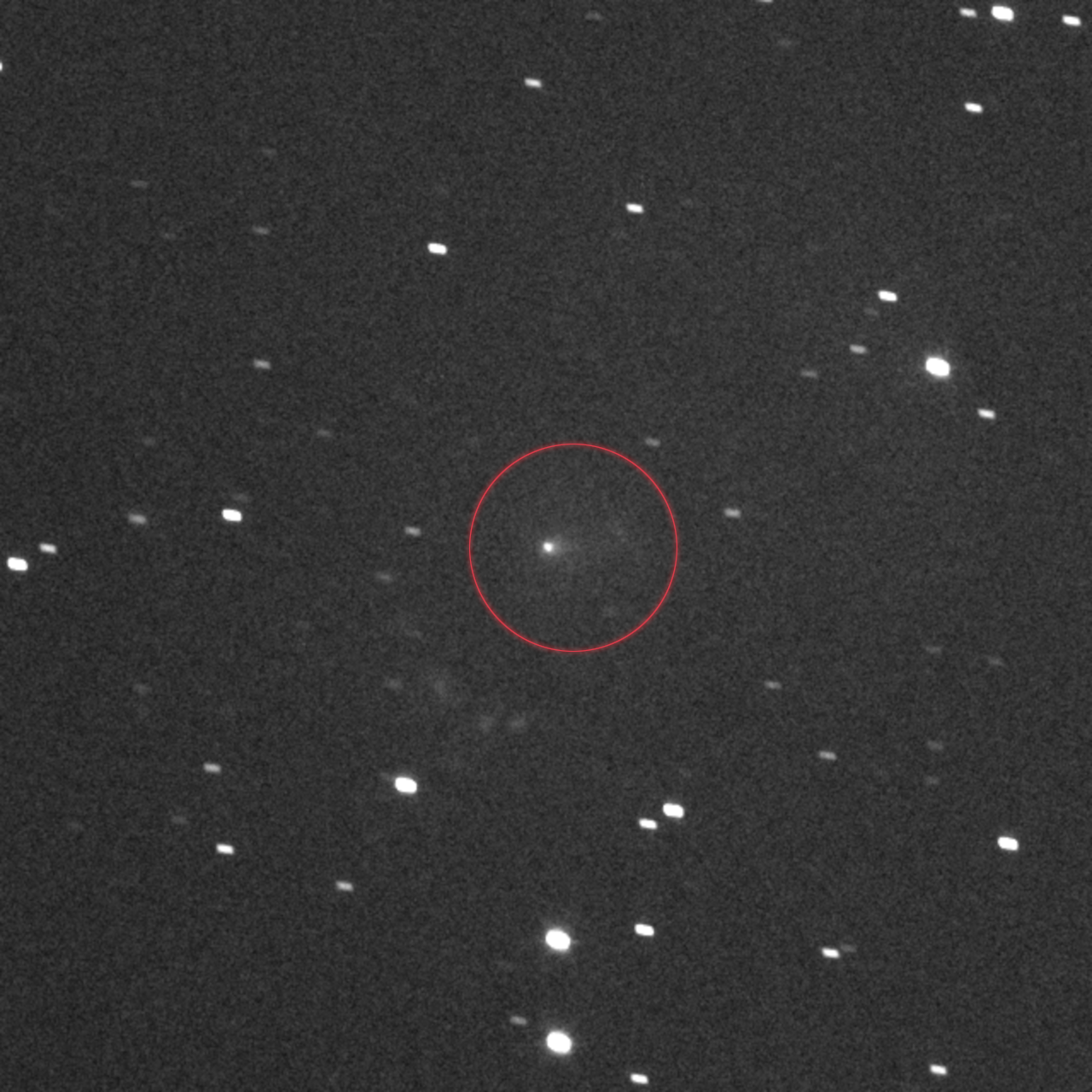
A comet in the middle of a star field with a faint tail extending to the right.

Sept. 16, 2025: Lucy

On its way to the Trojan asteroids, the Lucy spacecraft spotted comet 3I/ATLAS from about 240 million miles away.
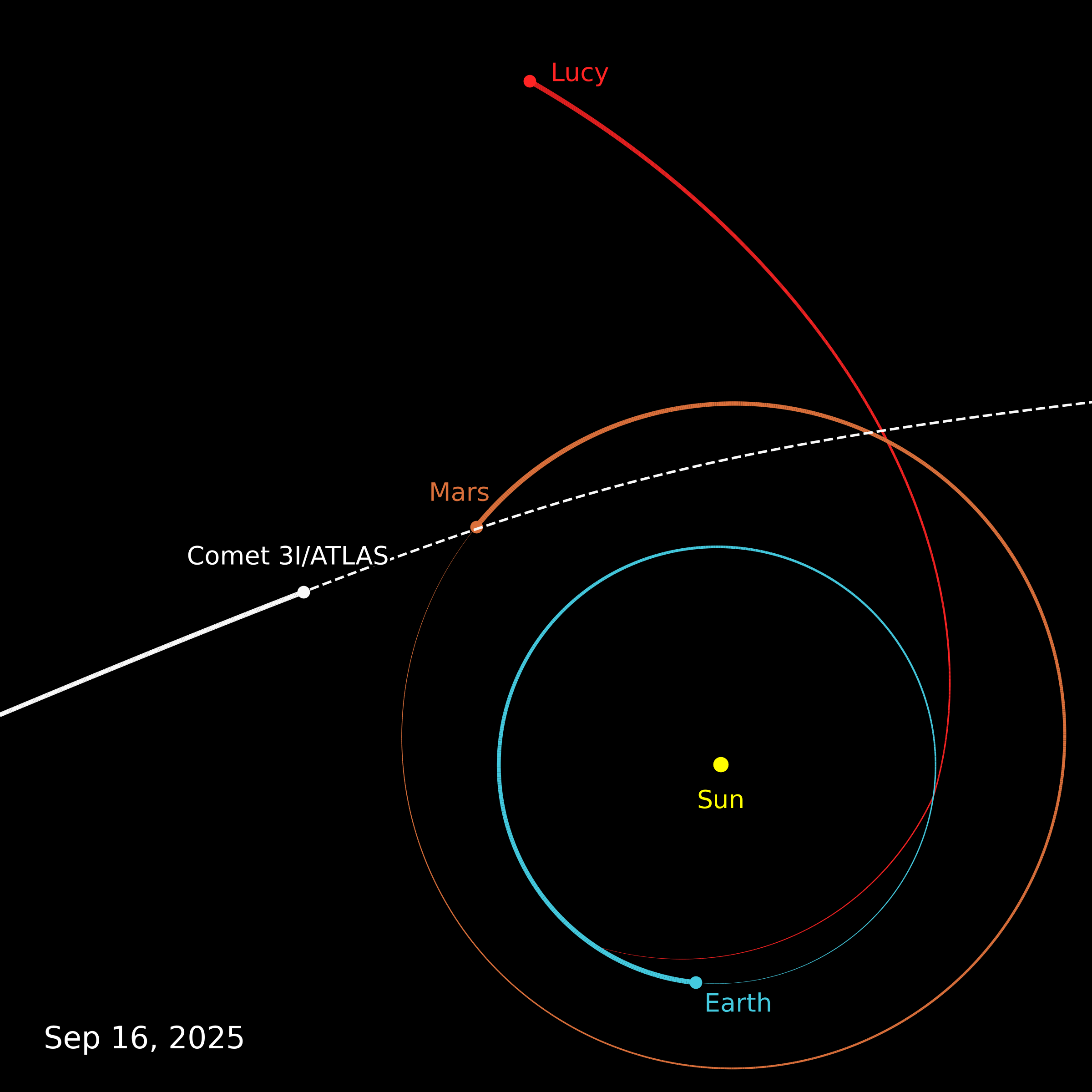
A diagram of the solar system showing that NASA’s Lucy spacecraft is on the opposite side of the Sun from the Earth with comet 3I/ATLAS positioned intermediate between them.

Sept. 16, 2025: Lucy

This diagram of the solar system shows Lucy's relative position to the comet.
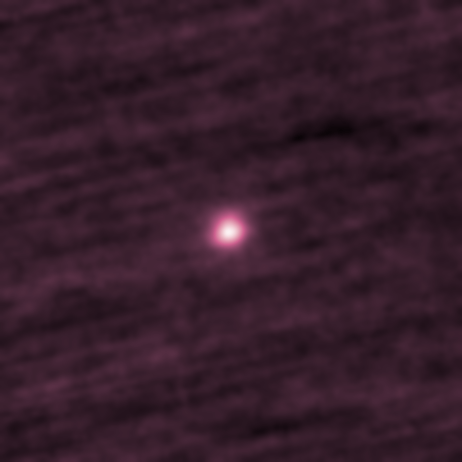
The image is made up of vertical streaks of black and various hues of pinks with a hazy white orb at the center, representing the comet 3I/ATLAS. The top left corner has the name of the comet, 3I/ATLAS, and below that, the date range the comet was observed.

Sept. 11-25, 2025: STEREO

Comet 3I/ATLAS is visible by using colorized, stacked images collected by the STEREO mission.

Sept. 11-25, 2025: STEREO (.mp4)

Comet 3I/ATLAS is visible using a series of stacked images collected by the STEREO mission.
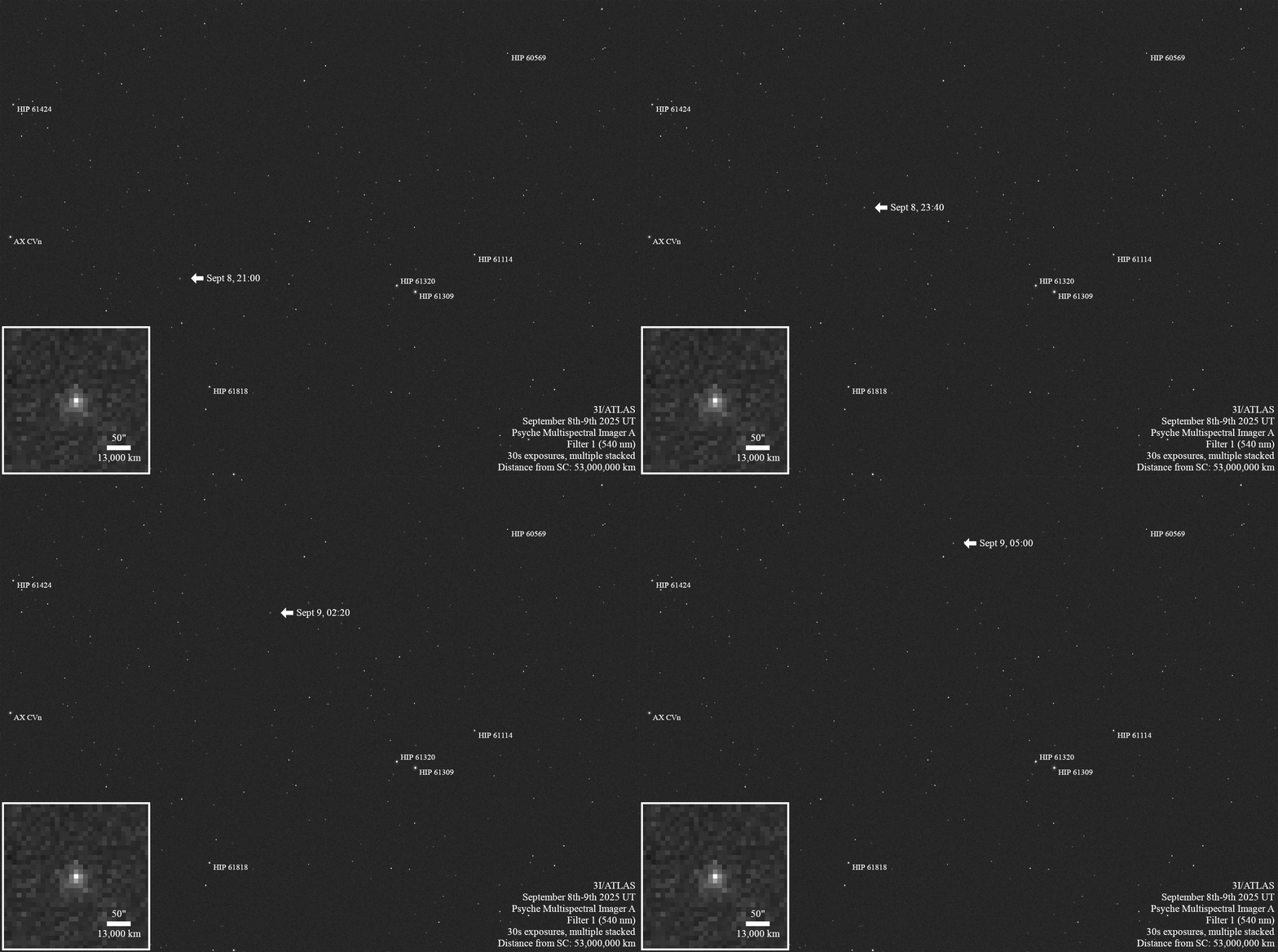
A predominantly black view of space is dotted with white stars, some of them labeled with names. Moving upward through the image, small white arrows indicate the position of interstellar comet 3I/ATLAS as it moves in front of the starfield, with date and time of four Psyche observations labeled. The comet appears slightly fuzzy compared with the pinpoint stars in the background. The inset in the bottom left shows a zoomed in and pixelated view of the comet.

Sept. 8-9, 2025: Psyche (.gif)

The Psyche spacecraft captured four observations of 3I/ATLAS over eight hours.
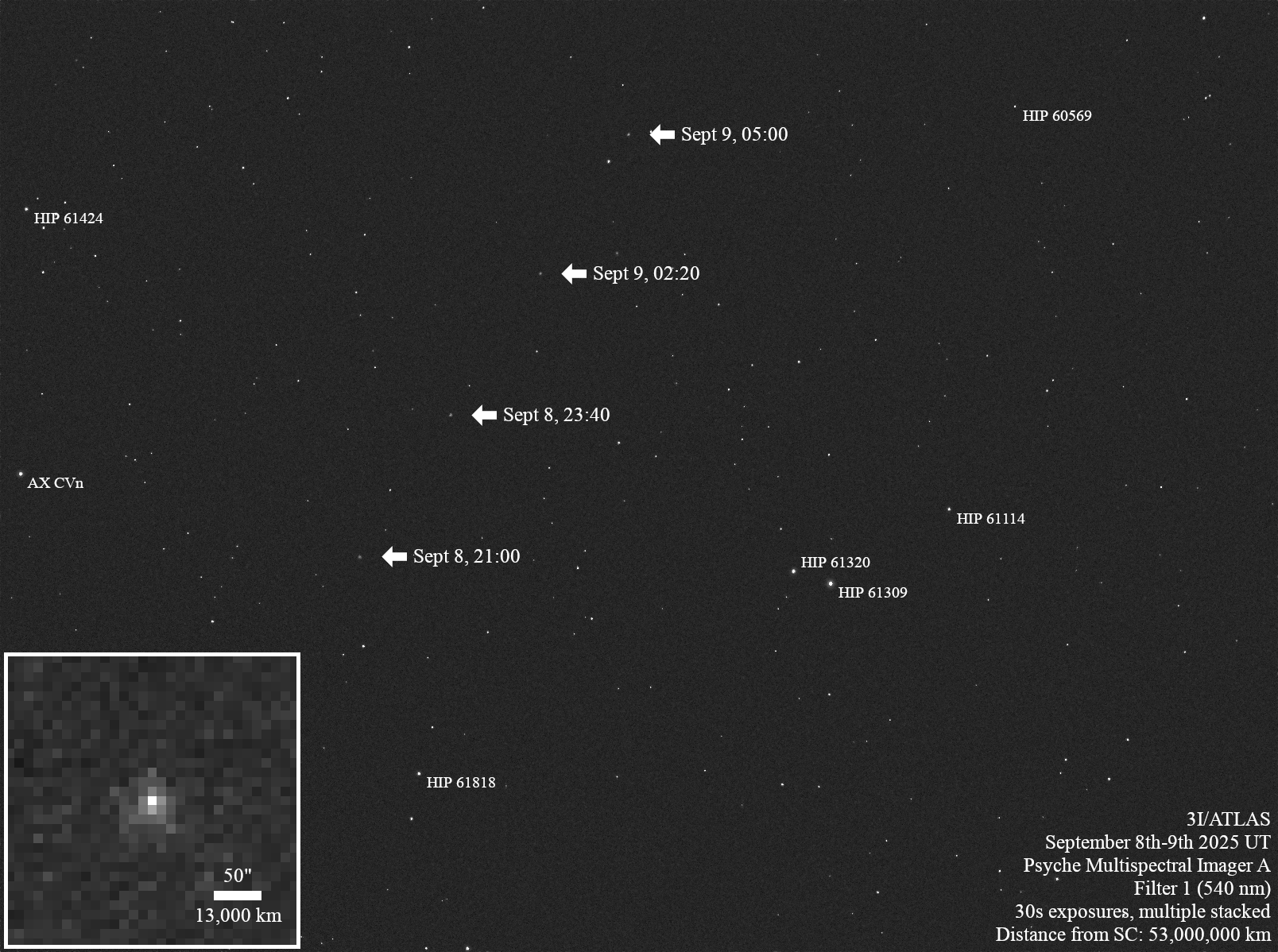
A predominantly black view of space is dotted with white stars, some of them labeled with names. Moving upward through the image, small white arrows indicate the position of interstellar comet 3I/ATLAS as it moves in front of the starfield, with date and time of four Psyche observations labeled. The comet appears slightly fuzzy compared with the pinpoint stars in the background. The inset in the bottom left shows a zoomed in and pixelated view of the comet

Sept. 8-9, 2025: Psyche

The Psyche spacecraft captured four observations of 3I/ATLAS over eight hours.
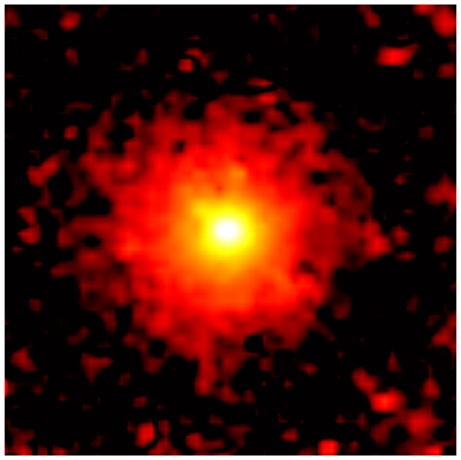
Against a black background is a red circle, which appears fuzzy and slightly pixelated. At the center is a bright area of yellow, and at the center of that is a bright area of white.

Aug. 7-15, 2025: SPHEREx

NASA’s SPHEREx mission observed the interstellar comet 3I/ATLAS for about a week.
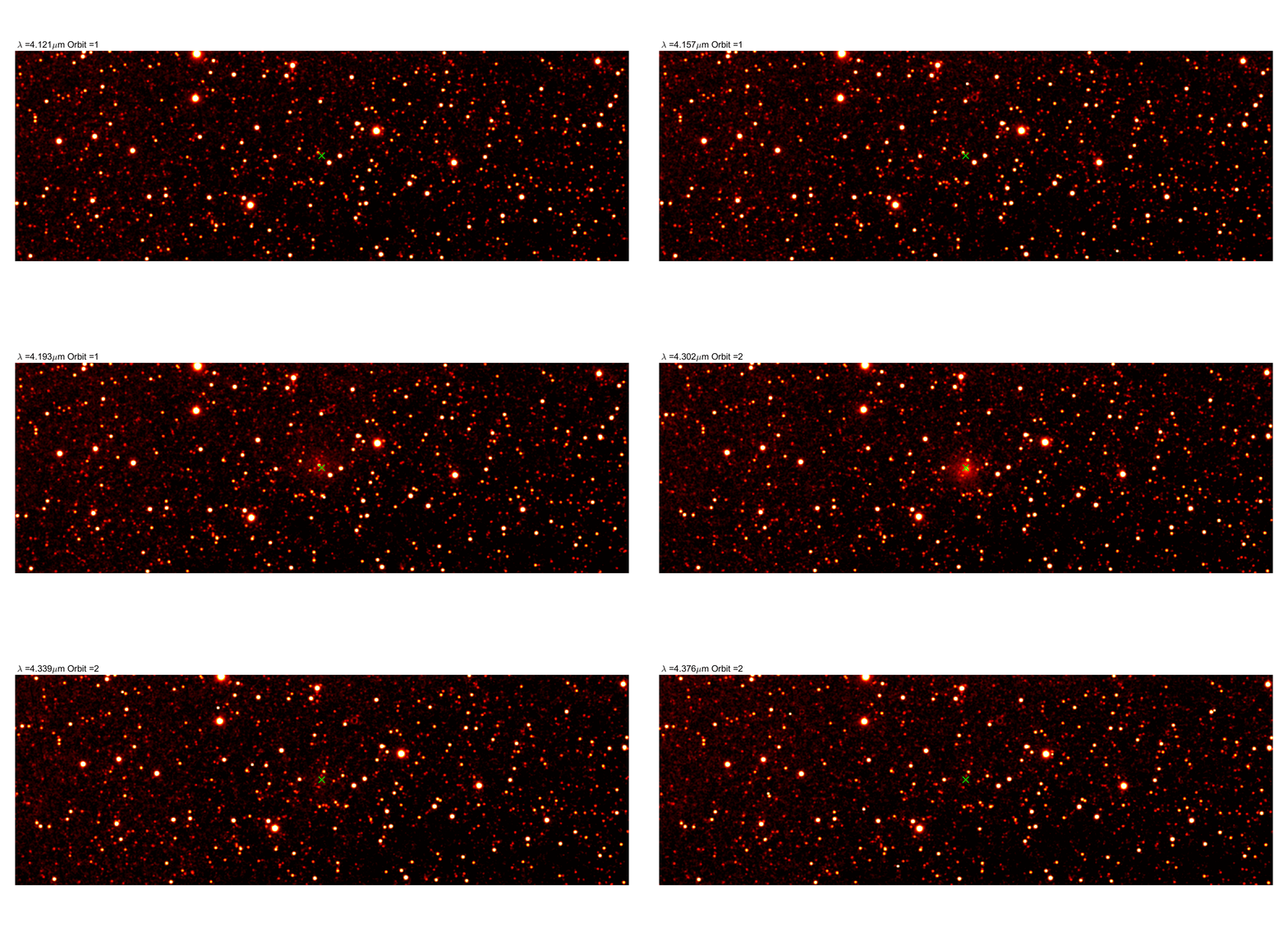
This horizontal moving image shows red and white blotches against a black background. In the middle, a bright red, yellow, and white object gets bigger.

Aug. 7-15, 2025: SPHEREx (.gif)

NASA’s SPHEREx mission observed the interstellar comet 3I/ATLAS for about a week.
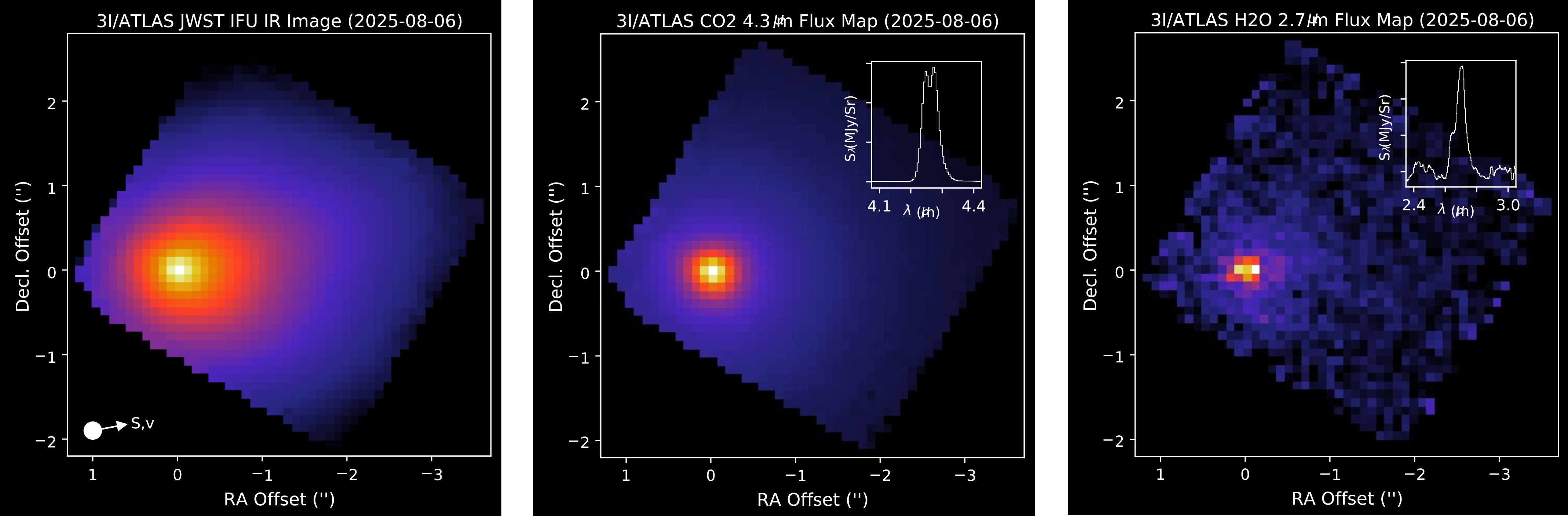
Three charts with the X axis labeled RA Offset and the Y axis labeled Decl. Offset. There is a blue diamond and on the middle height, to the left there is a red and yellow dot.

Aug. 6, 2025: James Webb Space Telescope

NASA’s James Webb Space Telescope observed interstellar comet 3I/ATLAS with its Near-Infrared Spectrograph instrument.
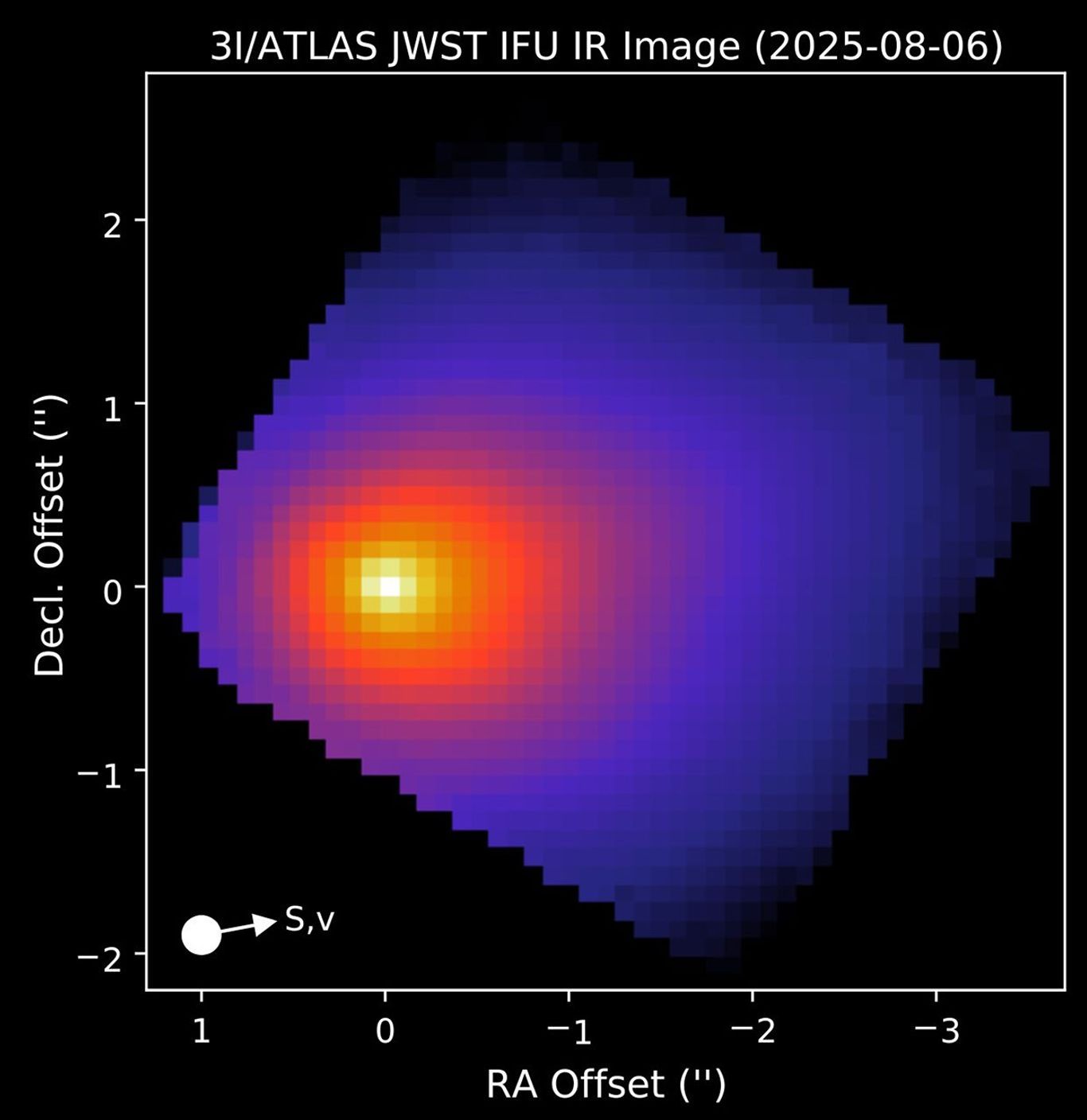
A chart with the X axis labeled RA Offset and the Y axis labeled Decl. Offset. There is a blue diamond and on the middle height, to the left there is a red and yellow dot.

Aug. 6, 2025: James Webb Space Telescope

NASA’s James Webb Space Telescope observed interstellar comet 3I/ATLAS with its Near-Infrared Spectrograph instrument. 

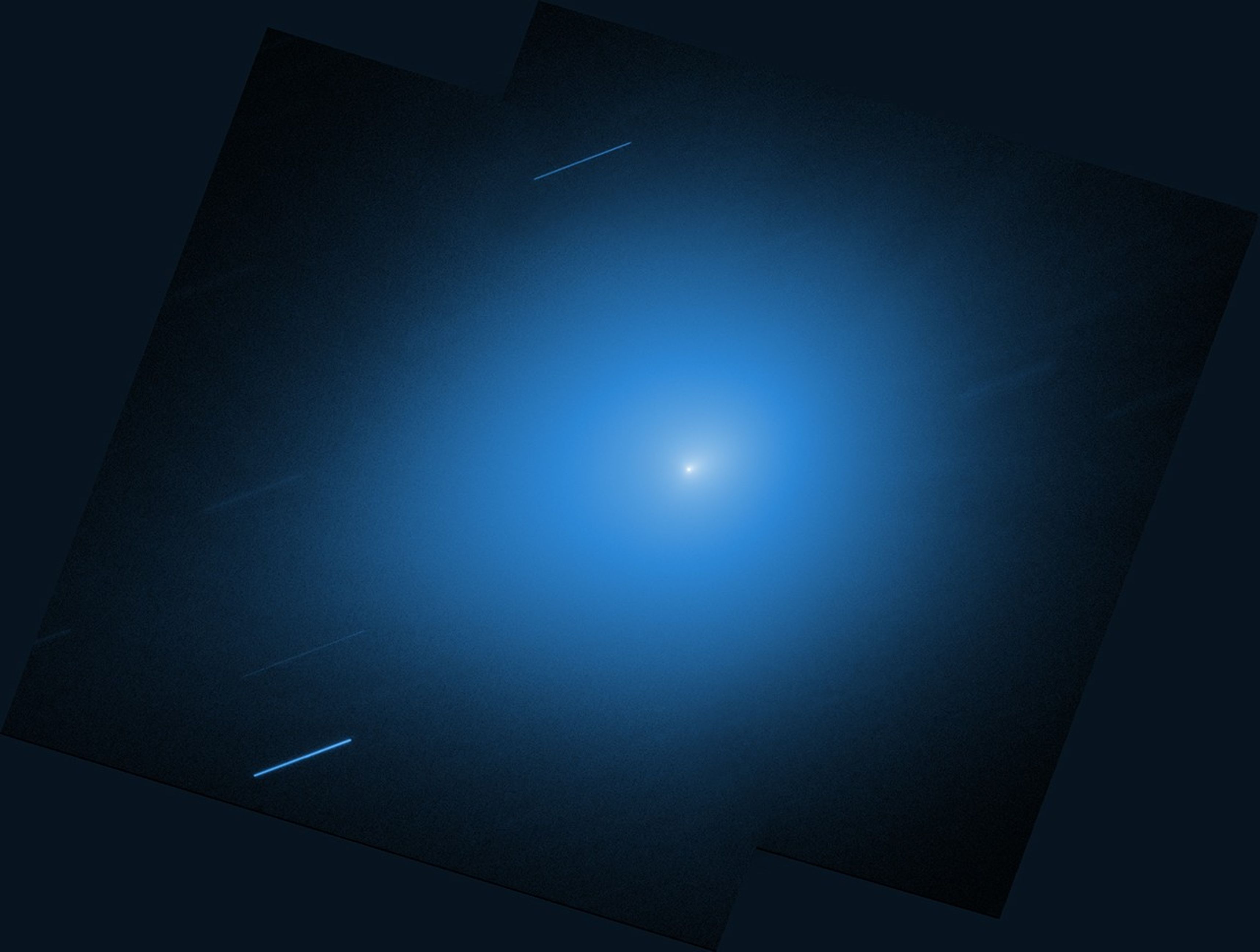
At the center of the image is a comet that appears as a teardrop-shaped bluish cocoon of dust coming off the comet’s solid, icy nucleus and seen against a black background. The comet appears to be heading to the bottom left corner of the image. About a dozen short, light blue diagonal streaks are seen scattered across the image, which are from background stars that appeared to move during the exposure because the telescope was tracking the moving comet.

July 21, 2025: Hubble Space Telescope

Hubble captured this image of the interstellar comet 3I/ATLAS when the comet was 277 million miles from Earth.

This animation shows the observations of comet 3I/ATLAS when it was discovered on July 1, 2025. The NASA-funded ATLAS survey telescope in Chile first reported that the comet originated from interstellar space.

July 1, 2025: ATLAS Survey Telescope (.gif)

This animation shows the observations of comet 3I/ATLAS when it was discovered on July 1, 2025 by the NASA-funded ATLAS survey telescope in Chile.
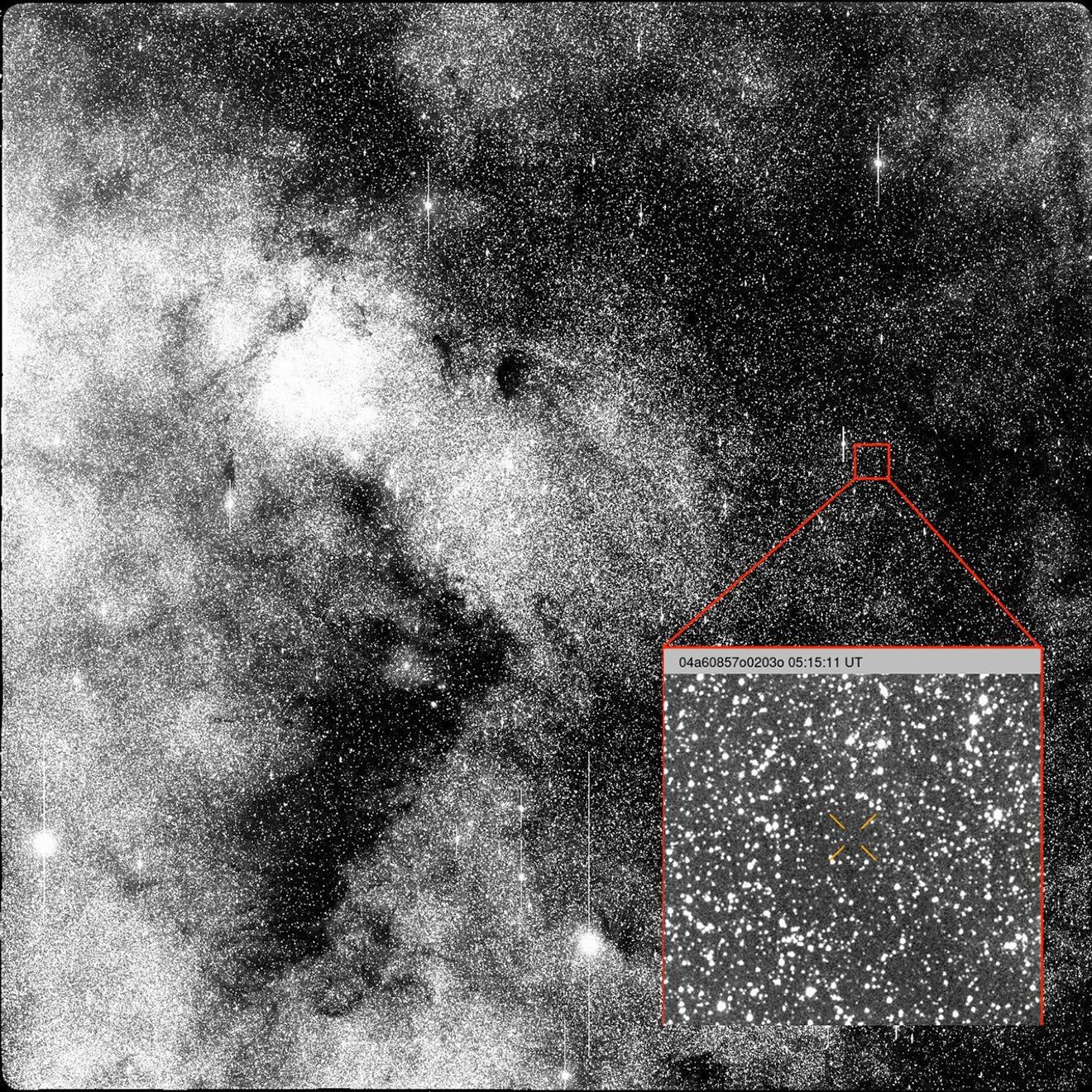
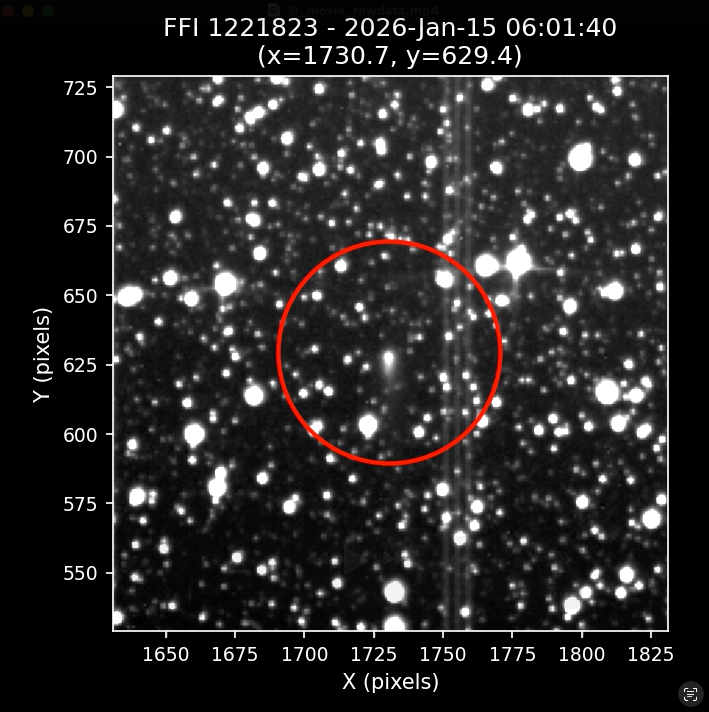
Black and white star field with a red inset showing a close up view with orange crosshairs around a tiny white dot, representing the interstellar comet.

July 1, 2025: ATLAS Survey Telescope: First Image

This image shows the observation of comet 3I/ATLAS when it was discovered on July 1, 2025. The NASA-funded ATLAS survey telescope in Chile first reported that the comet originated from interstellar space.

Comet 3I/ATLAS Trajectory

NASA Graphics Showing the Trajectory of comet 3I/ATLAS as it moves through our solar system.

Updated: Comet Trajectory (.mp4)

This sequence of four animated views shows the path of comet 3I/ATLAS during its trip through the solar system. The views, which depict different time periods within a range from December 2023 to September 2028, were generated using NASA Eyes on the Solar System, an interactive 3D visualization tool produced by NASA’s Jet Propulsion Laboratory.
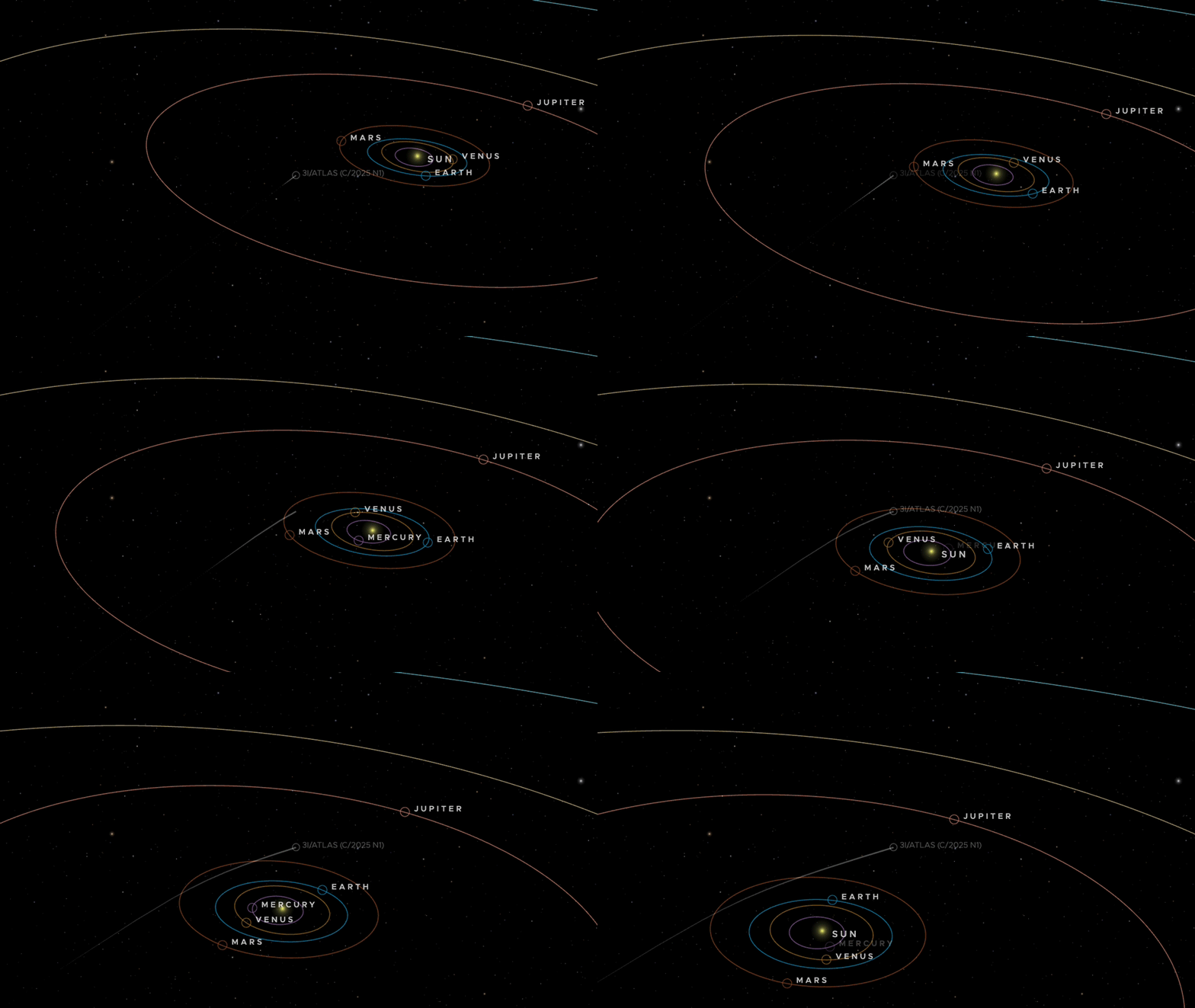
Animation of comet's trajectory through the solar system

Comet Trajectory (.gif)

Animation by NASA Eyes on the Solar System of comet 3I/ATLAS moving through the solar system.
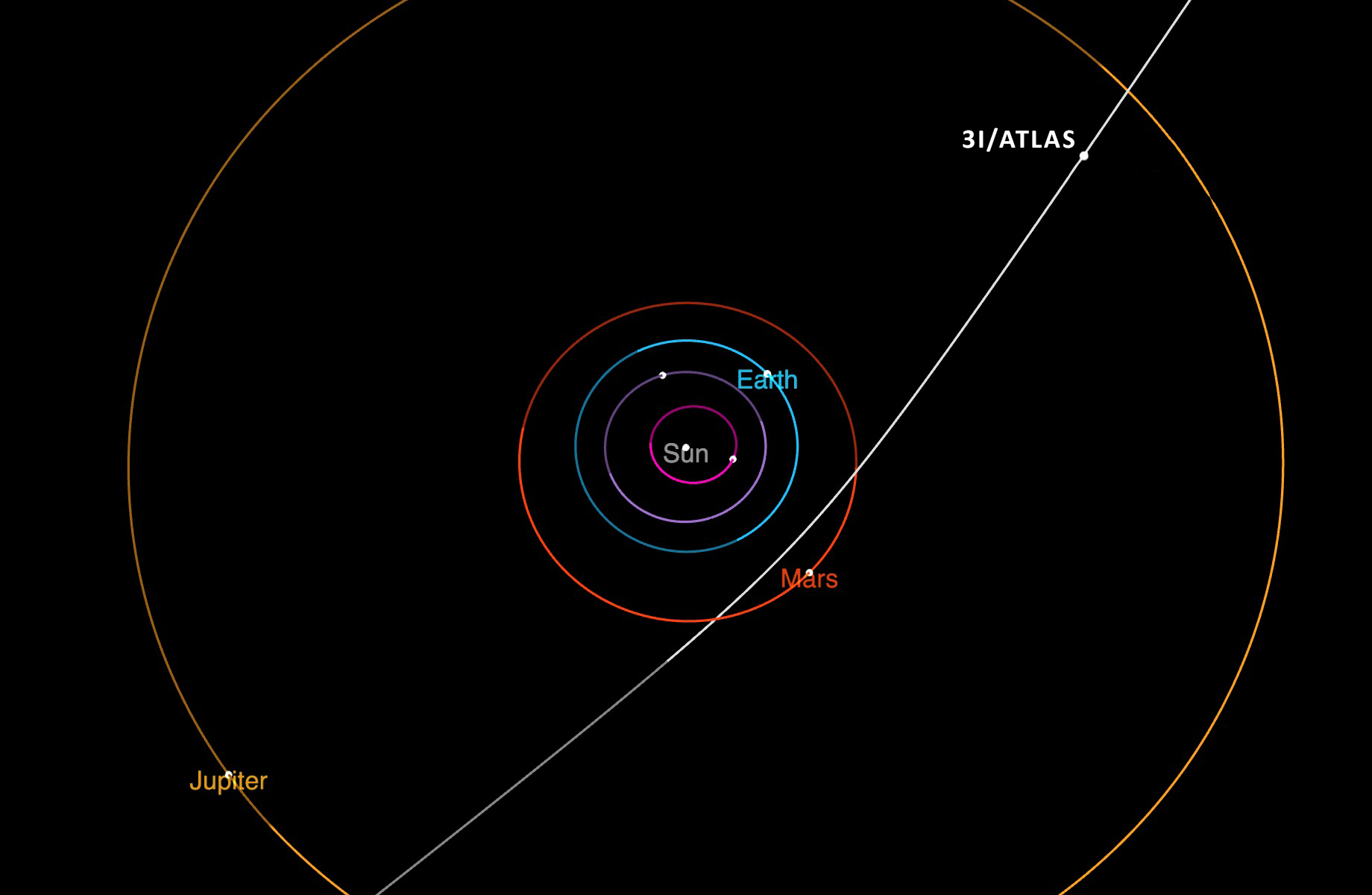
This diagram shows the trajectory of interstellar comet 3I/ATLAS as it passes through the solar system. It will make its closest approach to the Sun in October.

Comet Trajectory (.jpg)

This diagram shows the trajectory of interstellar comet 3I/ATLAS as it passes through the solar system.