




















On Sumatra, a chain of steep mountains runs along the western coast and tapers down to a low-lying coastal plain in the east. There, the land is covered by a mixture of lowland rainforests, peat swamp forests, wetlands, and agricultural lands. People use slash-and-burn deforestation to clear land for agriculture, with negative outcomes for environmental quality not just at the site itself but surrounding ecosystems as well. Fires get out of control and creep into undisturbed forests, degrading them and setting them up for more intense fires later on. Regional air quality is compromised off and on for several months when the burning is severe, as it was in 1998, during an extreme El Niño-induced drought.
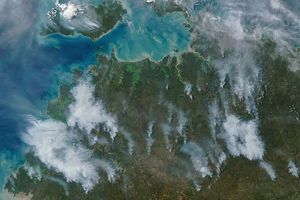
Open burning is banned, but regulation is difficult. This image of burning on the island was captured by the Moderate Resolution Imaging Spectroradiometer (MODIS) on NASAâs Aqua satellite on October 14, 2004. Active fires are marked in red, and are most abundant in the area around the city Palembang, to the right of image center. Meanwhile, to the east, fires in the Kalimantan, Indonesia, portion of the island of Borneo are contributing to the regional haze.
References & Resources
NASA image created by Jesse Allen, Earth Observatory, using data obtained from the MODIS Rapid Response team.