

















Bezymianny Volcano on the Kamchatka Peninsula in Russia's Far East rises to a summit elevation of 2,882 meters (9,455 feet). The name, which translates to “no name,” was likely bestowed because the stratovolcano had been quiet for a thousand years at the time it was named. Until late 1955, when it awakened with a cataclysmic eruption, the volcano was considered extinct. Bezymianny has been erupting intermittently ever since.
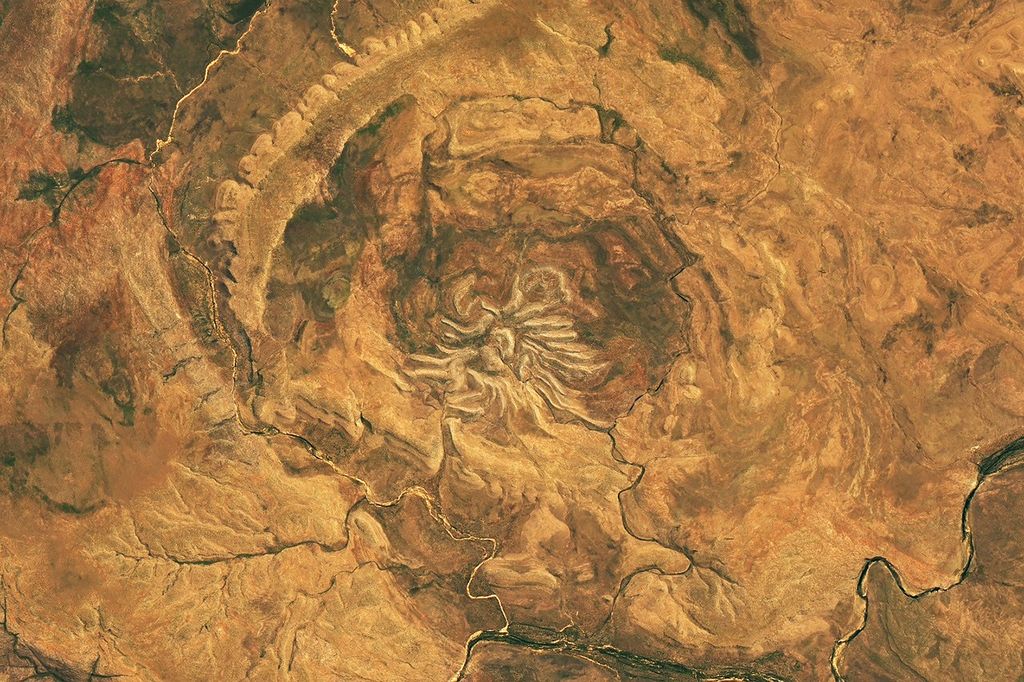
The 1955–1956 eruption was very similar to the 1980 eruption of Mount St. Helens, with a lateral flank explosion and summit collapse producing a mile-wide horseshoe-shaped crater. Continuing volcanic activity, including the resurgence of a lava dome and pyroclastic flows, has since filled in the 1956 crater.
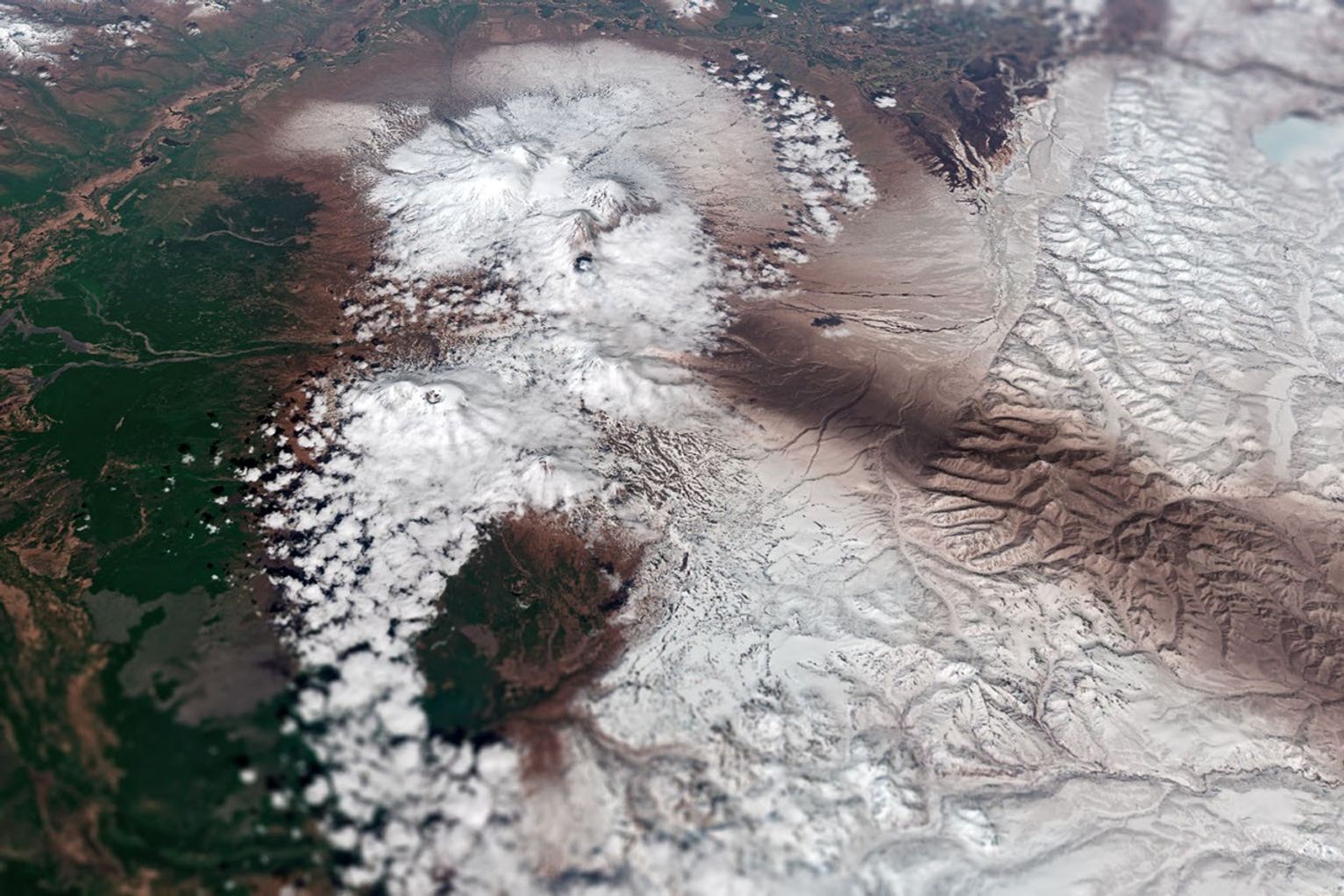
On May 28, 2022, Bezymianny erupted again with a strong explosion and large ash plume recorded by observers at the Kamchatka Volcanological Station. The ejected ash ultimately reached an altitude of 15 kilometers (9.3 miles) and traveled east-southeast for more than 1,600 kilometers (1,000 miles). As the plume drifted over the peninsula toward the Pacific Ocean, it deposited a layer of ash on the snow-covered ground.
The streak of ash is visible in this image, acquired on May 29, 2022, by the Operational Land Imager (OLI) on Landsat 8. The image is overlain on topography data from the NASA Digital Elevation Model. Bezymianny is seen next to two larger neighboring volcanoes, Kamen and Klyuchevskaya.
The recent eruption continued through June 3 “characterized by strong fumarolic emissions, lava-dome incandescence, explosions, and hot avalanches,” according to reports from the Kamchatkan Volcanic Eruption Response Team compiled by the Smithsonian Global Volcanism Program. The ash cloud prompted a red-level aviation alertbefore being lowered to orange; the second highest alert on a four-level, color-coded scale.
The Kamchatka Peninsula is home to more than 300 volcanoes, 20 of which are active, making it one of the most volcanically and geothermally active regions in the world. The peninsula rides on the Okhotsk Plate, with the Pacific Plate diving under it at a rate of 8 to 10 centimeters per year. Magma generated by the descent of the Pacific Plate into the submarine Kuril-Kamchatka Trench has given rise to three volcanic arcs, or arcuate ranges of volcanoes, on the peninsula above.
References & Resources
- Jones, V., & Solomina, O. (2015) The geography of Kamchatka. Global and Planetary Change, Vol. 134.
- NASA Earth Observatory (2014, September 25) Volcanoes of Kamchatka.
- NASA Earth Observatory (2013, February 3) Four Erupting Volcanoes on the Kamchatka Peninsula.
- NASA Earth Observatory (2010, December 6) Kamchatka Volcanoes.
- Global Volcanism Program (2022) Report on Bezymianny (Russia) In: Sennert, S.K. (ed.), Weekly Volcanic Activity Report, 1 Juneâ7 June 2022. Smithsonian Institution and U.S. Geological Survey. Accessed June 10, 2022.
- Global Volcanism Program (2022) Report on Bezymianny (Russia) In: Mayberry, G. (ed.), Weekly Volcanic Activity Report 25 Mayâ31 May 2022. Smithsonian Institution and U.S. Geological Survey. Accessed June 10, 2022.
NASA Earth Observatory image by Joshua Stevens , using Landsat data from the U.S. Geological Survey and topographic data from NASADEM . Story by Sara E. Pratt .