






















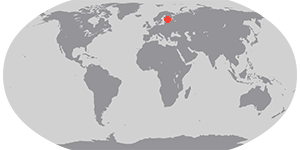


Combine dissolved nutrients, abundant summer sunlight, and seasonally warm waters and you have the makings of a phytoplankton bloom in just about any sea in the world. In the central and eastern Baltic Sea, near the shores of Finland and Estonia, that recipe usually produces blue-green algae, as it did in the summer of 2022.
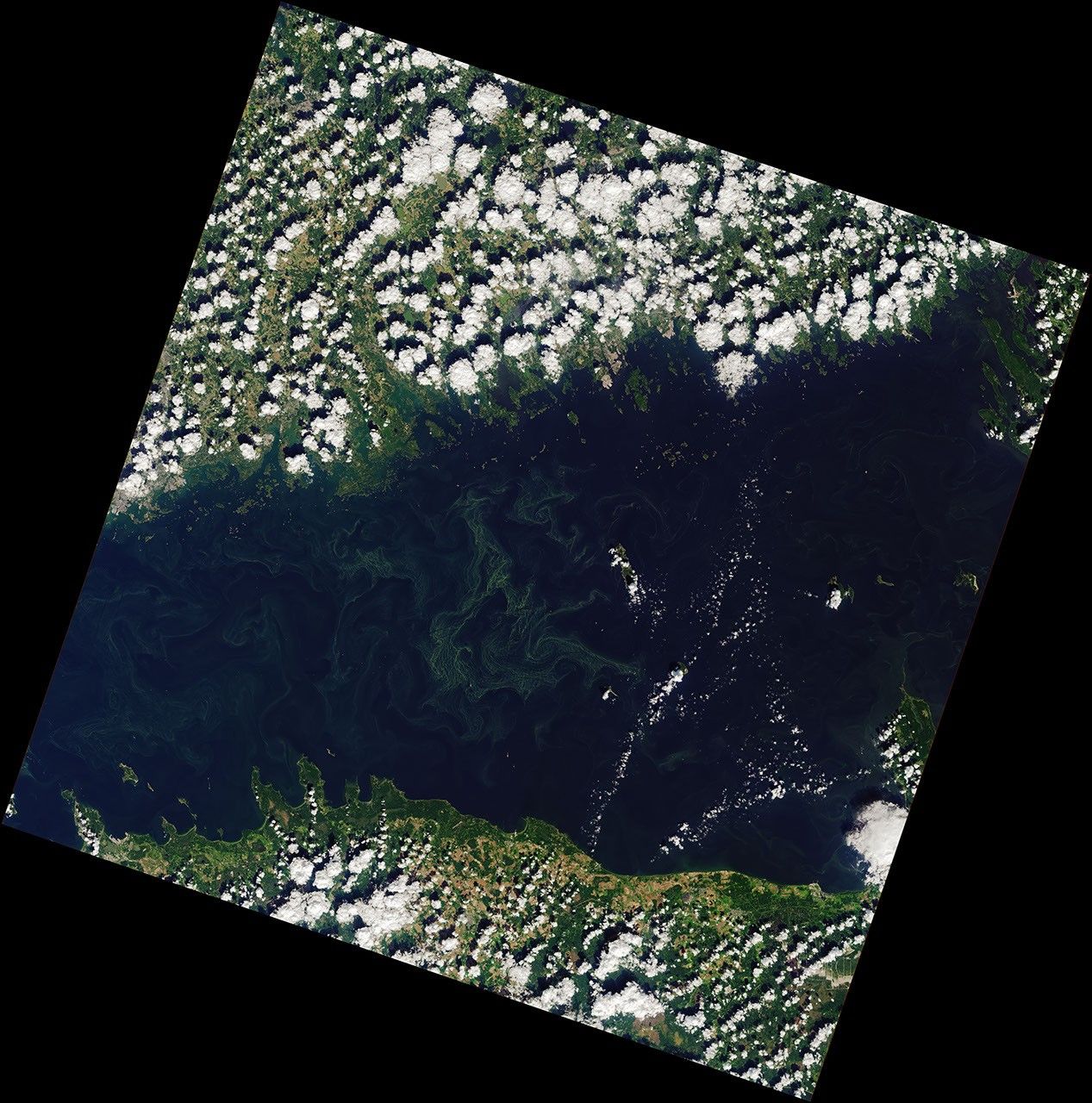
The formal name for these floating, plant-like organisms is cyanobacteria, though they are popularly referred to as blue-green algae. These single-celled algae are among the oldest life forms on Earth, and they rely on photosynthesis to turn sunlight into food. Cyanobacteria grow swiftly when nutrients like phosphorus and nitrogen are abundant in calm waters, multiplying and aggregating into vast stringy masses that can span hundreds of kilometers. Some forms of cyanobacteria produce a toxin known as microcystin that can sicken people and animals, contaminate drinking water, and force closures of boating and swimming sites.
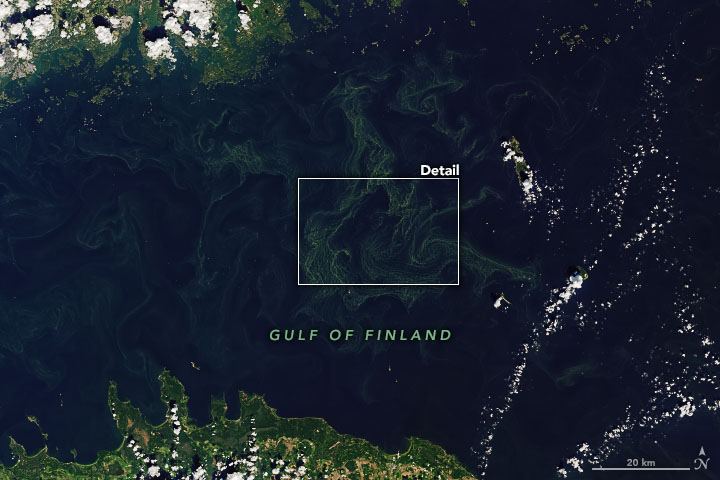
On August 9, 2022, the Operational Land Imager (OLI) on Landsat 8 acquired natural-color imagery (above) of swirls of blue-green algae in the Gulf of Finland. While cyanobacteria have been identified by marine scientists as the dominant bloomer in the region this year, it is possible that some of the greens in the images could come from diatoms, which are also rich in chlorophyll.
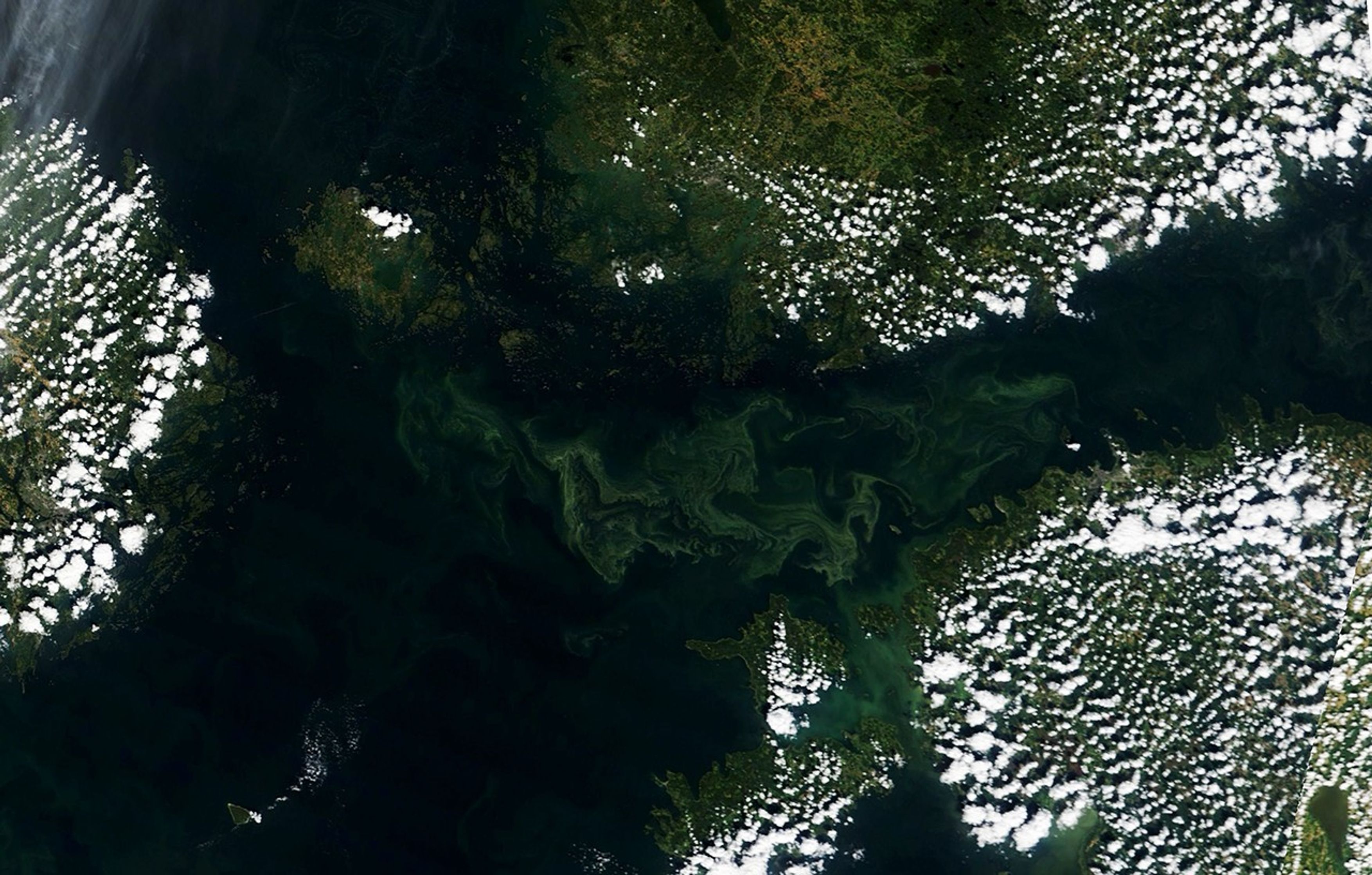
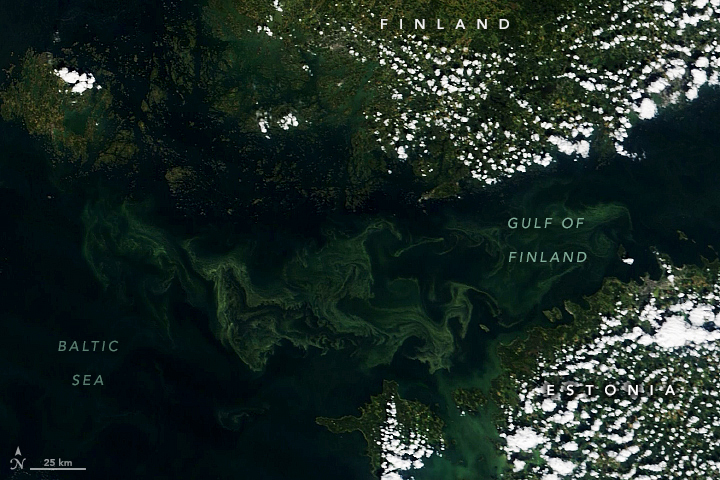
The Moderate Resolution Imaging Spectroradiometer (MODIS) on NASA’s Terra satellite acquired wider views of the blooms on August 9 (below) and on August 14. On August 8, the Copernicus Sentinel-2 satellite also acquired an image of the bloom.
“There have been blue-green algal blooms in the Baltic Sea since historical times, but I would say that the coverage of these blooms has increased since the 1990s,” said Mika Raateoja, a marine scientist at the SYKE Finnish Environment Institute. “The nutrient content of the Baltic Sea is at such a high level these days that it enables large blooms to occur every year. Whether they do this depends on the summertime weather.”
In a report posted on August 18, a SYKE research team that tracks blooms reported: “In sea areas, the amounts of cyanobacteria are still higher than the long-term average, but wind has caused the cyanobacteria to mix with water. Calm and warm weather...can increase the number of cyanobacterial surface blooms in late summer.” At the start of summer, the researchers correctly predicted that “the risk of large cyanobacterial blooms in Finnish sea areas this summer remains at the same level as previous summers, as nutrient levels in the Baltic Sea remain largely unchanged.”
“We track the seasonal succession of the blue-green algal blooms in the Baltic Sea every year because of the possible toxic impact these blooms can have to people and domestic animals,” Raateoja said. “Right now there is a mixture of toxic and non-toxic blue-green algal species in these accumulations.”
While many phytoplankton species reproduce best in somewhat cooler water, blue-green algae thrive when the air and water are warmer. Blooms in the Gulf of Finland typically peak in late July and early August. It is possible the blooms in 2022 have been influenced or amplified by the successive heat waves that have washed over Europe.
Around the Gulf of Finland, the Gulf of Bothnia (to the northwest), and the Baltic Sea, water temperatures appear favorable for blooms to continue (if there are sufficient nutrients). The NASA JPL sea surface temperature anomaly dataset showed waters on August 17 to be 2 to 3 degrees Celsius (3.5 to 5.5 degrees Fahrenheit) warmer than normal.
References & Resources
- European Scientist (2018, July 6) Scientists warn of unprecedented oxygen loss in Baltic Sea. Accessed August 18, 2022.
- European Geosciences Union (2018, July 5) New study: oxygen loss in the coastal Baltic Sea is âunprecedentedly severe.â Accessed August 18, 2022.
- SYKE Finnish Environment Institute (2022, August 18) Cyanobacterial observations still higher than average, warm and calm weather may further increase surface blooms in late summer. Accessed August 18, 2022.
- SYKE Finnish Environment Institute (2022, August 11) Warm weather has increased the number of cyanobacterial observations at sea and in inland waters. Accessed August 18, 2022.
- SYKE Finnish Environment Institute (2022, July 28) The poor cyanobacterial situation at seahas improved somewhat, small amounts of cyanobacteria in lakes. Accessed August 18, 2022.
- SYKE Finnish Environment Institute (2022, June 2) Risk of cyanobacterial blooms is considerable in Finnish sea areas this summer. Accessed August 18, 2022.
- NASA Earth Observatory (2015, August 23) Blooming Baltic Sea.
- NASA Earth Observatory (2010, July 13) What are Phytoplankton?
- YLE Finland (2022, July 22) Toxic blue-green algae blooms grow in Archipelago Sea, Gulf of Finland. Accessed August 18, 2022.
- YLE Finland (2022, July 22) Toxic blue-green algae blooms grow in Archipelago Sea, Gulf of Finland. Accessed August 18, 2022.
- YLE Finland (2022, July 15) Environmental agency: Nearly entire Gulf of Finland overrun with blue-green algae. Accessed August 18, 2022.
NASA Earth Observatory images by Joshua Stevens and Lauren Dauphin, using Landsat data from the U.S. Geological Survey and MODIS data from NASA EOSDIS LANCE and GIBS/Worldview . Story by Michael Carlowicz .