

















Mars Odyssey
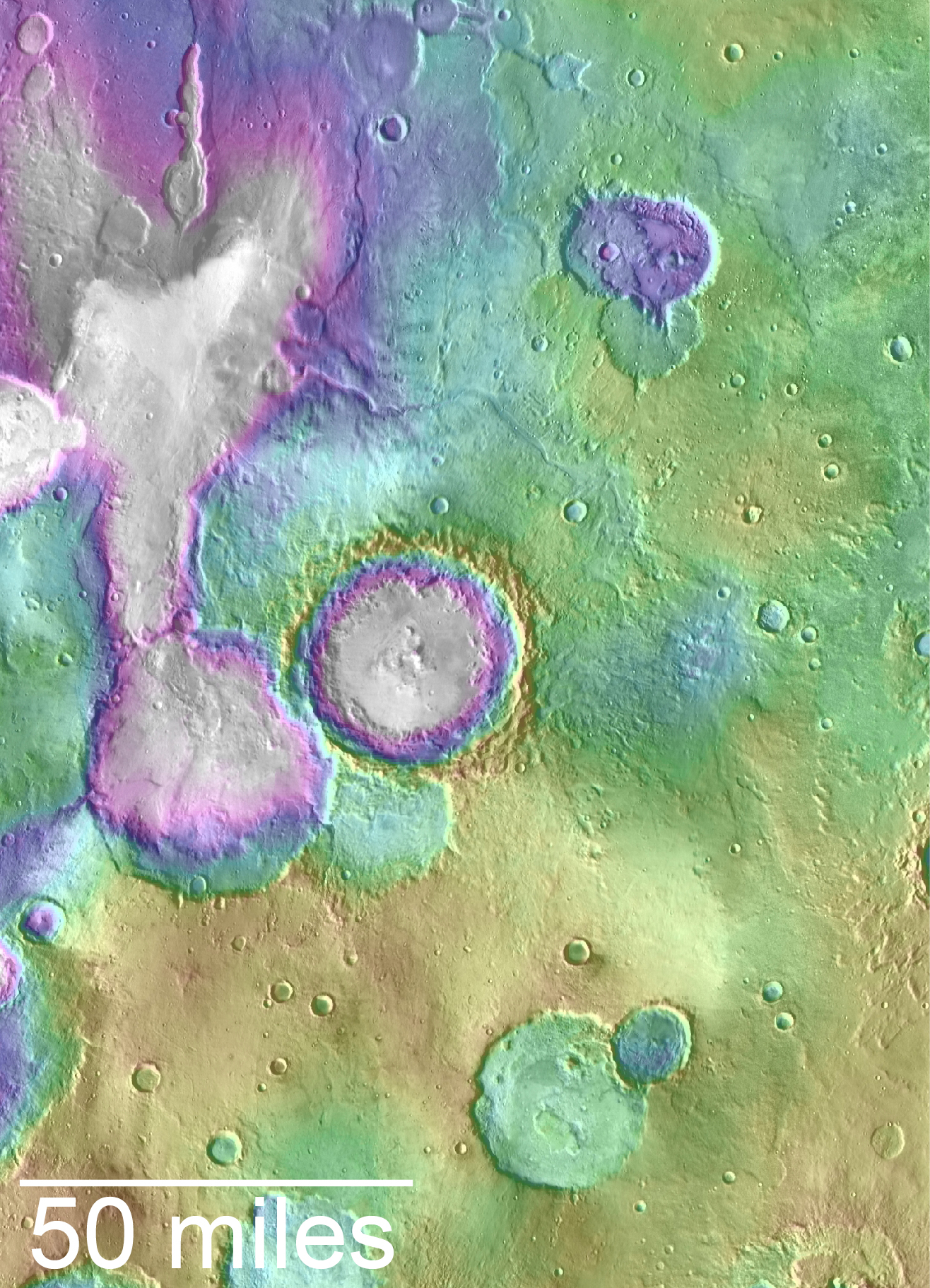
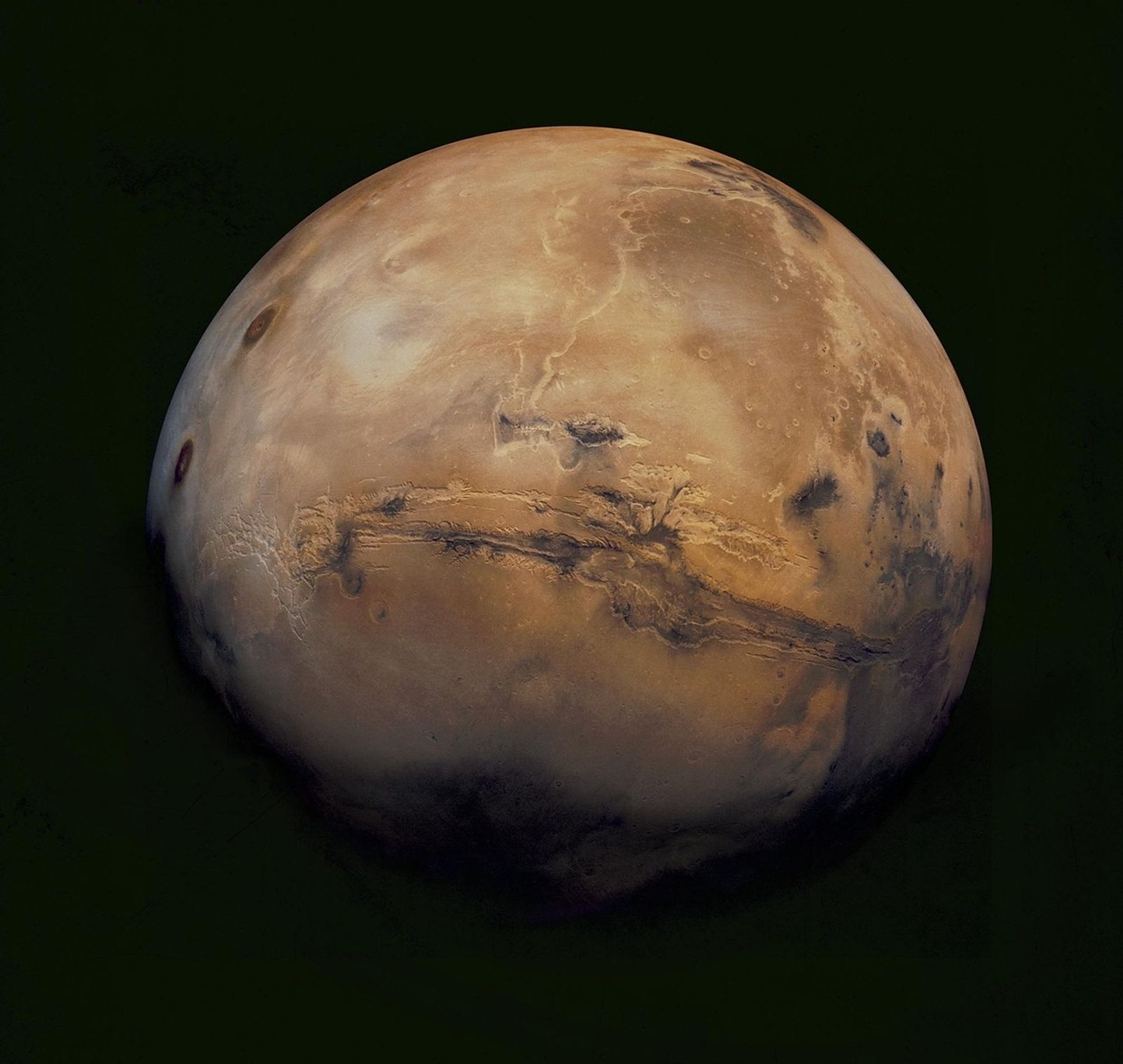
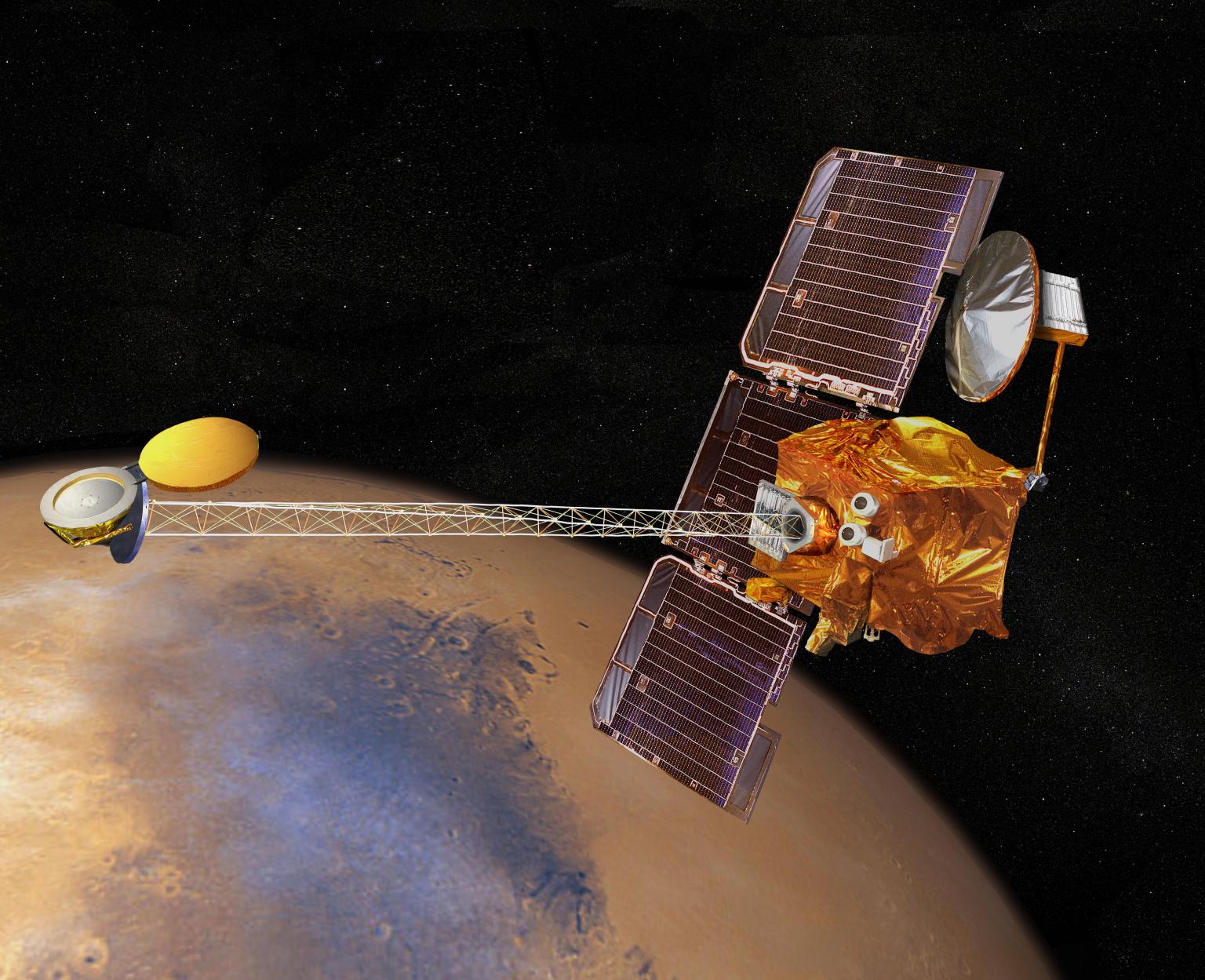
NASA’s 2001 Mars Odyssey mission created the first global map of chemical elements and minerals that make up the Martian surface.
Odyssey Celebrates 25 Years
No mission has been active at Mars longer than 2001 Mars Odyssey, which launched on April 7, 2001, and arrived at the Red Planet on Oct. 24, 2001.
Learn More
Meet the Mars Odyssey Orbiter
Key Facts
| Launch | April 7, 2001, 11:02 am EST |
| Launch Location | Cape Canaveral Air Force Station, Florida |
| Cruise | April-October 2001 |
| Mars Orbit Insertion | Oct. 24, 2001 |
| Rocket | Delta II 7925 |
| Mission Duration | 2001 - ongoing |
What Would Mars Look Like for an Astronaut in Orbit?
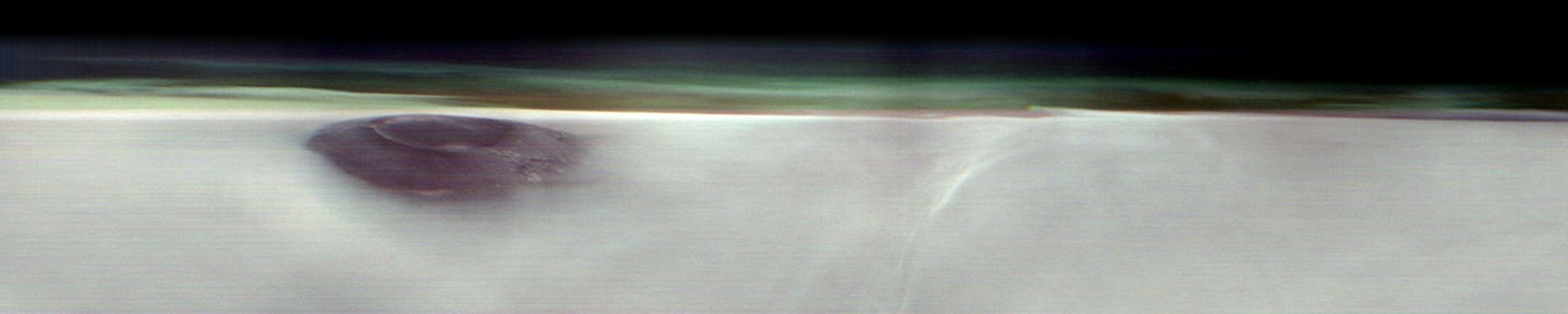
NASA's Mars Odyssey orbiter, which will mark 25 years in orbit in 2026, during which it's made more than 100,000 trips around the Red Planet, captured the first-ever views of Mars that showcase the curving horizon and layers of atmosphere. Taken from an altitude of about 250 miles (400 kilometers), the same altitude at which the International Space Station flies above Earth, the views of Mars are similar to what an astronaut on board the ISS sees of Earth. While there are no astronauts yet at Mars, this view gives us a sense of what they might see, including gauzy layers of clouds and dust.
Learn More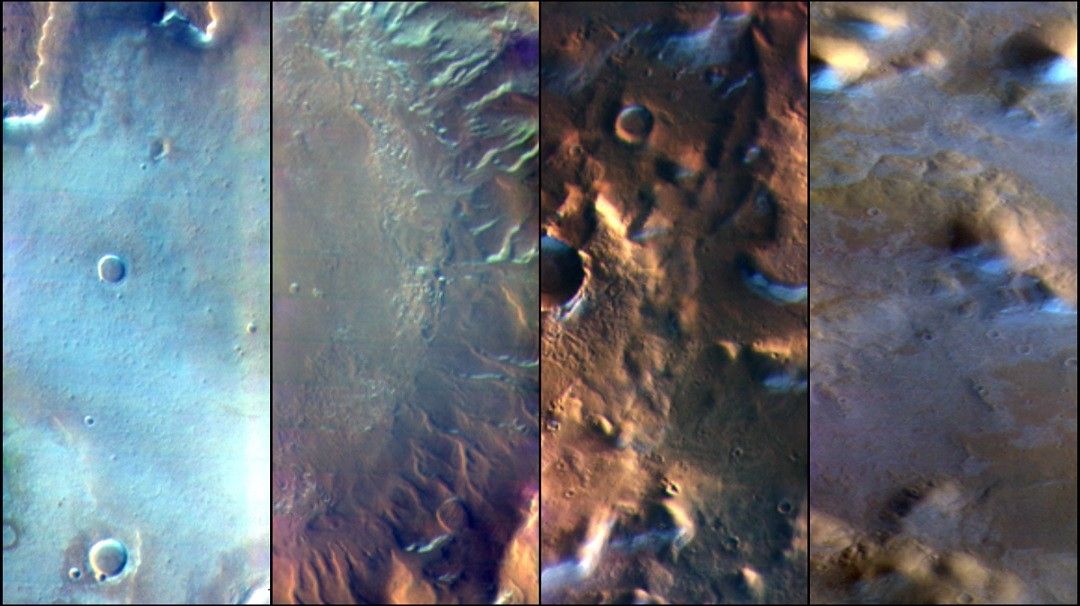
Tech Specs
| Dimensions | 7.2 feet (2.2 meters) long 5.6 feet (1.7 meters) tall 8.5 feet (2.6 meters) wide |
| Total Weight | 1,598.4 pounds (725.0 kilograms) |
| Command and Data Handling Subsystem | The heart of this subsystem is a RAD6000 computer, a radiation-hardened version of the PowerPC chip once used on most Macintosh computers. With 128 megabytes of random access memory (RAM) and three megabytes of non-volatile memory, which allows the system to maintain data even without power, the subsystem runs Odyssey's flight software and controls the spacecraft through interface electronics. The entire command and data handling subsystem weighs 24.5 pounds (11.1 kilograms). |
| Power | Electrical power subsystem weighs 189.6 pounds (86.0 kilograms). |
| Propulsion | Uses hydrazine propellant with nitrogen tetroxide as an oxidizer, produces a minimum thrust of 144 pounds of force (65.3 kilograms) of force. Each of the four thrusters used for attitude control produces a thrust of 0.2 pound of force (0.1 kilogram) of force. Four 5.0-pound-force (2.3-kilogram-force) thrusters are used for turning the spacecraft. The entire propulsion subsystem weighs 109.6 pounds (49.7 kilograms). |
| Communications | Odyssey's telecommunications subsystem is composed of both a radio system operating in the X-band microwave frequency range and a system that operates in the ultra high frequency (UHF) range. The X-band system is used for communications between Earth and the orbiter, while the UHF system is used for communications between Odyssey and any landers present on the Martian surface at any given time. The telecommunication subsystem weighs 52.7 pounds (23.9 kilograms). |
Mars Relay Network — 'The Interplanetary Internet'
The Mars Odyssey orbiter's telecommunications systems provide a crucial service for Martian spacecraft, serving as the first link in a communications bridge back to Earth — an "interplanetary Internet" that can be used by numerous international spacecraft in coming years.
Learn More About the Mars Relay Network about Mars Relay Network — 'The Interplanetary Internet'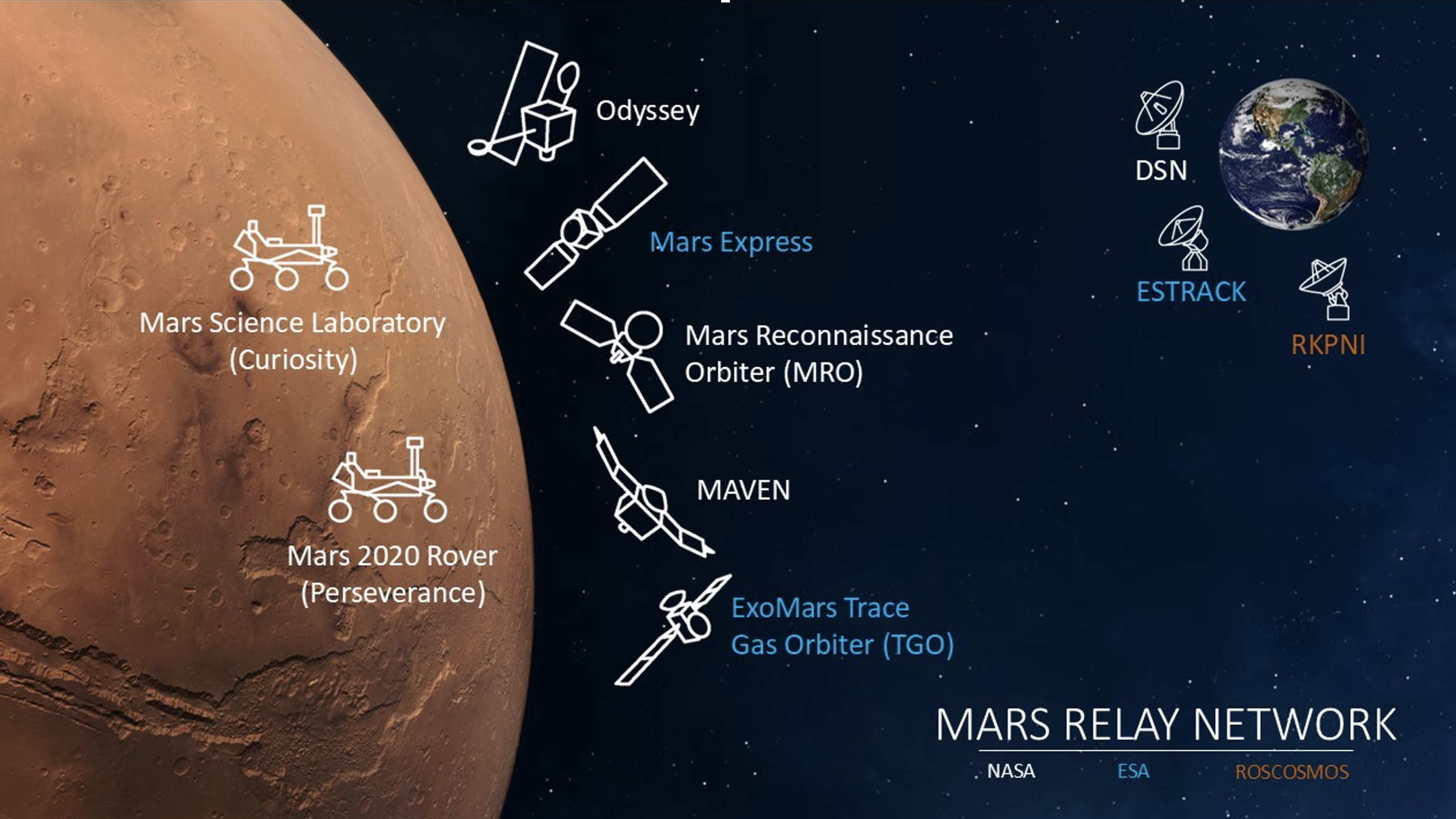
Science
2001 Mars Odyssey has contributed numerous science results supporting the Mars Exploration Program’s overall strategy – “Follow the Water.”
Learn More About Mars Odyssey Science about Science