




















May 10, 2022-May 11, 2023
Spain Browned by Drought
Since the start of the hydrological year, on October 1, 2022, Spain received 28 percent less rain than expected by mid-May 2023, according to Spain’s meteorological agency. The drought dried up reservoirs, parched olive groves, and led to water restrictions across the country.
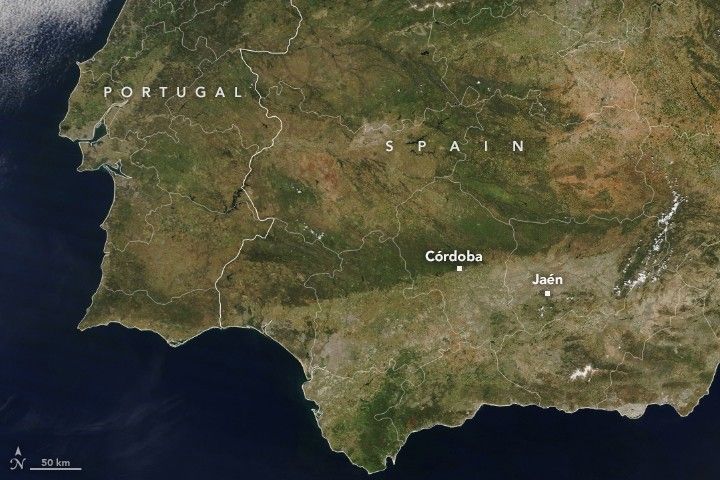
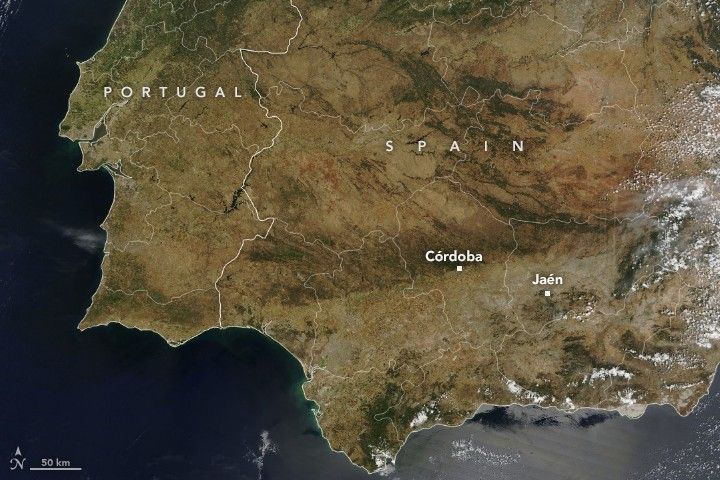
The images above, acquired by the Moderate Resolution Imaging Spectroradiometer (MODIS) on NASA’s Terra satellite, show where green vegetation in May 2022 (left) turned brown by May 2023 (right). The sparse rainfall further parched soils that were already unusually dry in 2022. According to a recent report by Copernicus Climate Change Services, soil moisture across all of Europe in 2022 was the second lowest in the past 50 years.
Unseasonable heat exacerbated the prolonged drought. On April 26, hot air from North Africa swept over southern Spain and pushed the temperature at the Córdoba airport to 38.8°C (101.8°F), the highest April temperature recorded in continental Spain.
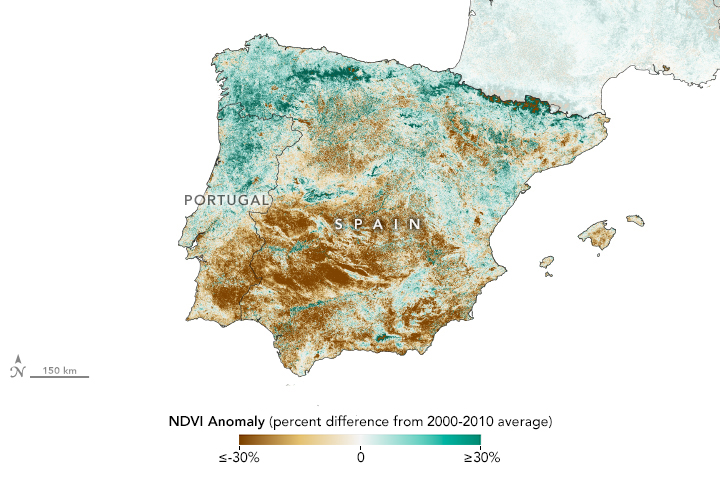
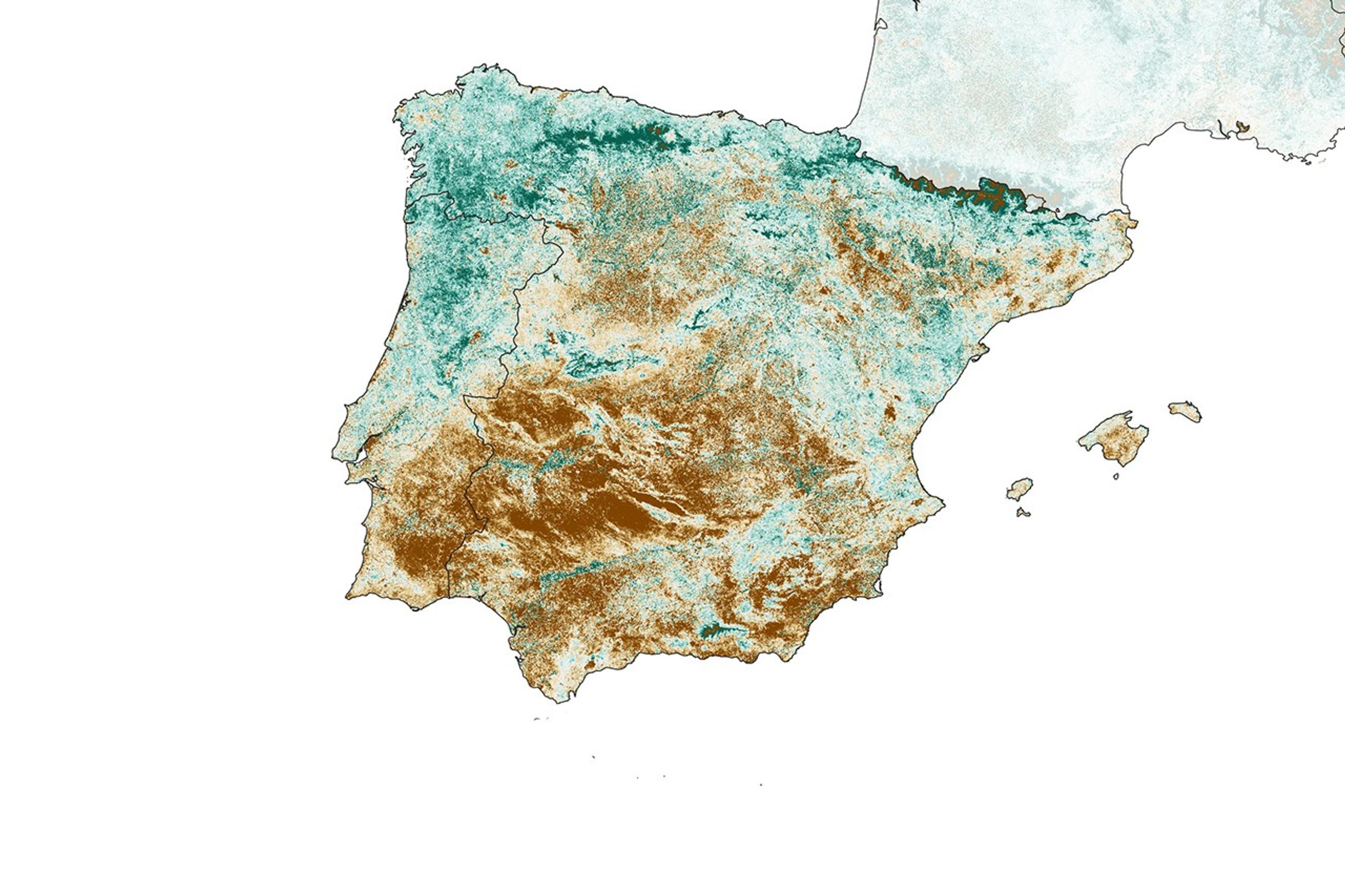
This map indicates where vegetation on the Iberian Peninsula was less healthy than usual (brown) in spring 2023. It shows anomalies in the Normalized Difference Vegetation Index (NDVI)—a satellite-derived product used to assess vegetation conditions.
NDVI depicts the health, or “greenness,” of vegetation based on how much red and near-infrared light the leaves reflect. Healthy vegetation reflects more infrared light and less visible light than stressed vegetation. This map, which uses MODIS data from NASA’s Terra satellite, compares NDVI from March 25 to April 23, 2023, with the longer-term average (2000–2010) for that period.
Notice that southern Spain—a key agricultural region—is especially brown in the map above. The Andalusia region in southern Spain is the largest olive oil producing region in the world. As of May 19, the Córdoba airport had only received about 30 percent of expected rainfall, compared to the 1981–2010 average.
Similarly scant rain fell in Jaén, a few miles east of Córdoba: only 2 centimeters (0.8 inches) of the expected 12.5 centimeters (5 inches) of rain fell through mid-May (16 percent of normal). The region is known for its extra virgin olive oil produced from the Picual olive variety. According to one estimate, the Jaén region of Andalusia produced 25 percent of the global olive oil supply in 2022.
References & Resources
- AEMET (2023, May 11) Summary of the evolution of rainfall in Spain. Accessed May 19, 2023.
- AEMET, via Twitter (2023, April 28) Córdoba temperature record. Accessed May 19, 2023.
- AEMET (2023) Seasonal analysis, Jaén, precipitation accumulation, March to May 2023. Accessed May 19, 2023.
- Copernicus Climate Change Service (2023, April 20) European State of the Climate 2022. Accessed May 19, 2023.
- EuroNews (2023, April 19) Barcelona is heading for a ‘drought emergency’ as water shortages worsen. Accessed May 19, 2023.
- France 24 (2023, April 13) ‘The country is becoming a desert’: Drought-struck Spain is running out of water. Accessed May 19, 2023.
- Galán, C., et al. (2008) Modeling olive crop yield in Andalusia, Spain. Agronomy Journal, 100(1), 98–104.
- NASA Earth Observatory (2000, August 30) Measuring Vegetation (NDVI & EVI).
- NASA Earth Observatory (2023, April 27) Shrinking Reservoirs in Catalonia.
- The Washington Post (2023, May 12) Climate change’s latest victim: the olive oil you cook with. Accessed May 19, 2023.
NASA Earth Observatory images by Allison Nussbaum, using MODIS data from NASA EOSDIS LANCE and GIBS/Worldview . Story by Emily Cassidy .