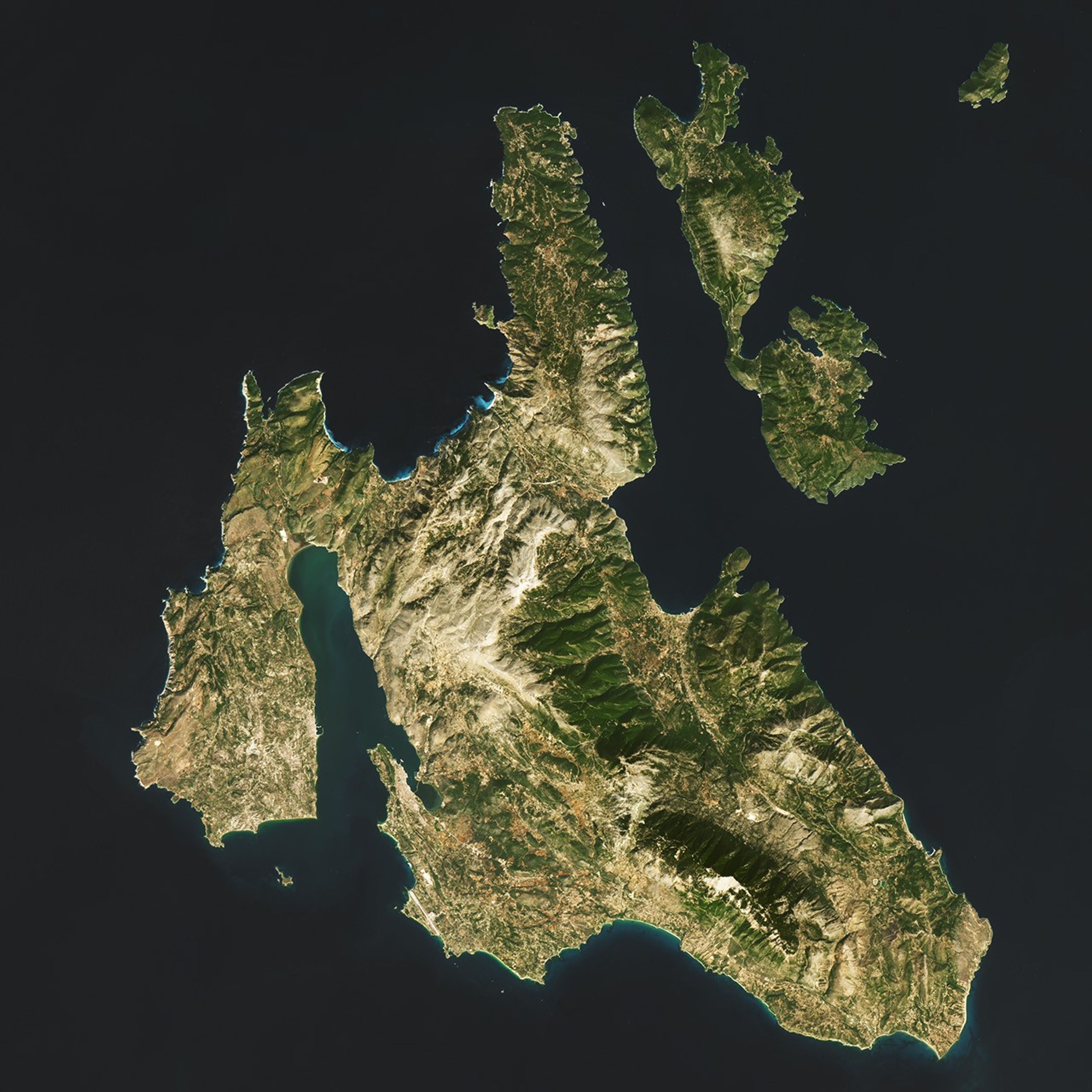




















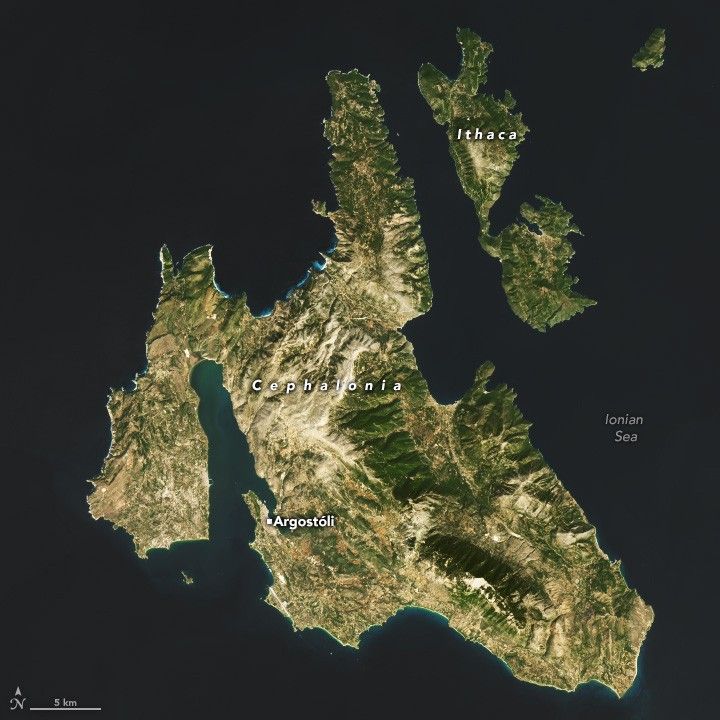
On Cephalonia, an island west of mainland Greece, efforts to conserve trees and prevent fire have had an unintended outcome: the preservation of dark skies.
Cephalonia (Kefalonia) spans 773 square kilometers (298 square miles), making it the largest of Greece’s seven main Ionian islands. The island, along with nearby Ithaca, are visible in this image, acquired on October 9, 2023, with the OLI-2 (Operational Land Imager-2) on Landsat 9. The island’s karstic landscape is rich with caves, sinkholes, and underground streams. Viewed from above, however, the forests stand out.
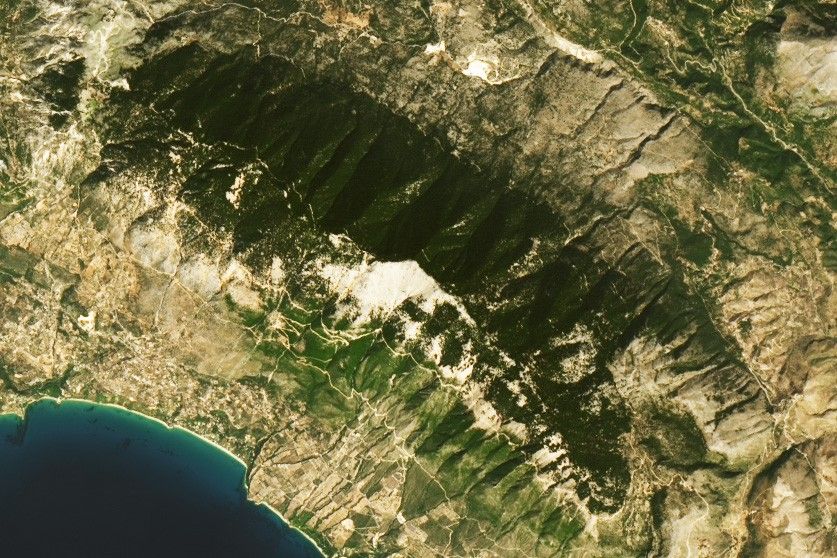
Aínos National Park was established in 1962 primarily to protect its fir forests. The image below shows a detailed view of the southern segment of the national park around Mount Aínos. This massif, along with that of Mount Rudi to the north, comprise the national park. Most of the green in the park’s core area is Cephalonian fir (Abies cephalonica)—classified as a new species, endemic to Greece, in 1838. Black pines (Pinus nigra) are also mixed in, along with various types of shrubs.
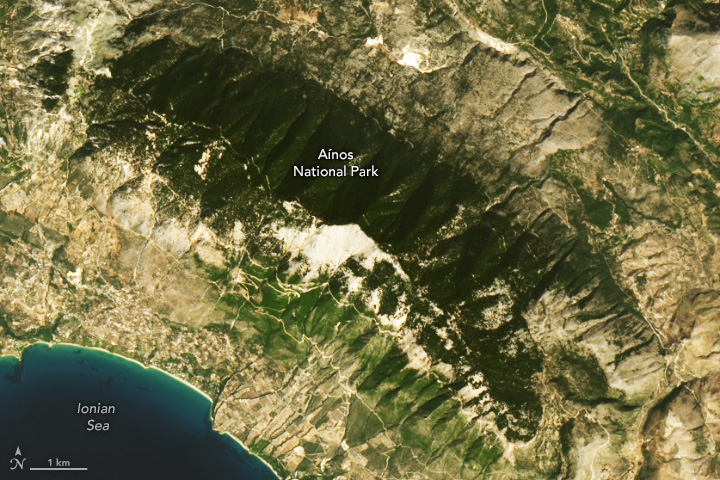
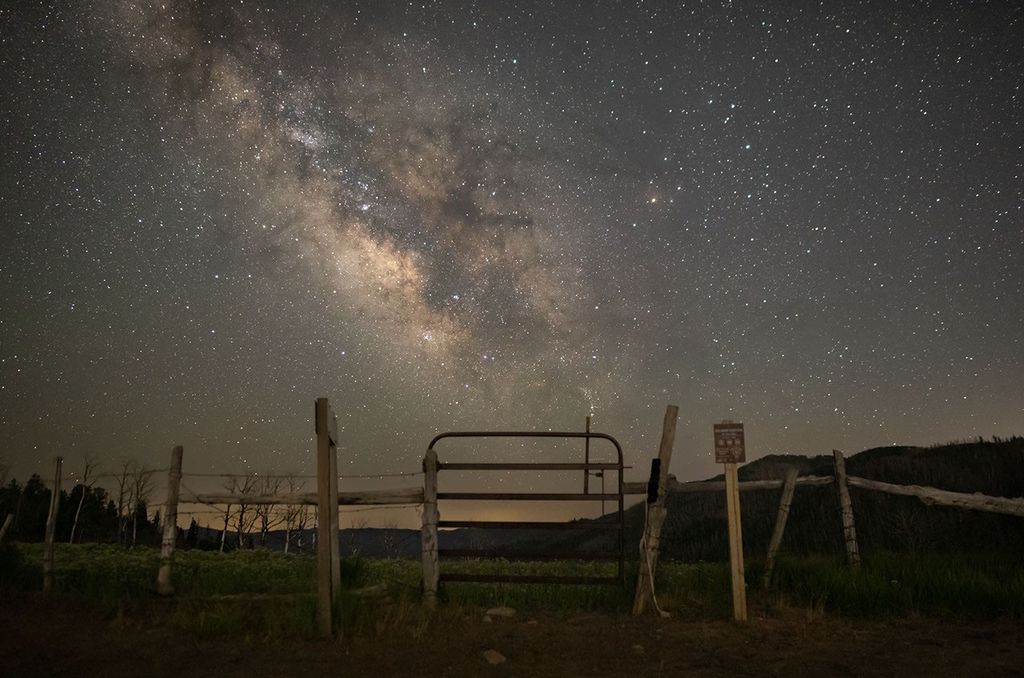
Fire is the main threat to the park’s fir. The flammable trees grow in a windy, dry microclimate with plenty of grasses for fuel. To protect against fire, nighttime access to the park is restricted. The restriction has also inadvertently preserved the park’s exceptionally dark night skies, benefiting the region’s ecology and stargazing opportunities. (Without a history of nighttime visitors, the park never installed artificial exterior lighting).
Still, some patches of artificial light come from the lights on a telecommunication tower outside park property on Mount Aínos, and from the lighted infrastructure of nearby towns such as Argostoli, Cephalonia’s capital. Park officials and dark sky experts spent several years conducting light pollution measurements, installing lighting retrofits, and hosting outreach programs. In June 2023, Aínos National Park became Greece’s first international dark sky park.
Dark skies matter for many of the island’s plants and nocturnal animals. For example, hatchlings of loggerhead turtles that nest on the beaches can become disoriented by artificial light. Dark skies also benefit nighttime sky-gazers. The park now hosts pre-arranged “astro-nights” in which permitted visitors can access the park at night to experience a sky lit by natural sources such as starlight and moonlight.
References & Resources
- Aenos International Dark Sky Park Aenos National Park. Accessed December 8, 2023.
- Aenos International Dark Sky Park Aenos Starry Nights. Accessed December 8, 2023.
- DarkSky (2023, June 9) Aenos National Park. Accessed December 8, 2023.
- DarkSky (2023, June 9) Aenos National Park named first International Dark Sky Park in Greece. Accessed December 8, 2023.
- DarkSky (2016, August 22) Eyes In The Sky: Exploring Global Light Pollution With Satellite Maps. Accessed December 8, 2023.
- Management Body of Aenos National Park History & Civilization. Accessed December 8, 2023.
- NASA Earth Observatory (2014, November 15) Dark Sky Parks. Accessed December 8, 2023.
- Papalambrou, A., et al. (2023) Aenos International Dark-Sky Park: The first officially designated area protected from light pollution in Greece. E3S Web Conf., 436, 09004.
- UNESCO (2022, April 13) UNESCO designates 8 new Global Geoparks. Accessed December 8, 2023.
- Xanthakis, M., et al. (2015) Study of vertical and horizontal forest structure in Mt. Ainos National Park, Cephalonia Island, Greece. Fl. Medit., 25, 245–256.
NASA Earth Observatory images by Wanmei Liang , using Landsat data from the U.S. Geological Survey . Story by Kathryn Hansen .