









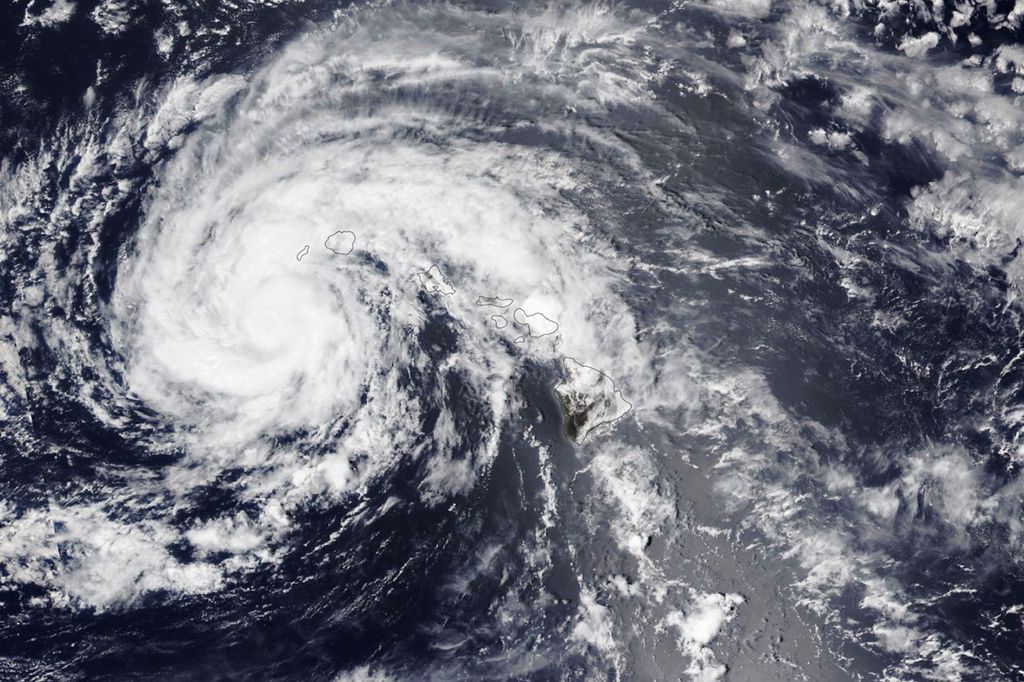








Super Typhoon Sepat came ashore in Taiwan on August 17, 2007, after bringing torrential rain and flooding to the Philippines the day before. Flights to and from Tapei, the island’s capital, were canceled and Chinese authorities were calling all ships at sea to come back to shore in anticipation of the powerful typhoon, said news reports. The typhoon was classified as Category 5 typhoon, the very top of the scale, with sustained winds of 184 kilometers per hour (114 miles per hour), according to CNN.
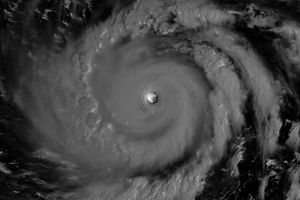
At 10:25 a.m. local time (02:25 UTC) on August 16, 2007, when the Moderate Resolution Imaging Spectroradiometer (MODIS) on NASA’s Terra satellite captured this image, Super Typhoon Sepat was still well away from its coming encounter with the Philippines and Taiwan. Winds were measured at a sustained speed as high as 257 km/hr (161 mph) at the time of this image, according to the University of Hawaii’s Tropical Storm Information Center. The storm’s strength is evident in this image from its large size, well-defined spiral structure, and obvious large eye. Some clouds are present in the central eye: a completely clear eye is a tell-tale sign of the most powerful storms, though some clouds can be present in the eye of a powerful storm, as is the case here.
References & Resources
NASA image by Jesse Allen, using data provided courtesy of the MODIS Rapid Response team at Goddard Space Flight Center.