
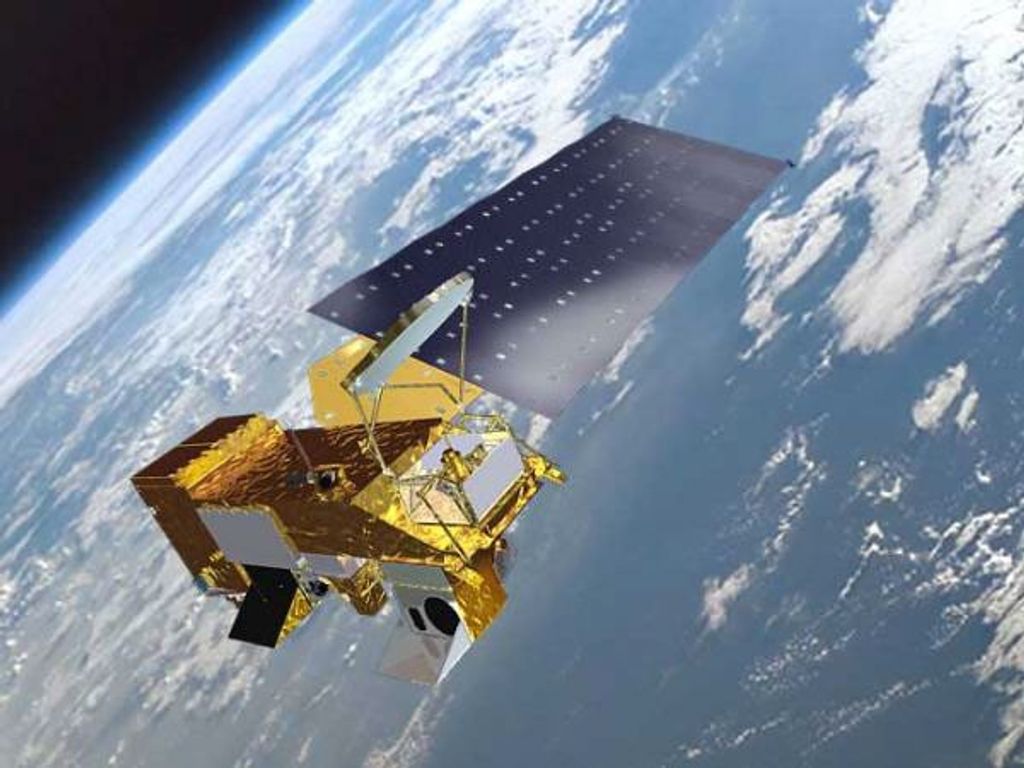
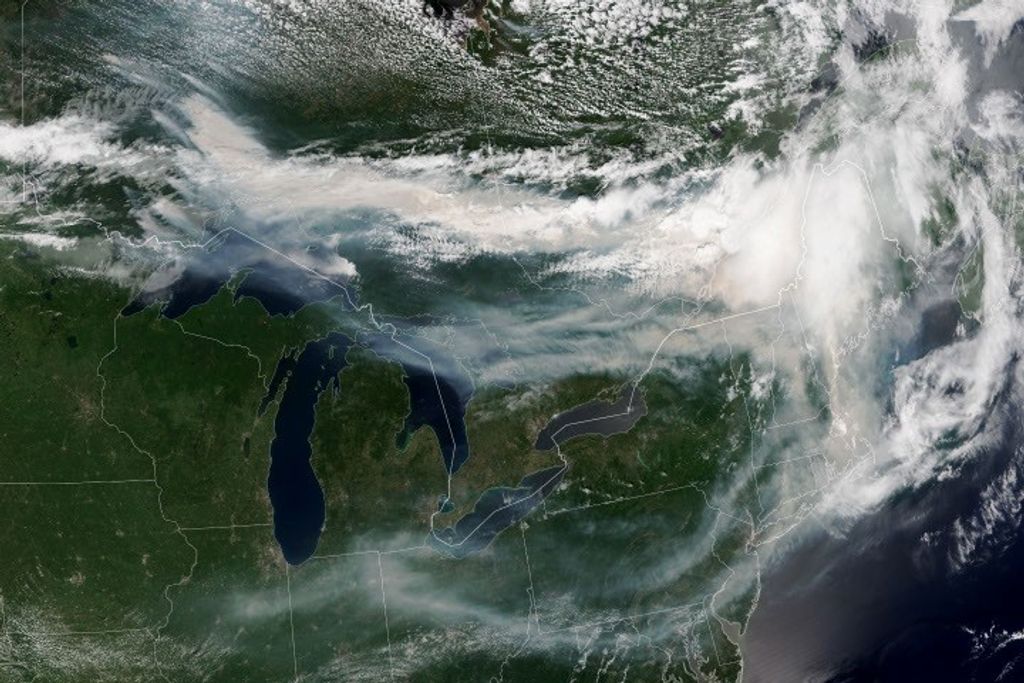

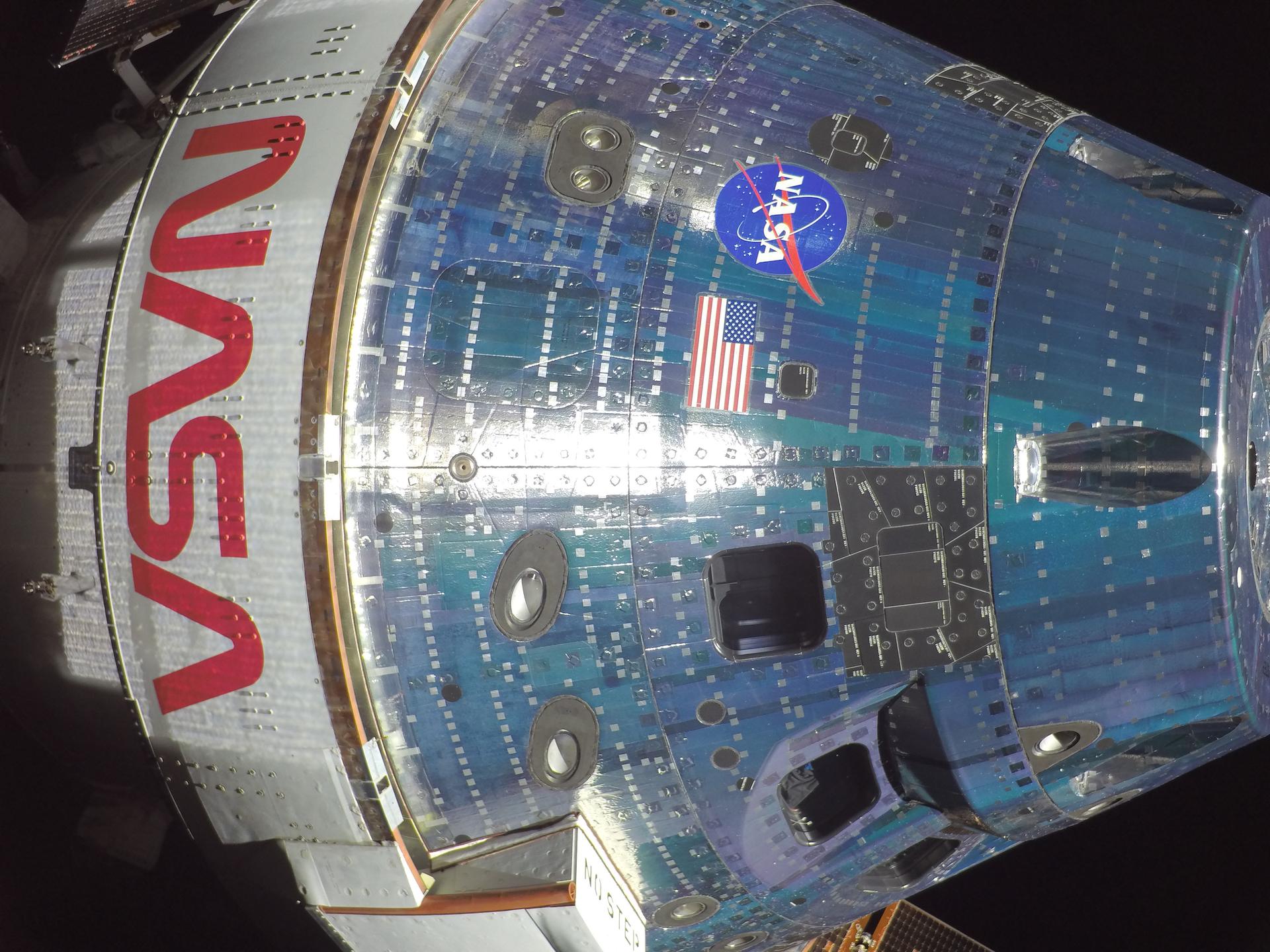




NASA’s latest Earth Observing System satellite“Aqua”is dedicated toadvancing our understanding of Earth’s water cycle. Launched on May 4,2002, Aqua has successfully completed its checkout period and is fullyoperational. Using multiple instruments, Aqua data and images arecrucial toward improving our knowledge of global climate change.
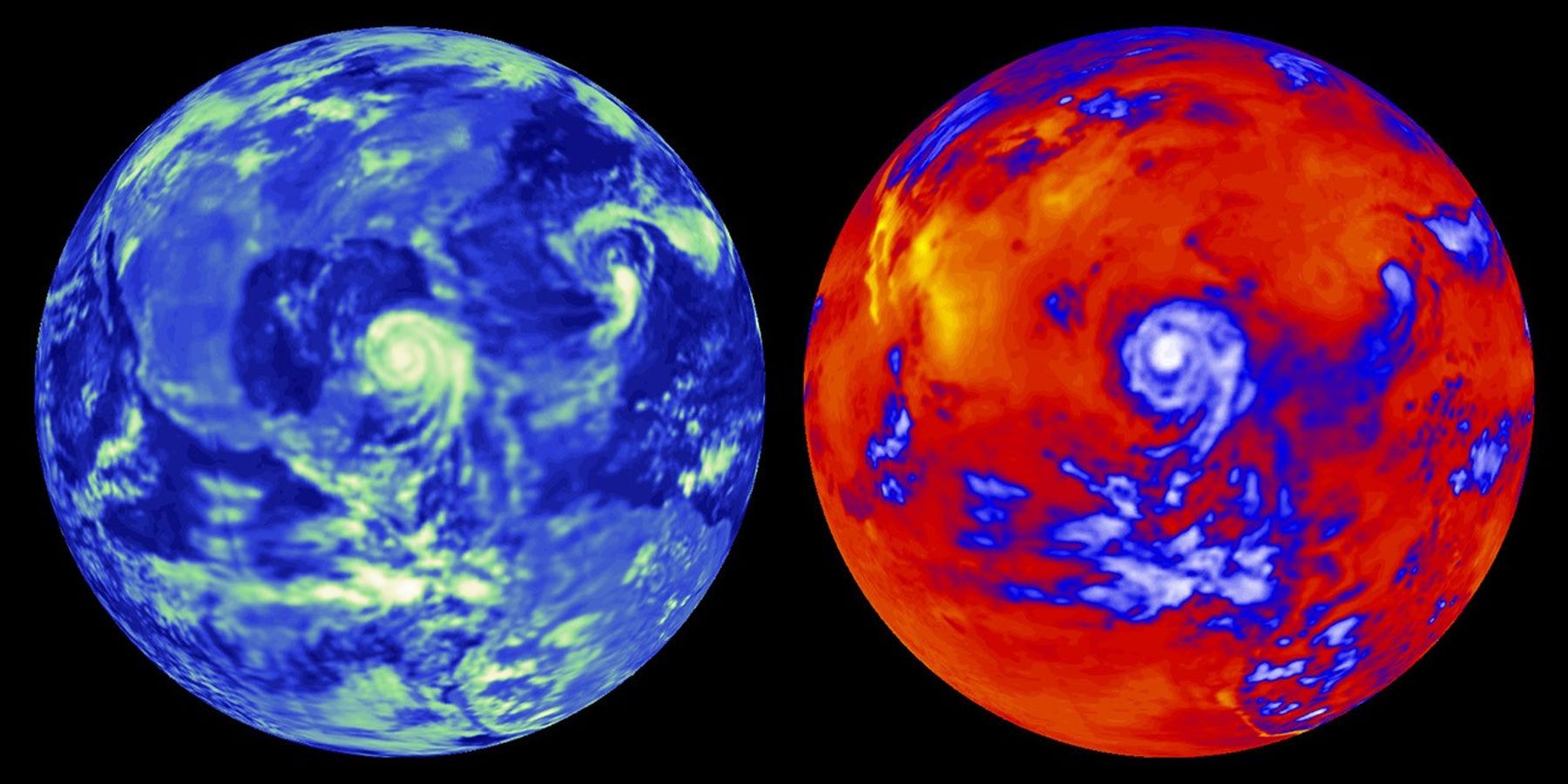
The Clouds and the Earth’s Radiant Energy System (CERES) instrumentis one of six on board the Aqua satellite. CERES detects the amount ofoutgoing heat and reflected sunlight leaving the planet. A detailedunderstanding of how clouds affect the energy balance is essential forbetter climate change predictions.
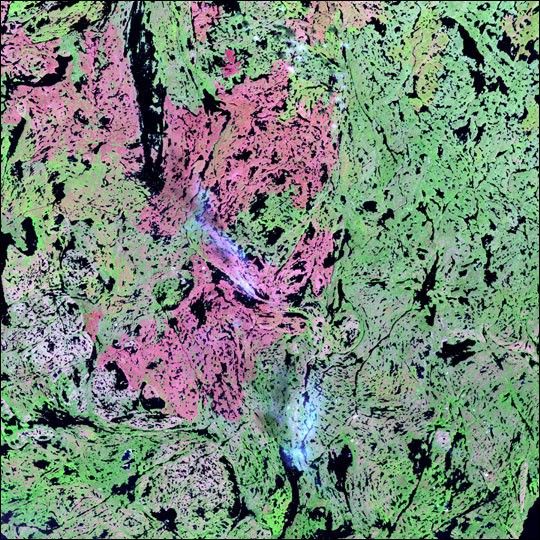
These Aqua images show CERES measurements over the United States andthe Gulf of Mexico from October 1, 2002. Visible are Hurricane Lili atthe center of the image and tropical storm Kyle located to the upperright. Lili developed into a major category 4 hurricane and made landfall over the coast of Louisiana two days later. Both of these tropicalcloud systems have a tendency to cool the Earth by reflecting a largeamount of sunlight (white and green areas in the left image) back tospace. At the same time, these tropical cloud systems have thecountering tendency to warm the Earth by reducing the amount of outgoingheat lost to space (blue and white areas in the right image). Withoutthese tropical cloud systems, the Earth would lose a large amount ofheat to space as seen by the surrounding clear-sky regions (red andyellow areas in the right image). The key to unlocking the mysteries ofclimate and climate changes is understanding the Earth's delicate energybalance between reflected sunlight and outgoing heat, and how thisbalance is affected by the presence of different cloud systems.
Aqua is part of NASA’s Earth Science Enterprise, a long-term researcheffort dedicated to understanding and protecting our home planet.Through the study of Earth, NASA will help to provide sound science topolicy and economic decision makers so as to better life here, whiledeveloping the technologies needed to explore the universe and searchfor life beyond our home planet.
References & Resources
Image courtesy of the CERES Science Team, NASA Langley Research Center.