


















Viking Project and Astrobiology
NASA's Viking Project was the first fully successful mission to land on the Martian surface and the first to search for evidence of life on Mars.
Mission type
Orbiter and Lander
launch
Viking 1 — Aug. 20, 1975 Viking 2 — Sept. 9, 1975
landing
Viking 1 — July 20, 1976 Viking 2 — Sept. 3, 1976
Objective
Orbit and land on Mars
Mission Overview
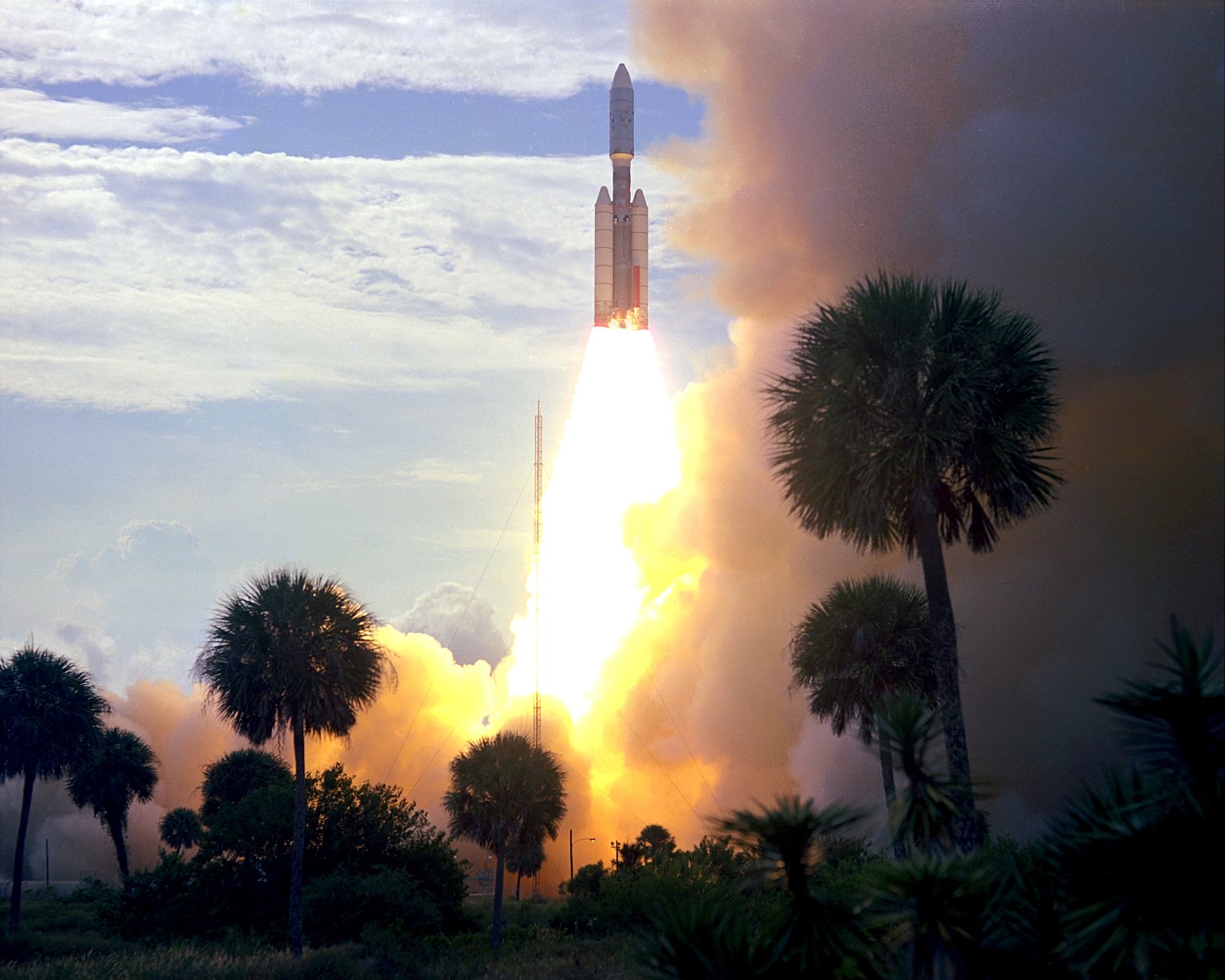
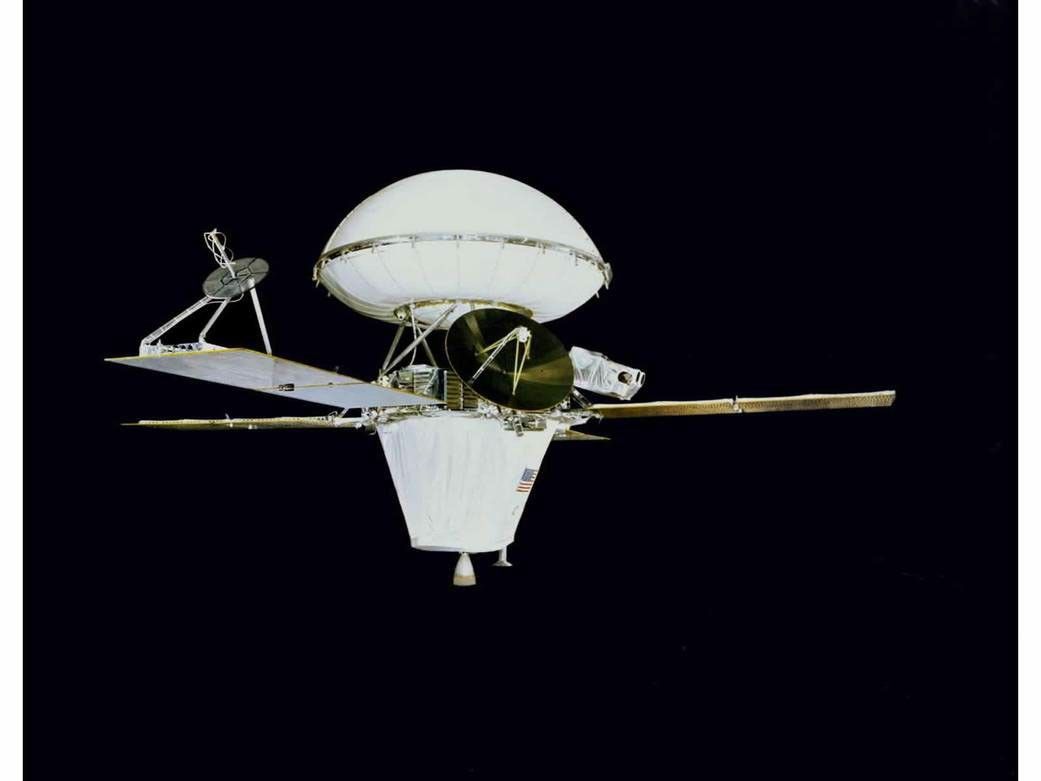
NASA’s Viking Project found a place in history when it became the first U.S. mission to land a spacecraft safely on the surface of Mars. Viking was also the first NASA mission designed to search for evidence of life on Mars. Two identical spacecraft, each consisting of a lander and an orbiter, were built. Each orbiter-lander pair flew together and entered Mars orbit; the landers then separated and descended to the planet’s surface.
Viking Lander 1 touched down on the western slope of Chryse Planitia (the Plains of Gold) on July 20, 1976. Viking Lander 2 settled down at Utopia Planitia on September 3, 1976. The last data from Viking Lander 2 arrived at Earth on April 11, 1980. Viking Lander 1 performed the longest, with its end of mission on November 13, 1982.
Relevance to Astrobiology
In addition to taking images and collecting science data on the Martian surface, the two landers conducted three biology experiments designed to look for possible signs of life. These experiments discovered unexpected and enigmatic chemical activity in the Martian soil, but provided no definitive evidence for the presence of living microorganisms in soil near the landing sites.
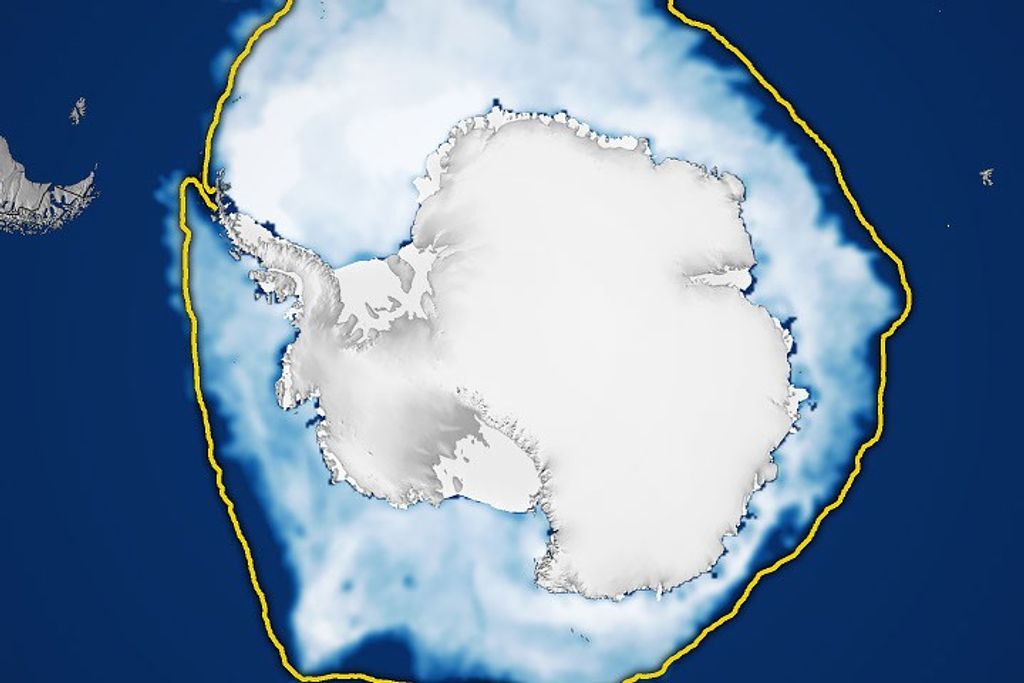
In order to test instruments for the Viking Program, early astrobiologists and exobiologists at NASA traveled to some of Earth’s most remote environments, including the Dry Valleys of Antarctica and the Atacama desert in Chile. These places are thought to be some of the best analogs for Mars that we have on Earth, and studying life in such locations has become an important element of astrobiology research at NASA.
The Viking results also taught scientists a great deal about how little we knew about life on Earth and how to detect it. To this day, the results are helping to shape the development of life detection strategies and equipment at NASA and other international agencies.
NASA’s Viking Project took place before NASA’s Astrobiology Program was founded, but many scientists from its precursor, NASA’s Exobiology Program, participated in the mission. Viking was NASA’s first attempt to search for life on another planet, and was thereby the first mission dedicated to astrobiology.
Some key figures behind Viking’s biology experiments include:
Klaus Biemann (1926-2016), Professor Emeritus of chemistry at the Massachusetts Institute of Technology and PI for the Gas Chromatograph-Mass Spectrometer.
Norman Horowitz (1915-2005), former head of the Biology Division at NASA’s Jet Propulsion Laboratories, Principal Investigator (PI) for the Pyrolytic Release experiment.
Harold P. Klein (1921 - 2001), Biology Team Leader for the Viking project, established the Exobiology and Life Sciences programs at NASA Ames.
Gilbert V. Levin (1924-2021), former NASA scientist and engineer, PI for the Labeled Release experiment.
Vance Oyama (1922-1998), former NASA Ames biologist and PI for the Gas Exchange experiment.
Wolf Vishniac (1922-1973), Professor of Biology at the University of Rochester and PI of the ‘Wolf Trap’ instrument (later removed from the Viking payload).
Some Mission Highlights
-
01
Mapping the Surface, October 11, 1982
The Viking orbiters provided more than 52000 photographs from orbit. Images from the orbiters provided detail on features on the martian surface, including some color and stereo observations. In all, the orbiters mapped 97 percent of the martian surface.
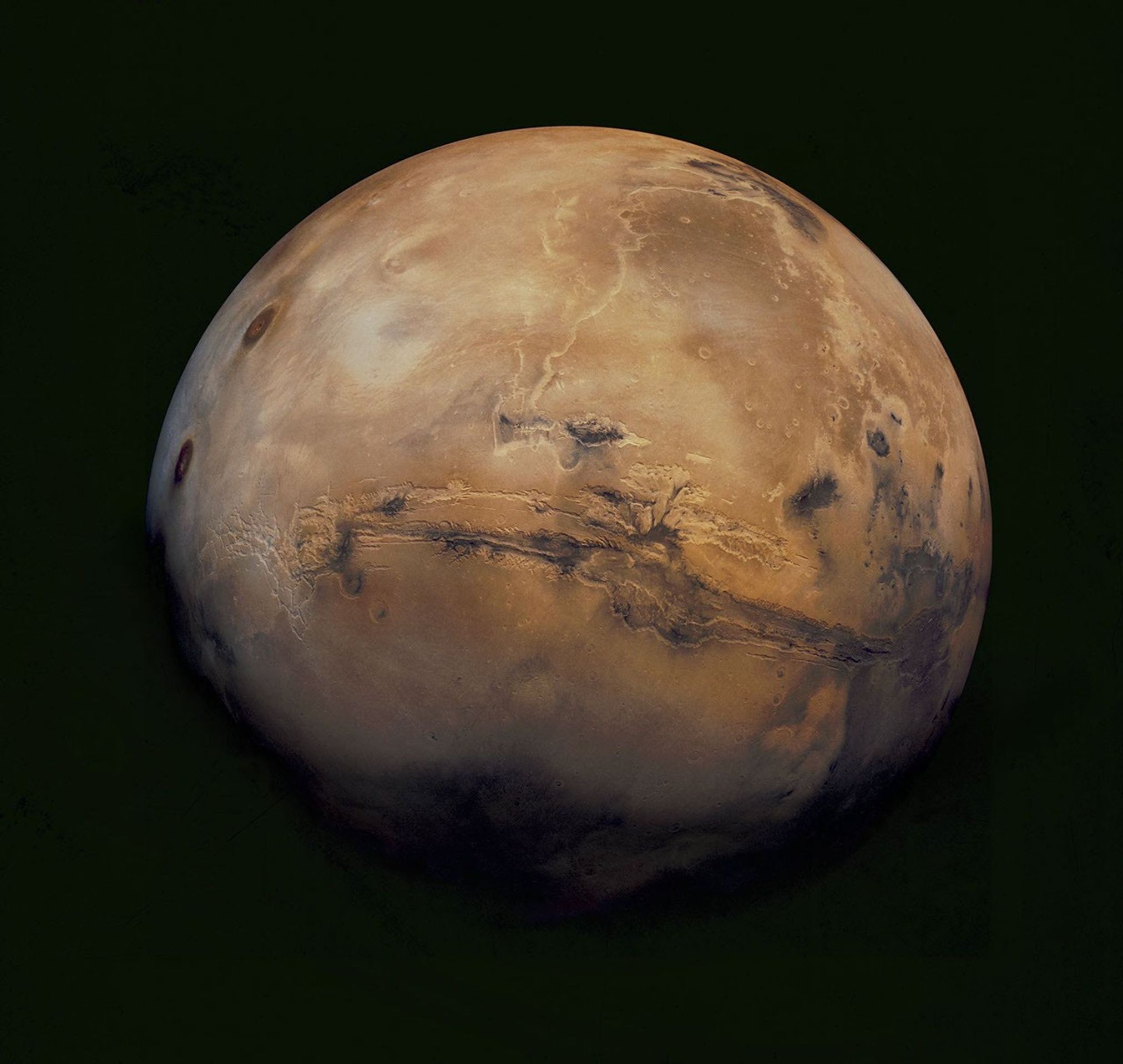 The global mosaic of Mars was created using Viking 1 Orbiter images taken in February 1980. The mosaic shows the entire Valles Marineris canyon system stretching across the center of Mars. It�s more than 2,000 miles (3,000 kilometers) long, 370 miles (600 kilometers) wide and 5 miles (8 kilometers) deep.NASA/USGS
 -
02
Mars from the Surface, October 11, 1982
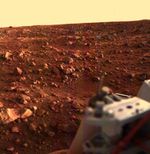
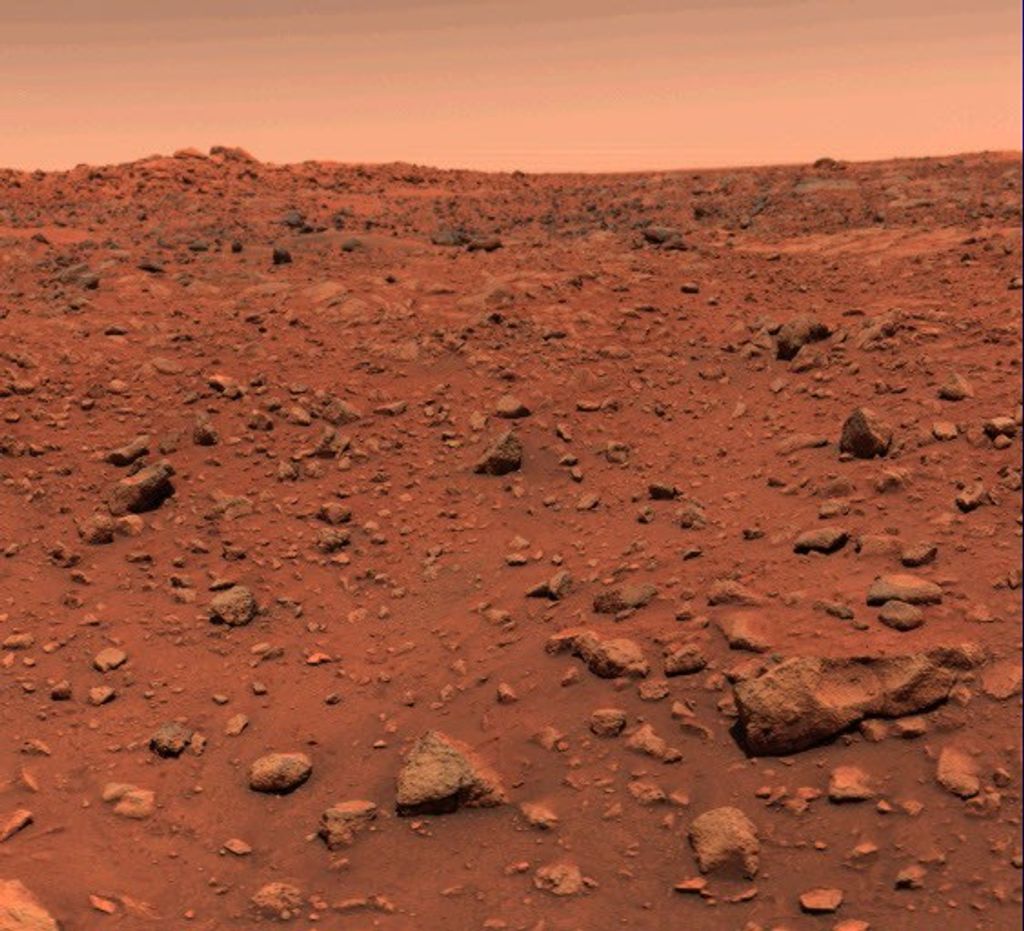
The Viking landers provided more than 4500 photographs from the surface, including the first digital image ever taken from the surface of Mars. The landers captured the first close-up look at Mars’ surface, monitored monitored variations in atmospheric opacity over several Martian years, and determined the mean size of the atmospheric aerosols.
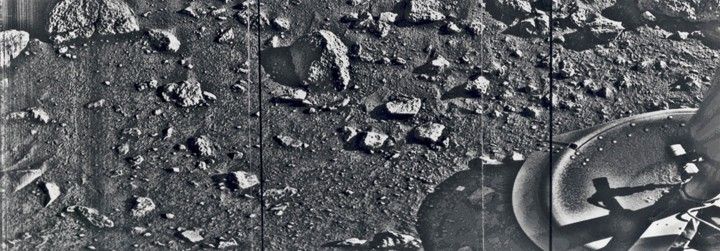 The image above is the first photograph ever taken from the surface of Mars. It was taken by the Viking 1 lander shortly after it touched down on Mars on 20 July 1976.
 -
03
Surface Findings, October 11, 1982
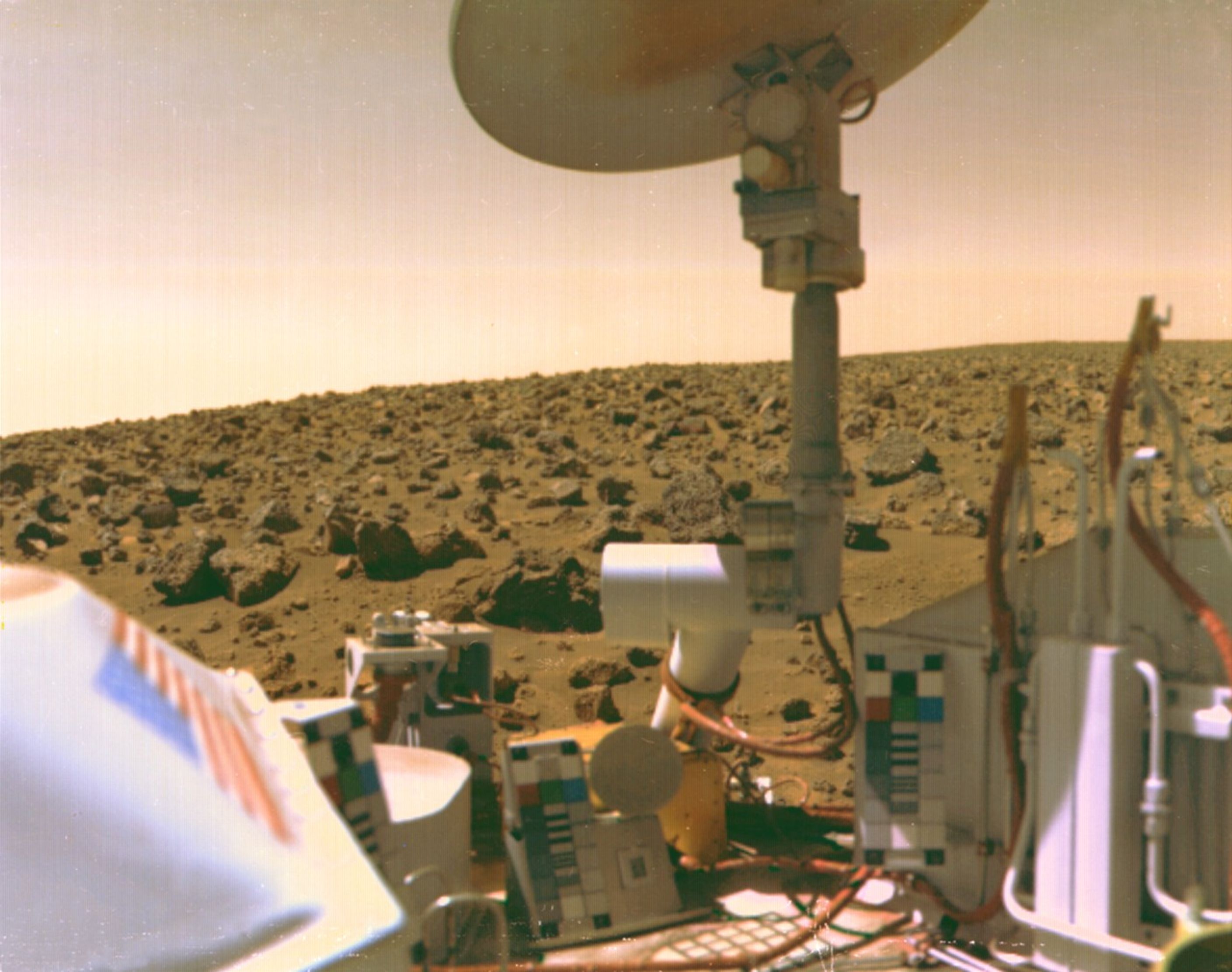
Viking showed that the martian surface is a type of iron-rich clay that contains a highly oxidizing substance that releases oxygen when it is wetted. Instruments on the landers also found no detectable organic molecules at the parts-per-billion level (less than soil samples returned from the Moon by Apollo astronauts). Over their mission lifetimes, the landers also showed that changes in the martian surface occur extremely slowly at their landing sites.
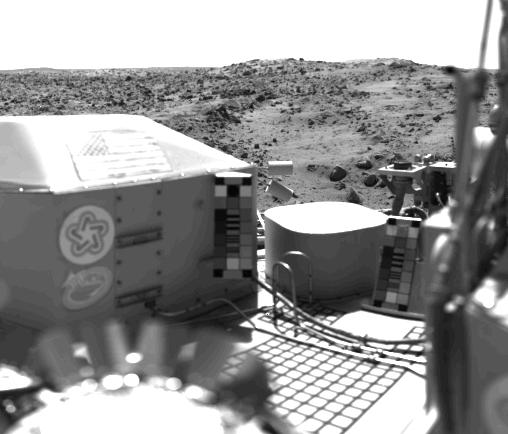 The view is west of the spacecraft and includes a series of low hills. The blocky hill in the center appears to be part of a crater rim. The dark, rocky stripes may be material ejected from the crater. The light areas are dune-like and may be accumulations of windblown sand or dust. http://photojournal.jpl.nasa.gov/catalog/PIA00388NASA