









![Request for Information – Potential [Placeholder for Prize]](https://assets.science.nasa.gov/dynamicimage/assets/science/psd/solar/2023/09/s/solarsystem_0.jpg?w=1024)










January 4, 2011
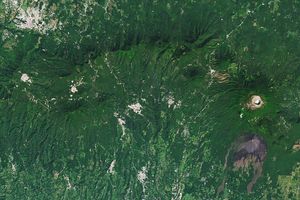
With a name that means smoking mountain in the Aztec language, Mexico’s Popocatépetl does not disappoint. The towering volcano, about 70 kilometers southeast of Mexico City, was emitting a faint plume of steam and gas on January 4, 2011, when the Advanced Land Imager (ALI) on NASA’s Earth Observing-1 (EO-1) satellite captured this photo-like image.
The agency that monitors volcanoes in Mexico reported five low-intensity eruptions between January 4 and 5. Popocatépetl erupts frequently, and the current eruptive episode started on January 9, 2005, according to the Global Volcanism Program.
References & Resources
- CENAPRED. (2011, January 5). Nivel de actividad del volcán Popocatépetl. (Spanish). Accessed January 5, 2011.
- Global Volcanism Program. (2010). Popocatépetl Smithsonian National Museum of Natural History. Accessed January 5, 2011.
NASA Earth Observatory image created by Jesse Allen, using EO-1 ALI data provided courtesy of the NASA EO-1 team. Caption by Holli Riebeek.