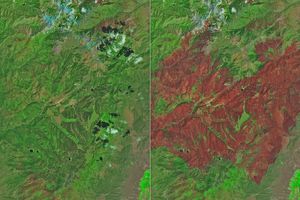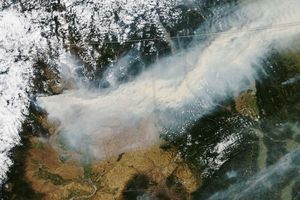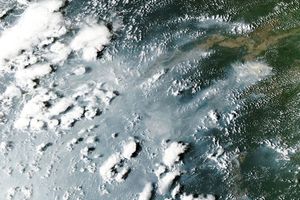

























The flames of the Cedar Fire engulfed the mountain city of Alpine, in Southern California. The fire consumed the trees and brush surrounding the city, and in some places, entire neighborhoods burned. The extent of the fire is clear in this Ikonos image taken on November 8, 2003. The false-color image (combining near infrared, red, and green wavelengths of light), shows blackened land completely surrounding Alpine’s neighborhoods. Living vegetation is red, while burned areas appear blue-black. The only areas which are not burned are landscaped patches around homes or businesses.
The unburned areas are a testament to the efforts of firefighters to protect structures. But despite their best efforts, many lost homes in this area, including Congressman Duncan Hunter. Almost all of the Cedar Fire occured in Hunter’s district.
The high-resolution image above gives a broader view of the scene in false-color and shows just how little vegetation escaped the flames. To see additional Ikonos images of the fires, visit the Space Imaging Fire Gallery.
References & Resources
© All Rights Reserved: Use of IKONOS, GeoEye, QuickBird and WorldView imagery must be coordinated with Maxar.
Image copyright DigitalGlobe © All Rights Reserved: Use of IKONOS, GeoEye, QuickBird, WorldView, and Digital Globe imagery must be coordinated with Maxar .