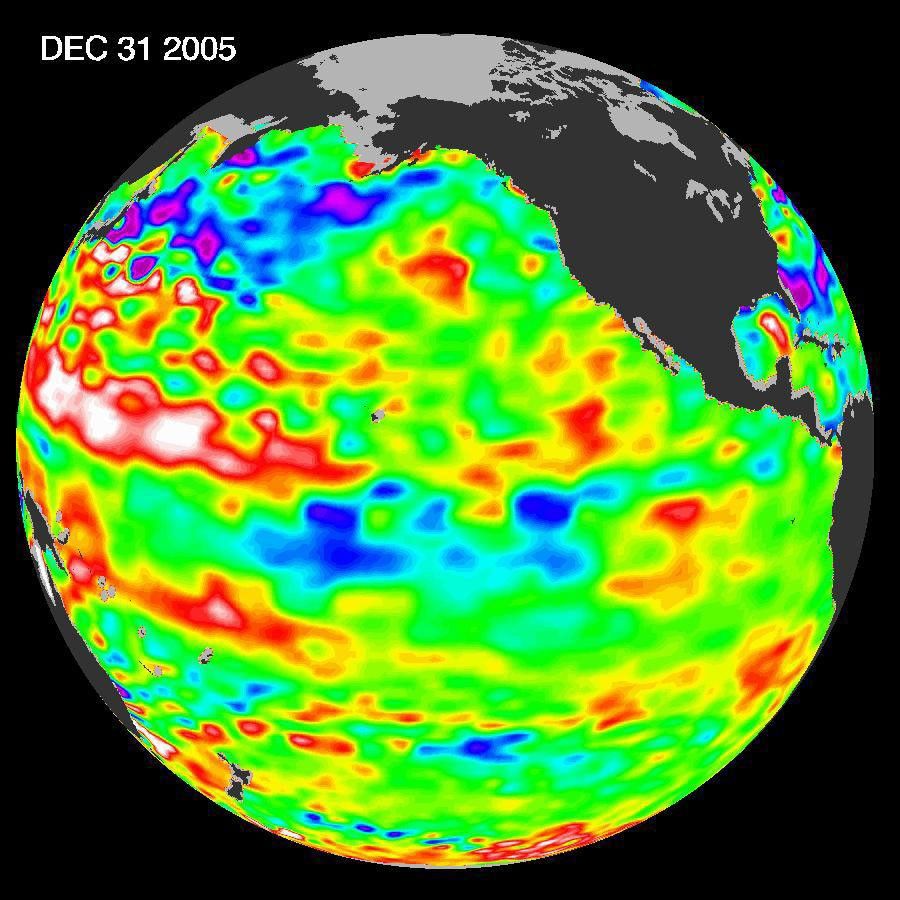










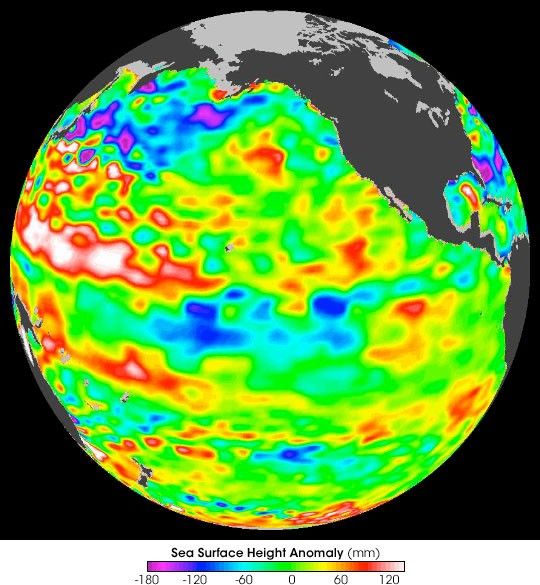
As water warms, it expands. As it cools, it contracts. Because of this correlation between temperature and water-column height, the height of the sea surface tells scientists about the ocean’s temperature. La Niña is a cooling of the equatorial waters in the Pacific, and this phenomenon affects weather over much of that ocean. As 2005 drew to a close, sea-surface height changes in the tropical Pacific exhibited characteristics of a developing La Niña.
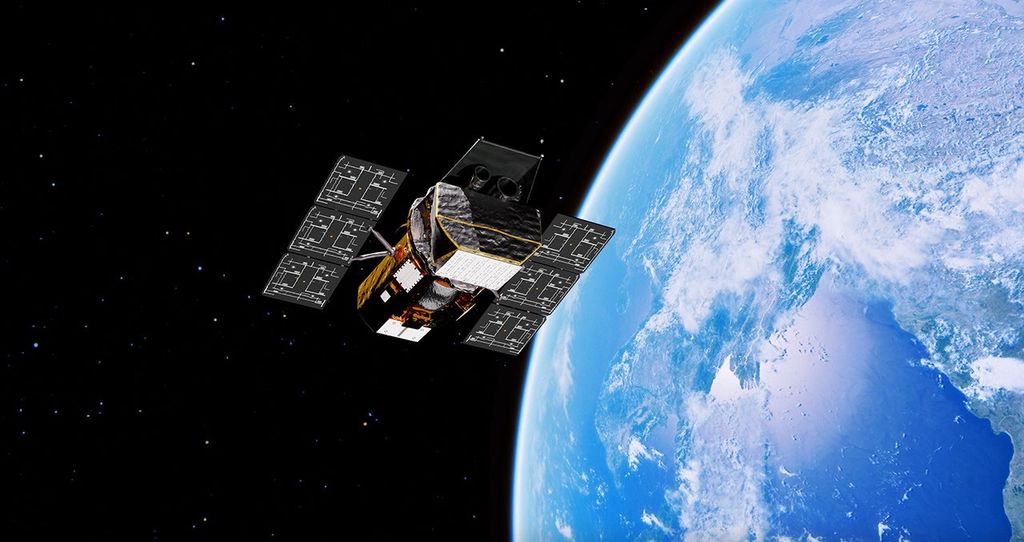
The image shows sea surface height relative to normal ocean conditions on December 31, 2005. Produced from sea-surface height measurements taken by the U.S.-French Jason satellite, this image shows a continuation of the gradual cooling of the central equatorial Pacific that appeared in the last few months of 2005. The white areas indicate sea surface height between 14 and 32 centimeters (6 to 13 inches) above normal. The red areas indicate a height about 10 centimeters (4 inches) above normal. The green areas indicate normal conditions. The purple areas are 14 to 18 centimeters (6 to 7 inches) below normal. The blue areas are 5 to 13 centimeters (2 to 5 inches) below normal.
La Niña is essentially the opposite of El Niño. During La Niña, the trade winds—easterly winds that blow through the tropics and subtropics—are stronger than normal. Likewise, the cold water that normally exists along the coast of South America extends to the central equatorial Pacific. La Niña reappears every three to five years. At the beginning of 2006, scientists were still unsure whether this cold pool would evolve into a long-lasting, strong La Niña condition. If so, it could be expected to reorganize global weather patterns.
- Further Reading:
- NOAA Predicts Weak La Niña
References & Resources
Image courtesy NASA/JPL Ocean Surface Topography Team . The U.S. portion of the Jason mission is managed by JPL for NASA’s Science Mission Directorate, Washington, D.C. Research on Earth’s oceans using Jason and other space-based capabilities is conducted by NASA’s Science Mission Directorate to better understand and protect our home planet.