
















After dominating the tropical Pacific Ocean for more than two years, the1998-2000 La Niña “cool pool” is continuing its slow fade and seems tobe retiring from the climate stage, according to the latest satellitedata from the U.S.-French TOPEX/Poseidon mission.
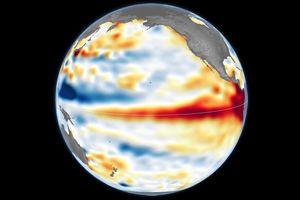
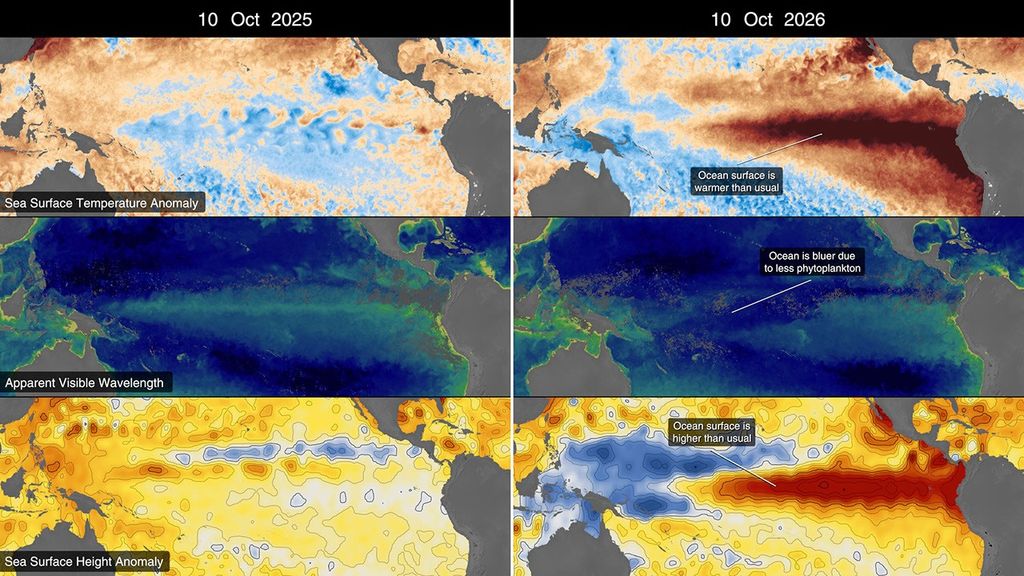
These data, taken during a 10-day cycle of collection ending June 9,show that the equatorial Pacific continues to warm up andis returning to normal (green) as this latest, persistent, two-year LaNiña episode is coming to an end. Only a few patches of cooler, lowersea levels (seen in blue and purple) remain across the tropics.
The blue areas are between 5 and 13 centimeters (2 and 5 inches)below normal, whereas the purple areas range from 14 to 18 centimeters(6 to 7 inches) below normal. In the far-western tropical Pacific Ocean,the ocean remains higher and warmer than normal. In summary, it appearsthat the global climate system is finally emerging from the past threeyears of dramatic swings from the extra-large El Niño of 1997/1998,which was followed by two unusually cool and persistent La Niña years,according to scientists at NASA’s Jet Propulsion Laboratory.
But as the northern hemisphere summer begins, above-normal seasurface heights and warmer ocean temperatures (indicated by the red andwhite areas) still blanket the western equatorial Pacific and much ofthe north and south mid-Pacific. Red areas are about 10 centimeters (4inches) above normal; white areas show the sea surface height is between14 and 32 centimeters (6 to 13 inches) above normal. This contrasts withthe Bering Sea and Gulf of Alaska region southward along the western coast ofNorth America, where lower-than-normal sea levels and cool oceantemperatures continue, although this pattern is also weakening.
“Let's not forget that the legacy of two years of La Nina will bewith us this summer and into the fall,” said JPL oceanographer Dr.William Patzert. “Much of the nation’s farmland is really dry in many regions. The reality is that theatmosphere is still acting as though La Nina remains.” The NationalOceanic and Atmospheric Administration's (NOAA) National Weather Servicehas forecasted continuing drought for much of the midwestern and southeastern United States and an active hurricane season for our comingsummer.
For more information on the TOPEX/Poseidon project, see http://topex-www.jpl.nasa.gov/.
References & Resources
Image courtesy NASA Jet Propulsion Lab
None