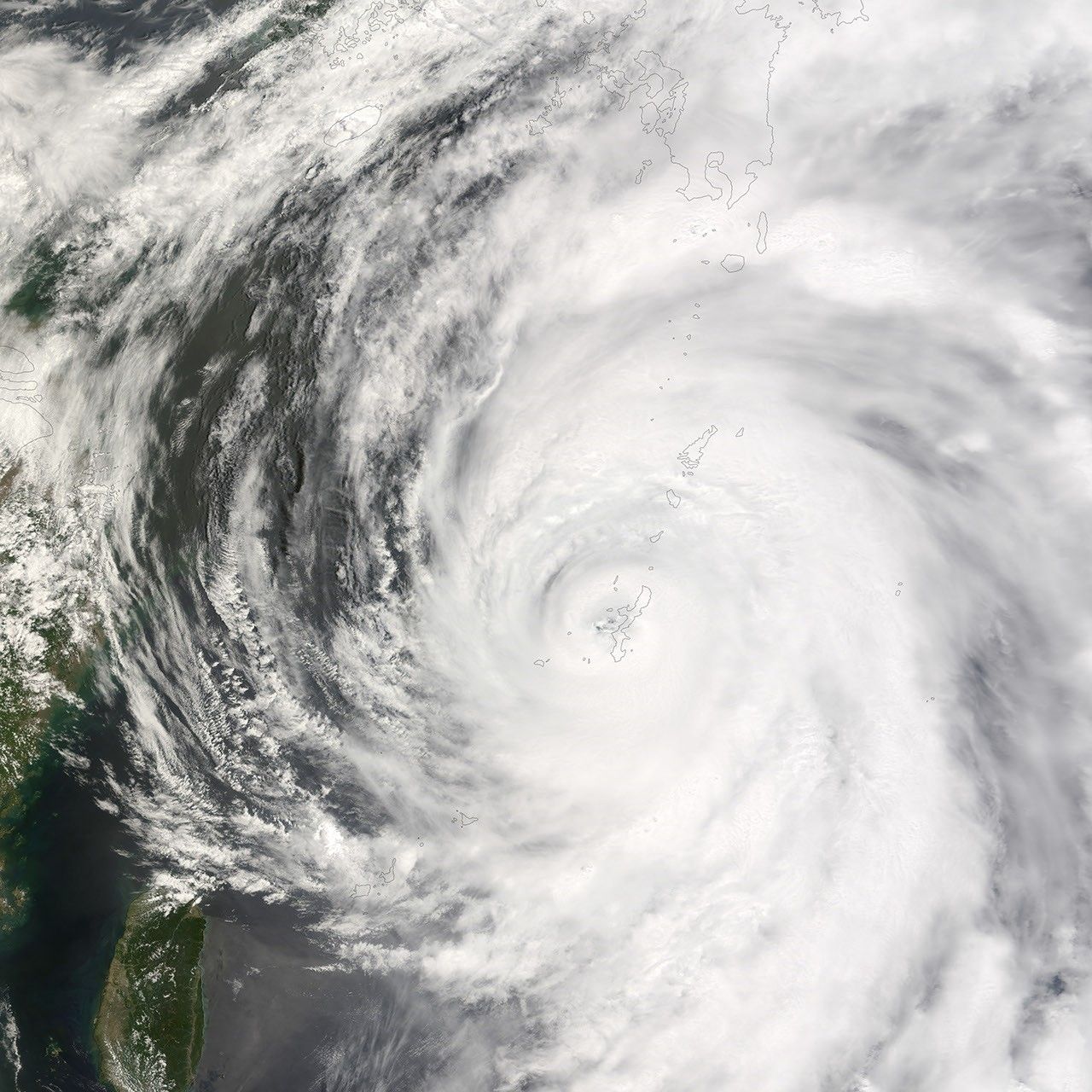
















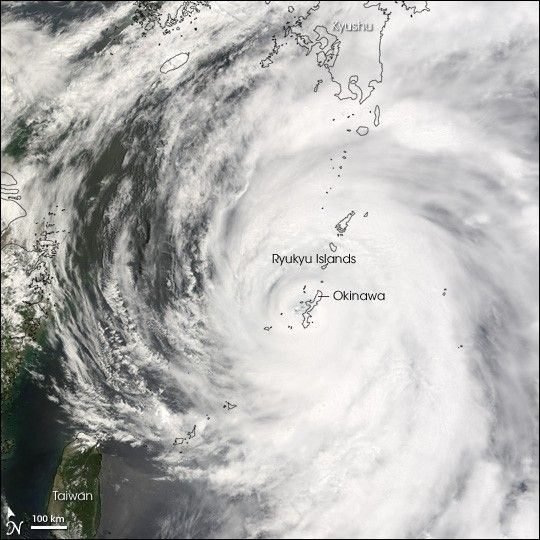
Typhoon Man-Yi was pummeling the Japanese island of Okinawa with winds between 230 and 295 kilometers per hour (125-160 knots, 144-184 miles per hour) and heavy rain on the morning of July 13, 2007, when the Moderate Resolution Imaging Spectroradiometer (MODIS) on NASA’s Terra satellite captured this image. The immense storm covered hundreds of kilometers with spiraling bands of thunderstorms, though it had lost the distinctive cloud-free eye it exhibited the day before.
Typhoons are common in Japan, but powerful typhoons usually strike the island nation later in the year. The Japan Meteorological Agency said that Man-Yi is the fourth typhoon of the 2007 season and may be the most powerful ever observed in the northwest Pacific in July, reported Kyodo News. The Joint Typhoon Warning Center expected the typhoon to strike Kyushu, a southern Japanese island, on July 14, and then curve northeast along the eastern shore of Japan. By the time the storm reaches Tokyo on July 15, it should be degraded to a tropical storm. As of July 13, Typhoon Man-Yi had injured eight and flooded twenty houses in Okinawa, and forced airlines to cancel hundreds of flights, said Kyodo News. The storm was expected to bring heavy rain to Japan’s Pacific coast.
References & Resources
NASA image created by Jesse Allen, using data provided courtesy of the MODIS Rapid Response team.