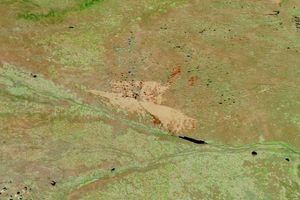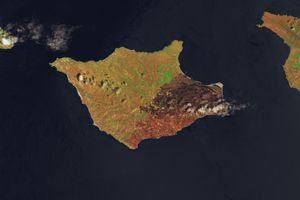



















On February 28, 2015, the Moderate Resolution Imaging Spectroradiometer (MODIS) on NASA’s Terra satellite acquired this image of a large wildfire burning in Argentina’s Chubut Province near Alerces National Park. Red outlines indicate hot spots where MODIS detected unusually warm surface temperatures associated with fire. As seen in the lower image, a long plume of smoke from the blaze moved east over southern Argentina. Lightning triggered the blaze on February 15, 2014. Quickly becoming one of the worst fires in Argentina’s recorded history, the blaze had charred more than 20,000 hectares (80 square miles) by February 28, according to media reports. The fire threatened ancient forests in Alerces National Park, which is known for containing some of the oldest trees in the world. Some of the trees date back more than 3,000 years.
Further Reading
- AccuWeather (2015, March 2) Wildfire Threatens Historic Argentina Forest. Accessed March 2, 2015.
- Buenos Aires Herald (2015, February 28) Head of National Fire Management dismissed after Chubut fire. Accessed March 2, 2015.
- Fox News Latino (2015, February 27) Vast Argentine wildfire burns out of control for almost 2 weeks.
References & Resources
NASA image courtesy of LANCE/EOSDIS Rapid Response. Caption by Adam Voiland.