













![Request for Information – Potential [Placeholder for Prize]](https://assets.science.nasa.gov/dynamicimage/assets/science/psd/solar/2023/09/s/solarsystem_0.jpg?w=1024)










February 10, 2023-January 30, 2025
Floating Solar in Madhya Pradesh
From the Mojave to the Thar, the abundance of sunlight and open space in the planet’s deserts has long made them favorable places to build solar farms. But the geometric arrays can be constructed elsewhere, even atop lakes and reservoirs. Like their land-based counterparts, the buoyant power parks are sometimes large enough to be seen from space.
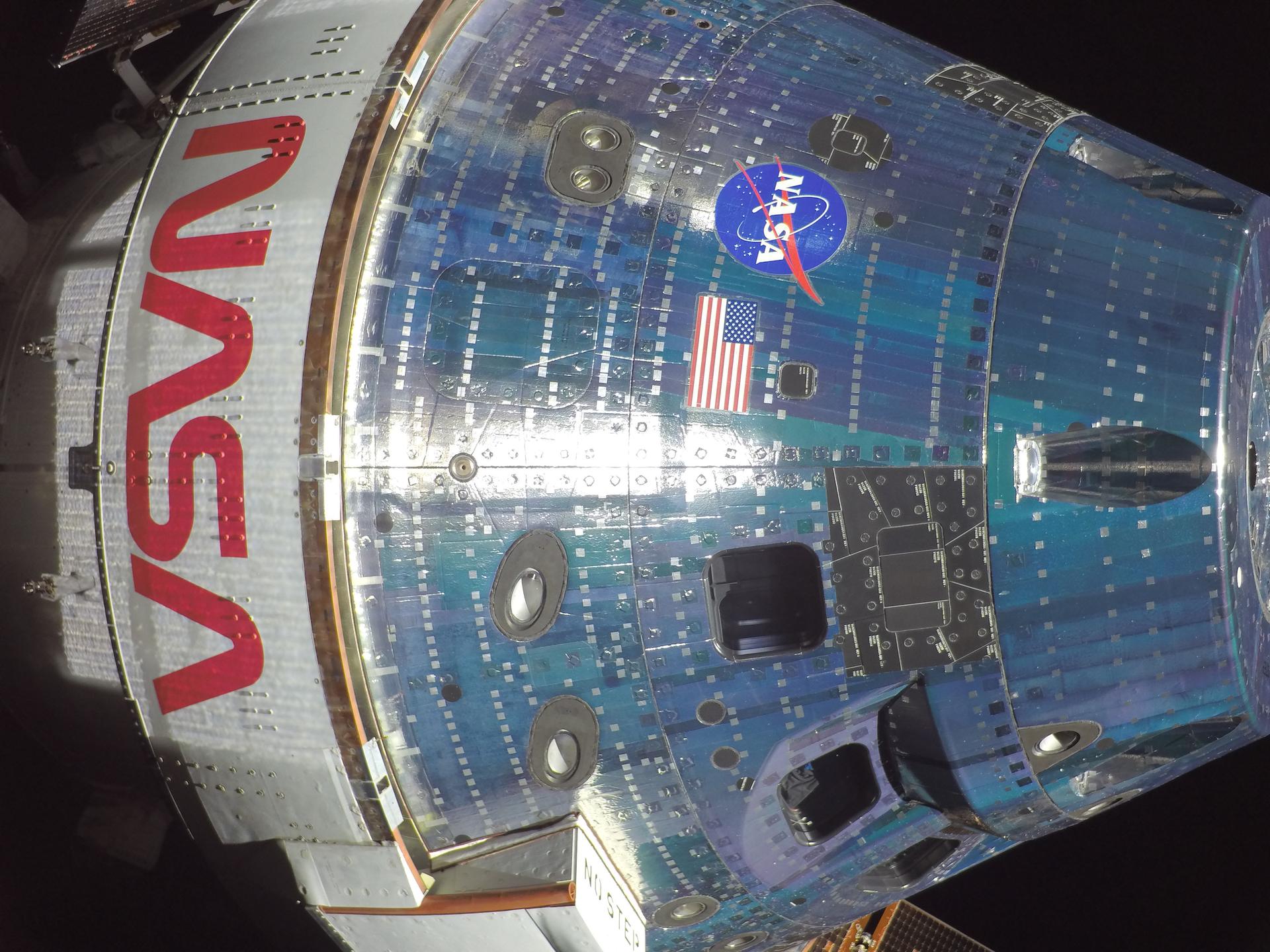
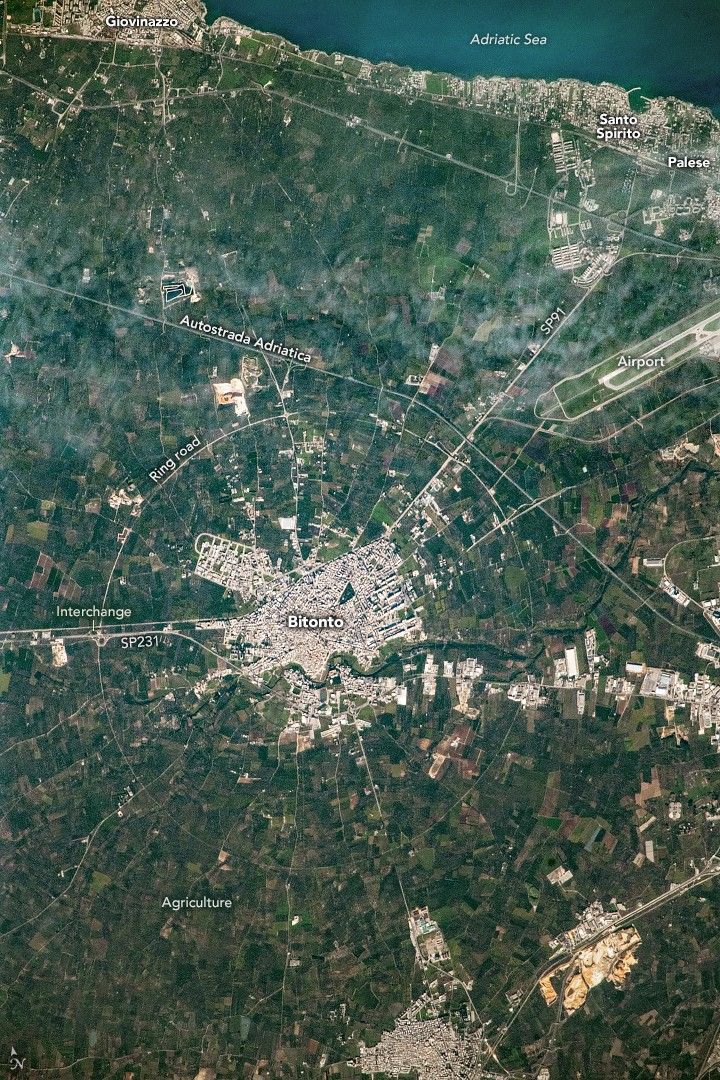
This pair of images shows the development of floating solar power arrays on a reservoir of the Narmada River in central India. The right image shows the reservoir on January 30, 2025. For comparison, the left image shows the same area on February 10, 2023, during an earlier stage of the project. Both images were acquired by the OLI-2 (Operational Land Imager-2) on Landsat 9.
The reservoir lies east of the Omkareshwar Dam and its associated hydroelectric station, completed in 2007, within the state of Madhya Pradesh. The reservoir has a total capacity of 987 million cubic meters and spans more than 90 square kilometers (35 square miles). The 2025 image shows solar panels across the reservoir’s northeast and southeast arms and includes the two floating solar projects that were commissioned in 2024: a 126-megawatt project and a 90-megawatt project.
Experts have noted that floating solar installations can pose challenges, such as higher up-front costs, vulnerability to natural events, and long-term effects on water quality. However, benefits of the systems might include their ability to prevent evaporation, impede algal growth, and provide an alternative to land-based systems in areas where space is limited.
In India, the space-saving systems have also been installed beyond the Omkareshwar Dam reservoir. For example, a floating solar project in Ramagundam, about 500 kilometers to the southeast, has a 100-megawatt capacity, and another in Kayamkulam, about 1,400 kilometers to the south, has a 92-megawatt capacity.
References & Resources
- Misra, D. (2021) Floating Photovoltaic Plant in India: Current Status and Future Prospect. Advances in Thermal Engineering, Manufacturing, and Production Management. ICTEMA 2020. Lecture Notes in Mechanical Engineering, Springer, Singapore.
- NASA Earth Observatory (2022, August 22) Solar Takes a Swim. Accessed March 20, 2025.
- U.S. Geological Survey (2025, January 30) India’s Giant Floating Solar Park. Accessed March 20, 2025.
NASA Earth Observatory images by Lauren Dauphin, using Landsat data from the U.S. Geological Survey . Story by Kathryn Hansen and Emily Cassidy.