


















In the early morning hours of July 20, 2025, fountains of lava began pouring continuously from vents in the summit caldera of Hawaii’s Kīlauea volcano. This eruptive episode was the 29th in a stretch of periodic activity in Halema‘uma‘u Crater that began on December 23, 2024.
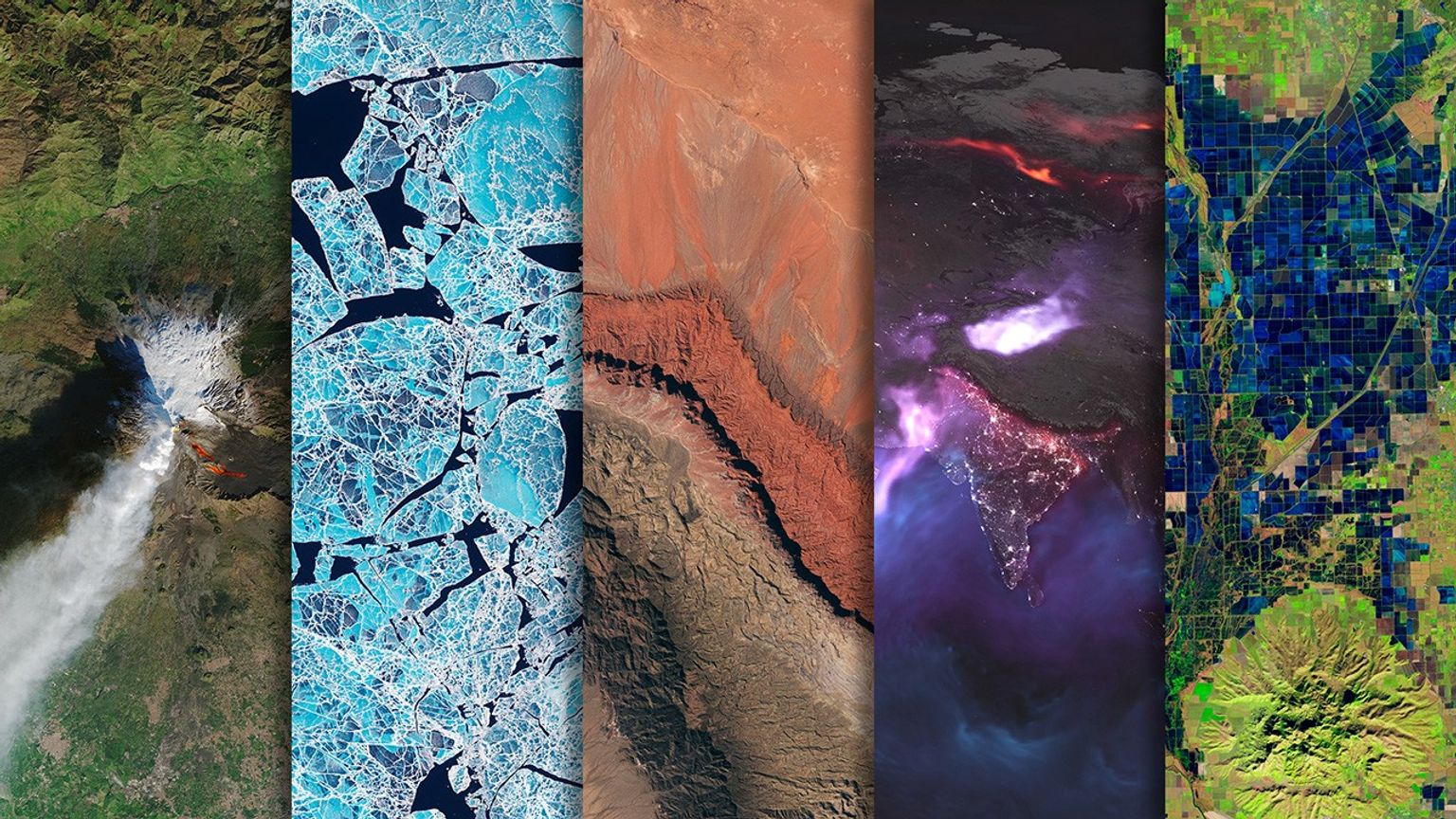
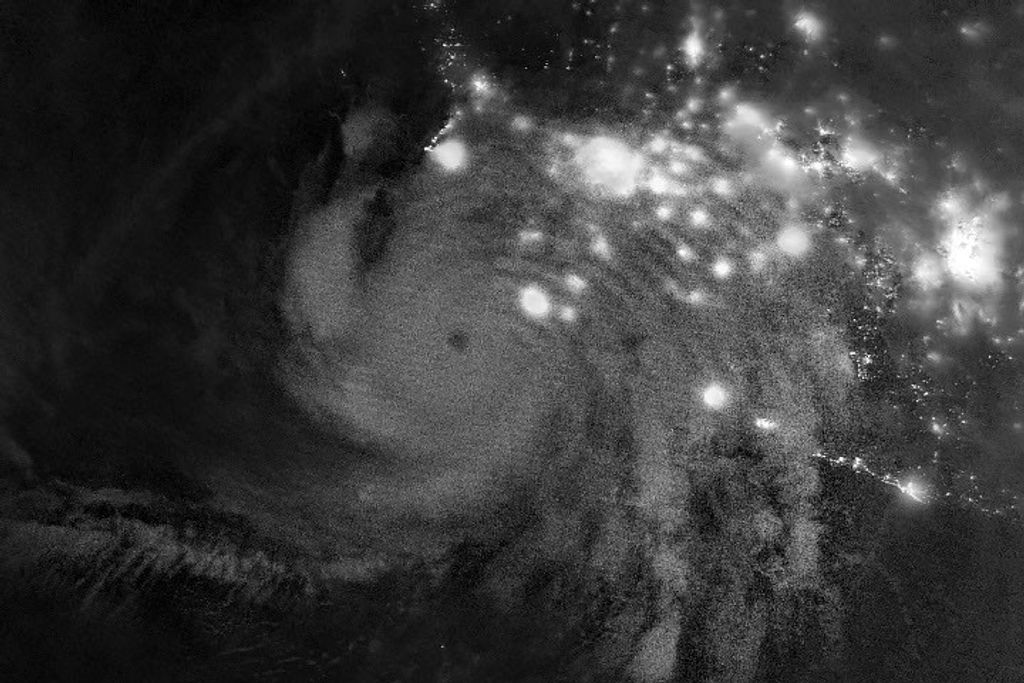
The OLI (Operational Land Imager) on Landsat 8 acquired this image at approximately 10:44 a.m. local time (20:42 Universal Time) on July 20, while the eruption was underway. The natural-color image is overlaid with an infrared signature to reveal the heat emanating from lava in the summit crater. Note that both clouds and a volcanic plume are visible.
The sustained lava fountains lasted for over 13 hours that day, according to the U.S. Geological Survey Hawaiian Volcano Observatory (HVO). The fountains reached heights of less than 330 feet (100 meters) during this period, the HVO reported, in contrast to recent episodes where they shot over 1,000 feet (300 meters) into the air. However, this episode produced more voluminous flows than in previous ones, covering approximately 80 percent of the crater floor in new lava, the observatory estimated.
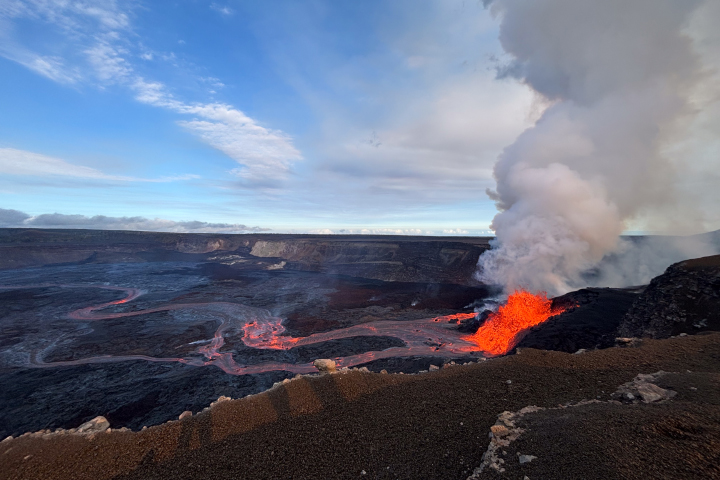
After lava fountains died down on the evening of July 20, some degassing and seismic tremors persisted, indicating that another episode is possible, according to the HVO. The summit area also began to reinflate. Tiltmeters on the volcano have measured cycles of inflation and deflation coinciding with each episode of the eruption, with the ground swelling as magma builds up beneath the surface and subsiding when it erupts.
As of July 23, experts were waiting for more data before estimating when episode 30 might begin. Breaks between several of the recent episodes have ranged from 6 to 10 days. This type of episodic behavior was last observed at Kīlauea from 1983 to 1986, at the start of the Pu‘u‘ō‘ō eruption.
References & Resources
- U.S. Geological Survey (2025) Hawaiian Volcano Observatory Daily Update. Accessed July 24, 2025.
- U.S. Geological Survey (2025) Kīlauea Eruption Information. Accessed July 24, 2025.
NASA Earth Observatory image by Wanmei Liang, using Landsat data from the U.S. Geological Survey . USGS photograph by M. Benage. Story by Lindsey Doermann .