



















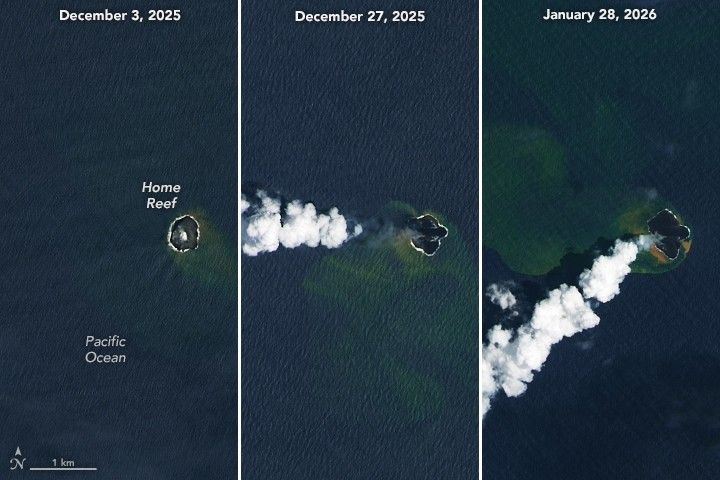
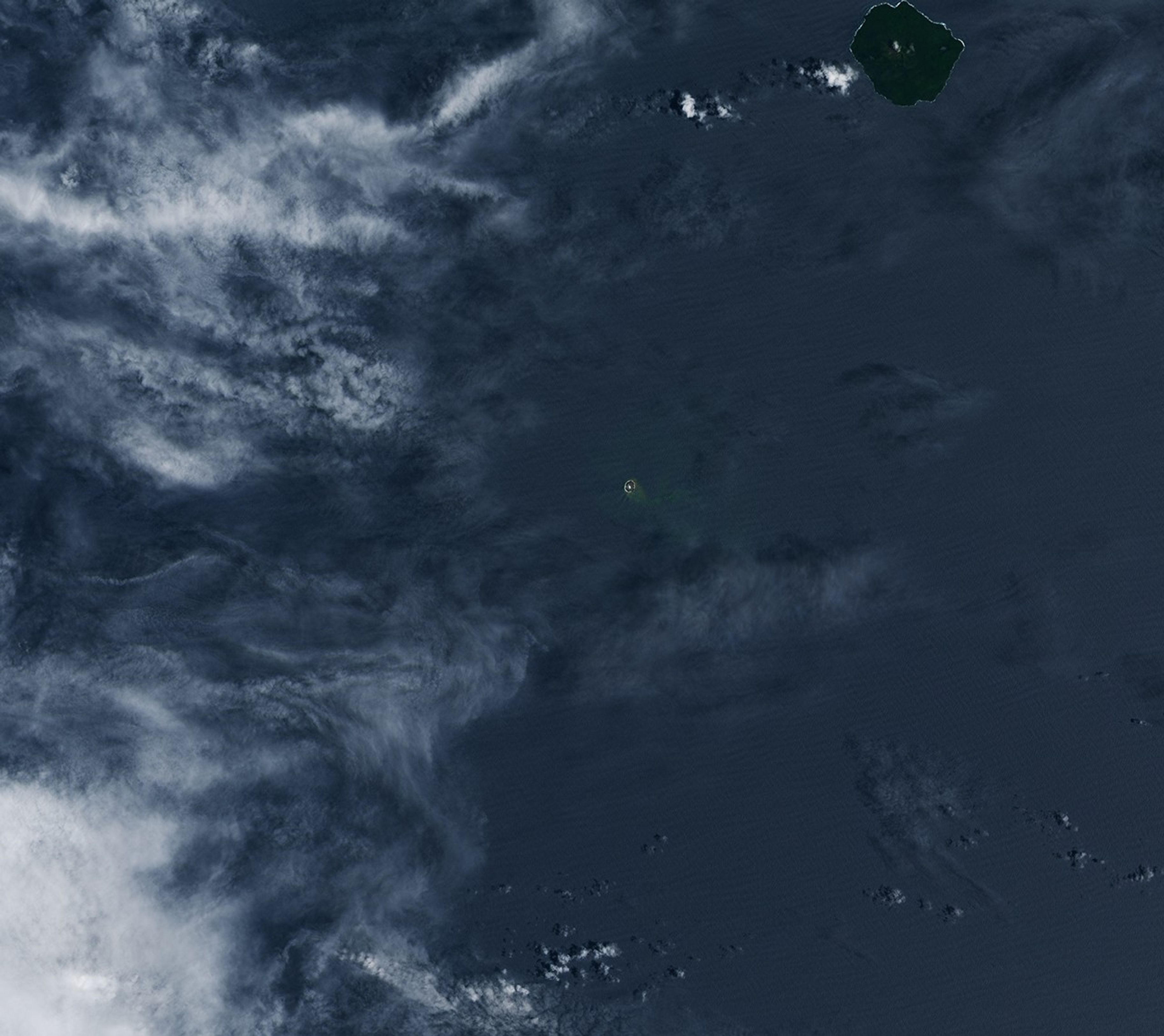
Home Reef, a mid-ocean volcano in the Tonga archipelago, continues to build onto its modest land area. Volcanic activity ramped up in December 2025, marking the latest in a series of periodic eruptions that began in 2022. The eruption was ongoing as of mid-February 2026.
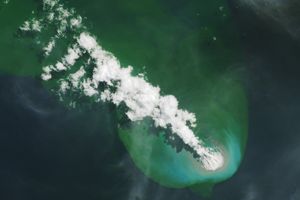
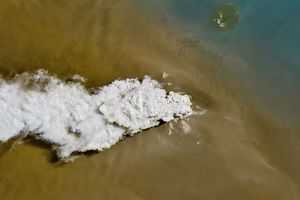
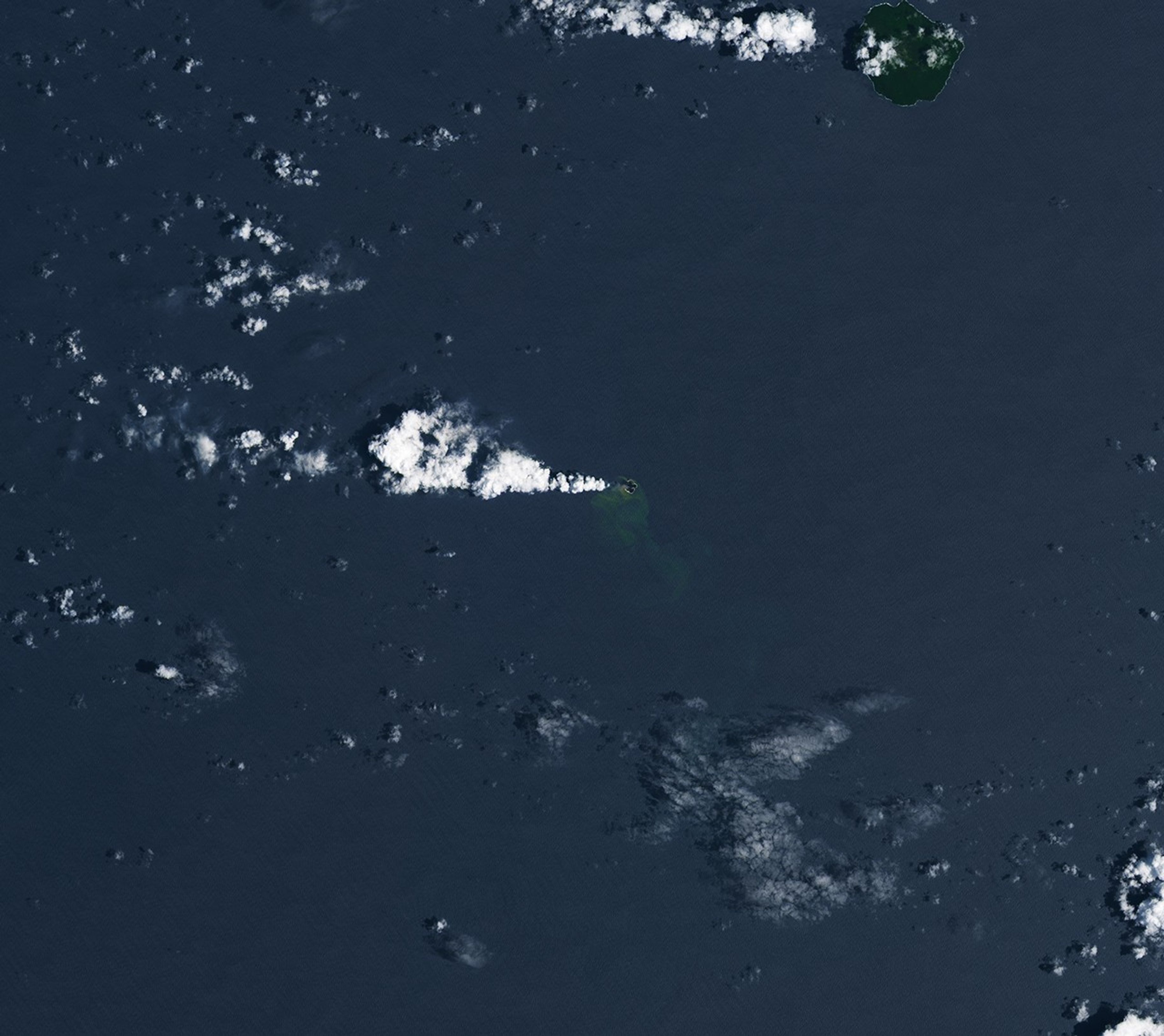
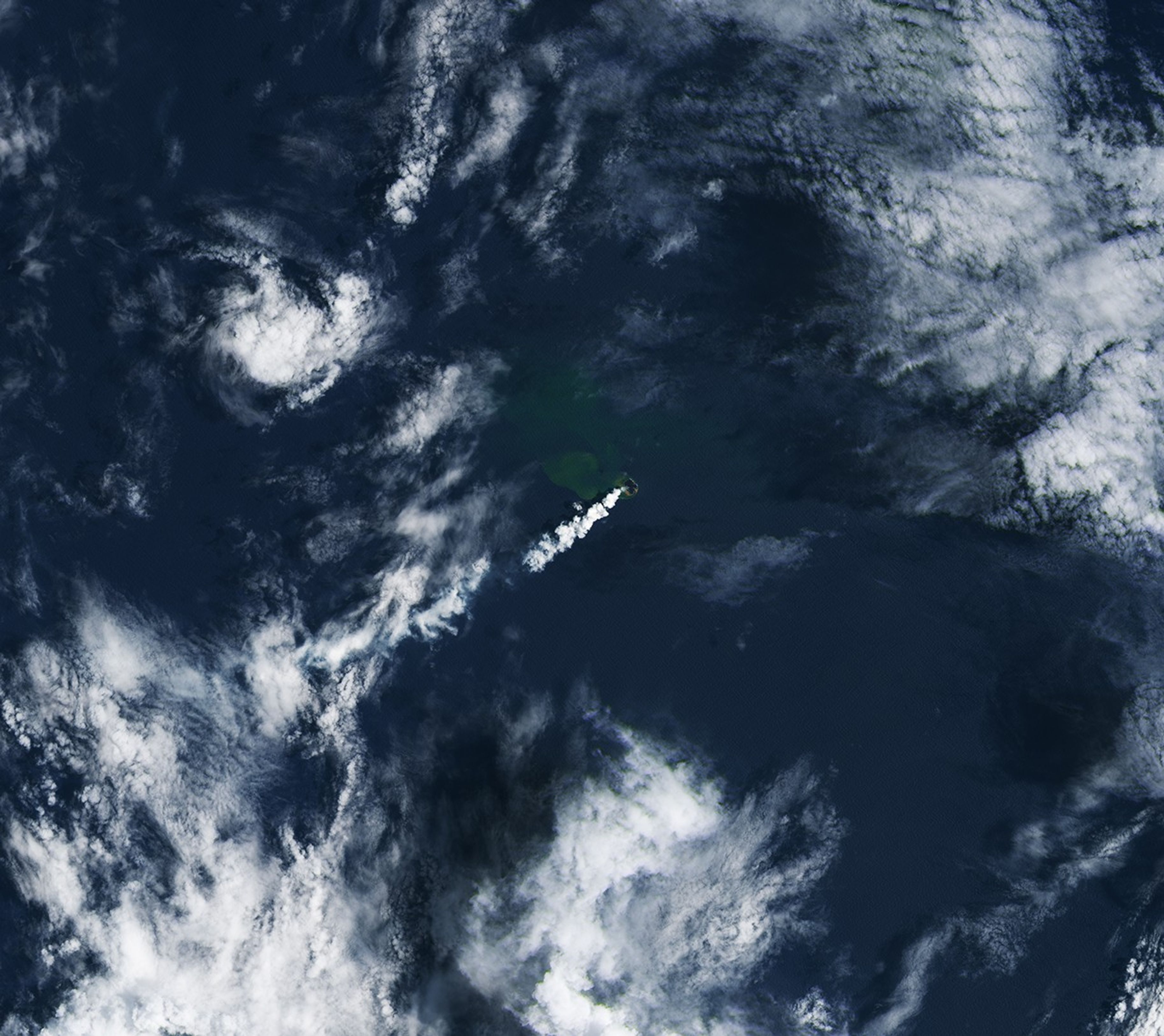
Satellites are critical to monitoring volcanoes such as Home Reef in remote and difficult-to-access locations. These images, from December 3, 2025 (left), December 27, 2025 (center), and January 28, 2026 (right), captured some of the volcano’s growth during its recent spate of activity. They were acquired with the OLI (Operational Land Imager) on Landsat 8 and 9.
Thermal data from MODIS (Moderate Resolution Imaging Spectroradiometer) and VIIRS (Visible Infrared Imaging Radiometer Suite) indicate that this eruptive phase began on December 17, 2025, after about five months of quiet, said Simon Plank. Plank, a researcher at the German Aerospace Center (DLR), has been studying Home Reef’s eruption dynamics and cycles of growth and erosion since it awoke in 2022 and emerged above sea level.
Beginning in December 2025, lava flows first extended the island’s footprint to the east and south, then to the northwest, and later to the north. Based on synthetic aperture radar data from DLR’s TerraSAR-X satellite, the island had grown by nearly 8 hectares (20 acres)—about the size of 15 American football fields—by early February, Plank said.
Plumes of volcanic gases billowed from a 100-meter-diameter vent throughout the eruptive period. Pilots in the area observed plumes increasing in height during the last week of January, Tonga Geological Services reported, and the agency raised the aviation color code to orange due to the possible presence of suspended ash.
The discolored water around the island is a sign of gases and magmatic fluids venting from the volcano. Previous research has shown that such plumes of superheated, acidic water can contain particulate matter, volcanic rock fragments, and sulfur, and that they can appear before signs of an eruption above the surface. Concentrations of yellow sulfur mixing with the blue ocean may account for the water’s greenish appearance.
Home Reef is part of the Tonga Volcanic Arc, a line of submarine and island volcanoes along the Tonga-Kermadec subduction zone. One of its neighbors, Hunga Tonga-Hunga Ha’apai, produced one of the most powerful volcanic eruptions in recent history—large enough to send a volcanic plume into the mesosphere. The current activity at Home Reef is much tamer; officials say it poses low risk to inhabited islands nearby.
NASA Earth Observatory images by Lauren Dauphin, using Landsat data from the U.S. Geological Survey. Story by Lindsey Doermann.
References & Resources
- Global Volcanism Program (2026) Home Reef. Accessed February 12, 2026.
- MIROVA (2026, February) Home Reef latest images and radiative power. Accessed February 12, 2026.
- NASA Earth Observatory (2025, February 18) A Growth Spurt for Home Reef. Accessed February 12, 2026.
- Plank, S., et al. (2025) The evolution of the 2022–2024 eruption at Home Reef, Tonga, analyzed from space shows vent migration due to erosion. Scientific Reports 15, 11508.
- Tonga Geological Services (2026) Tonga Geological Services, Government of Tonga. Accessed February 12, 2026.