



















Hubble and Webb Capture Messier 64
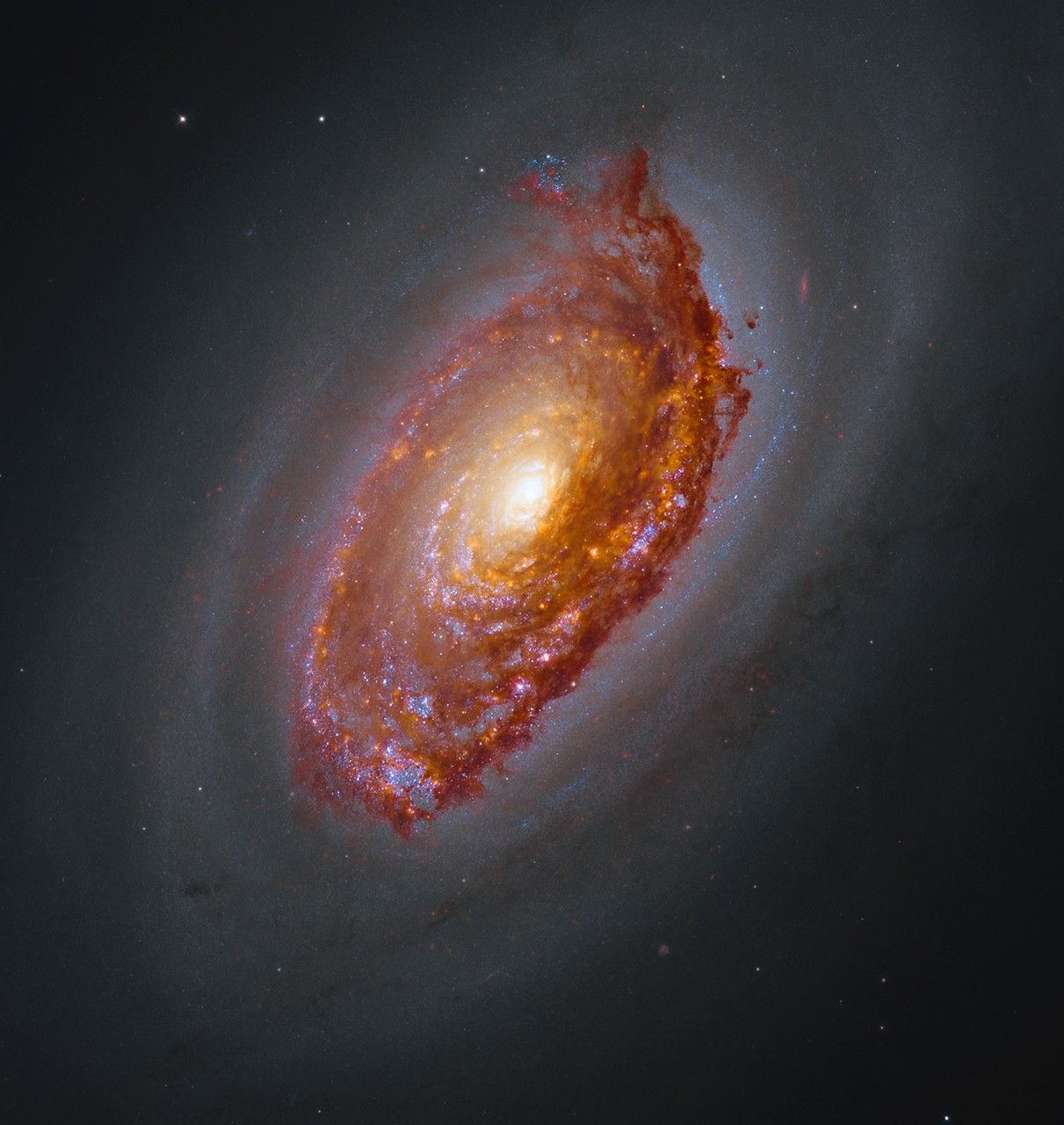
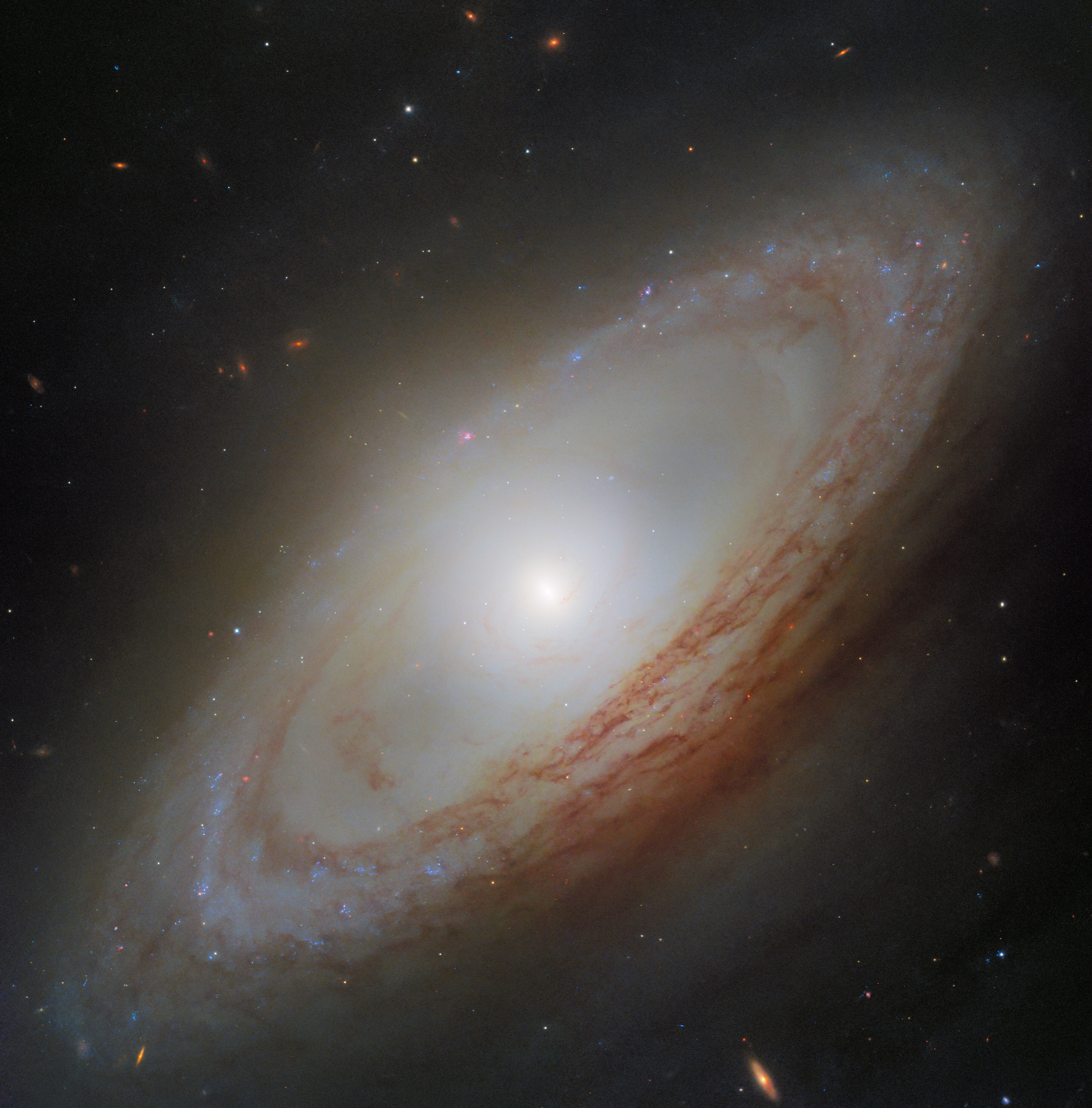
This new composite view from NASA’s Hubble Space Telescope and James Webb Space Telescope shows the spiral galaxy Messier 64, also known as the “Black Eye” Galaxy. Webb captured near- and mid-infrared wavelengths, while Hubble’s Wide Field Camera 3 shows the galaxy in ultraviolet, visible, and near-infrared light. These observations were taken to learn more about star formation in nearby galaxies. Though M64 is about 17 million light-years away, this is relatively nearby on a cosmic scale.
Image Credit: NASA, CSA, ESA, F. Belfiore (European Southern Observatory – Germany), J. Lee (Space Telescope Science Institute), A. Leroy (The Ohio State University), and D. Thilker (The Johns Hopkins University); Processing: Gladys Kober (NASA/Catholic University of America)
- X
https://science.nasa.gov/image-detail/amf-61ae25ff-6d3a-4368-8470-02e7ebed19c3/
Image CreditNASA, CSA, ESA, F. Belfiore (European Southern Observatory – Germany), J. Lee (Space Telescope Science Institute), A. Leroy (The Ohio State University), and D. Thilker (The Johns Hopkins University); Processing: Gladys Kober (NASA/Catholic University of America)
Size3853x4070px