


















APOD
Astronomy Picture of the Day
Discover the cosmos! Each day a different image or photograph of our fascinating universe is featured, along with a brief explanation written by a professional astronomer.
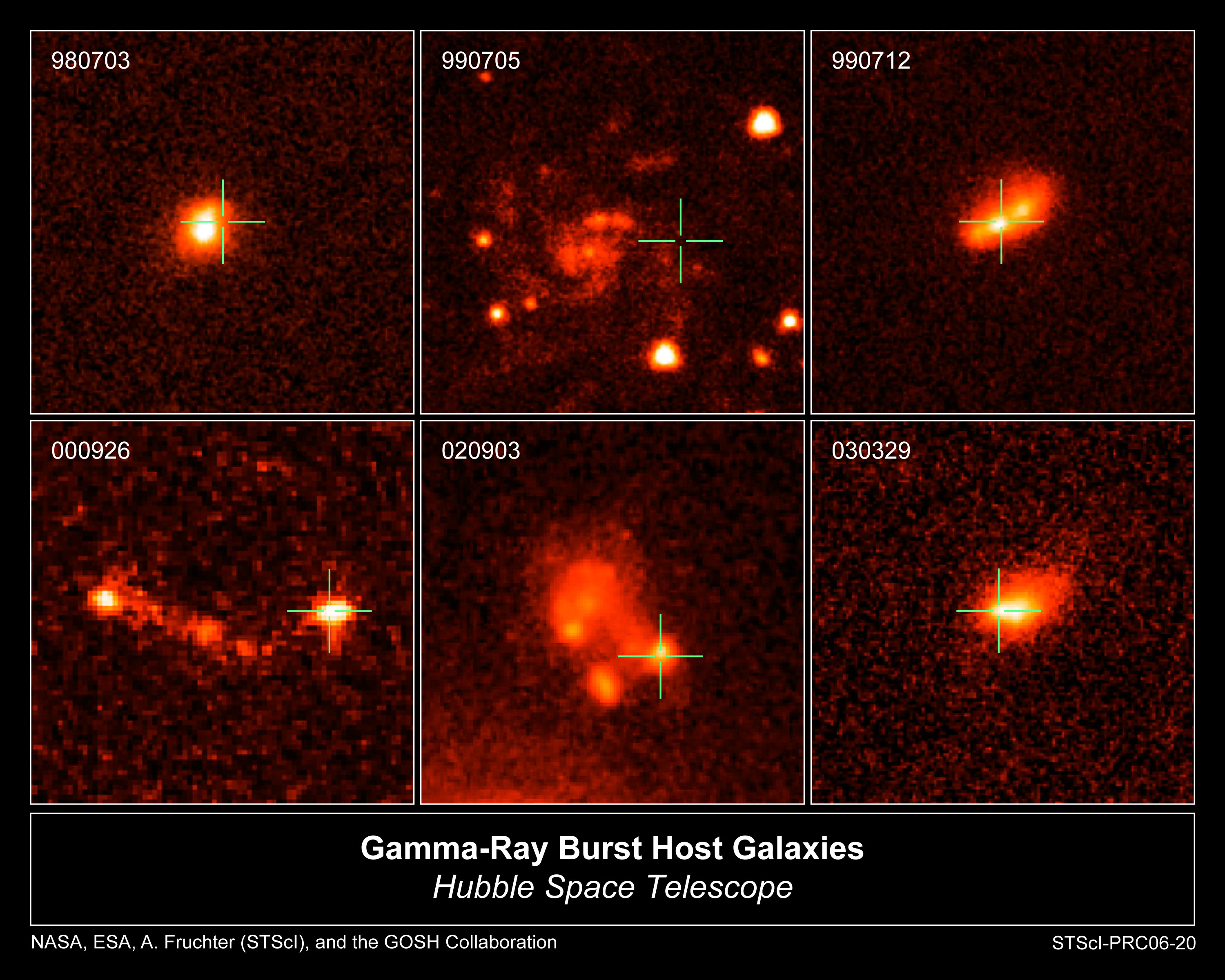
The Host Galaxies of Long-Duration GRBs
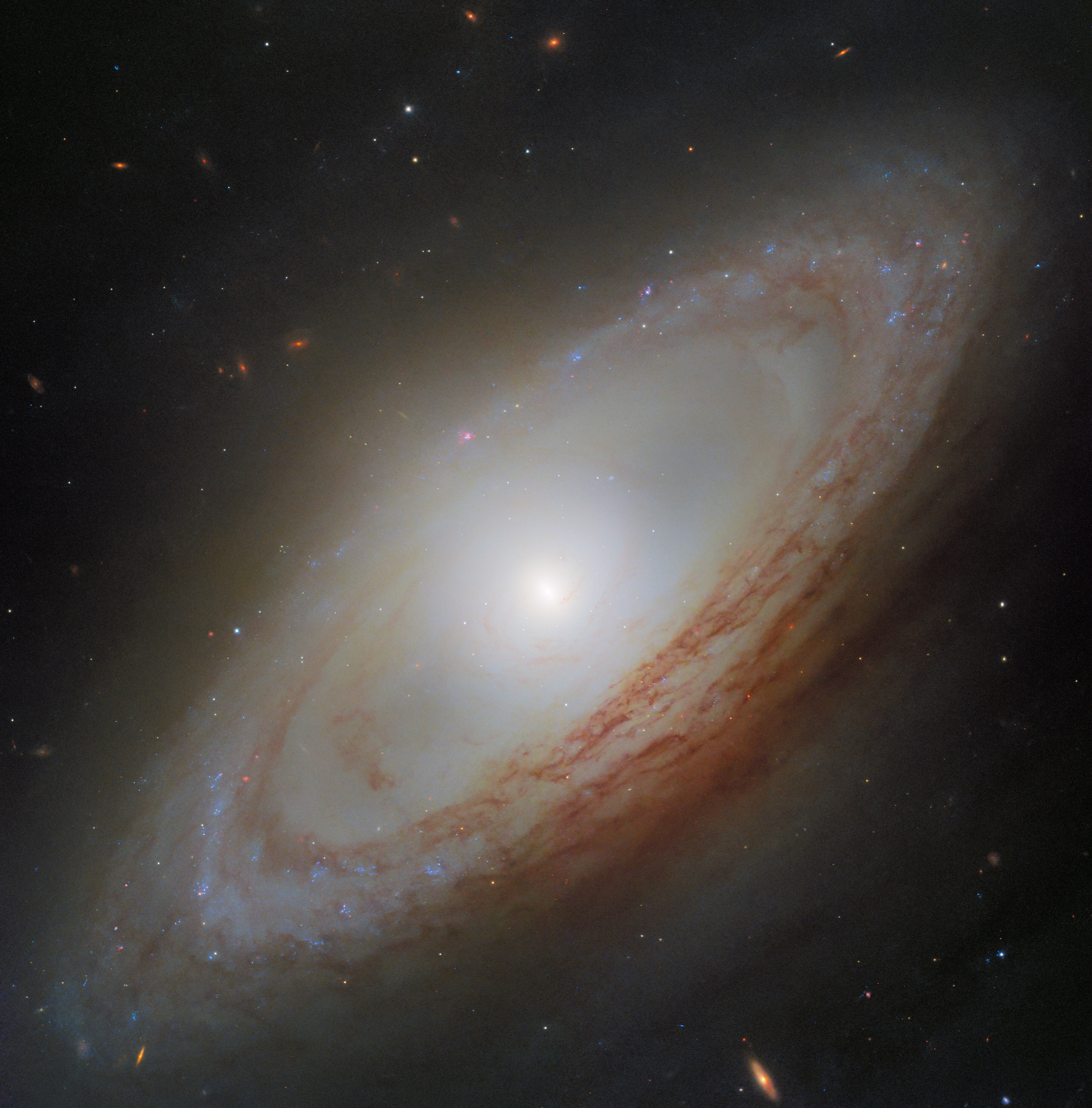
Explanation: What causes the powerful explosions known as gamma-ray bursts? Astrophysicists still aren't sure, but the longest duration gamma-ray bursts (GRBs) seem to involve very massive stars. A new clue indicating this was uncovered recently by a series of images taken by the orbiting Hubble Space Telescope . These images, shown above , indicate that long duration GRBs typically appear to come from galaxies and regions of galaxies with bright regions rich with star formation and bright, massive stars . Long GRBs are therefore different than many types of supernovas , which occur more uniformly distributed in their host galaxies. Since such active star forming regions are relatively rare in our Milky Way Galaxy , the chances of a nearby GRB affecting life on Earth are relatively slight .
| Date | May 17, 2006 |
|---|---|
| Credit | Credit: NASA , ESA , Andrew Fruchter ( STScI ), and the GOSH Collaboration |
| Authors & editors: | Robert Nemiroff (MTU) & Jerry Bonnell (UMCP) |
| A service of: |
ASD at NASA / GSFC, NASA Science Activation & Michigan Tech. U. |