











Brilliant Blue Star Cluster NGC 2031
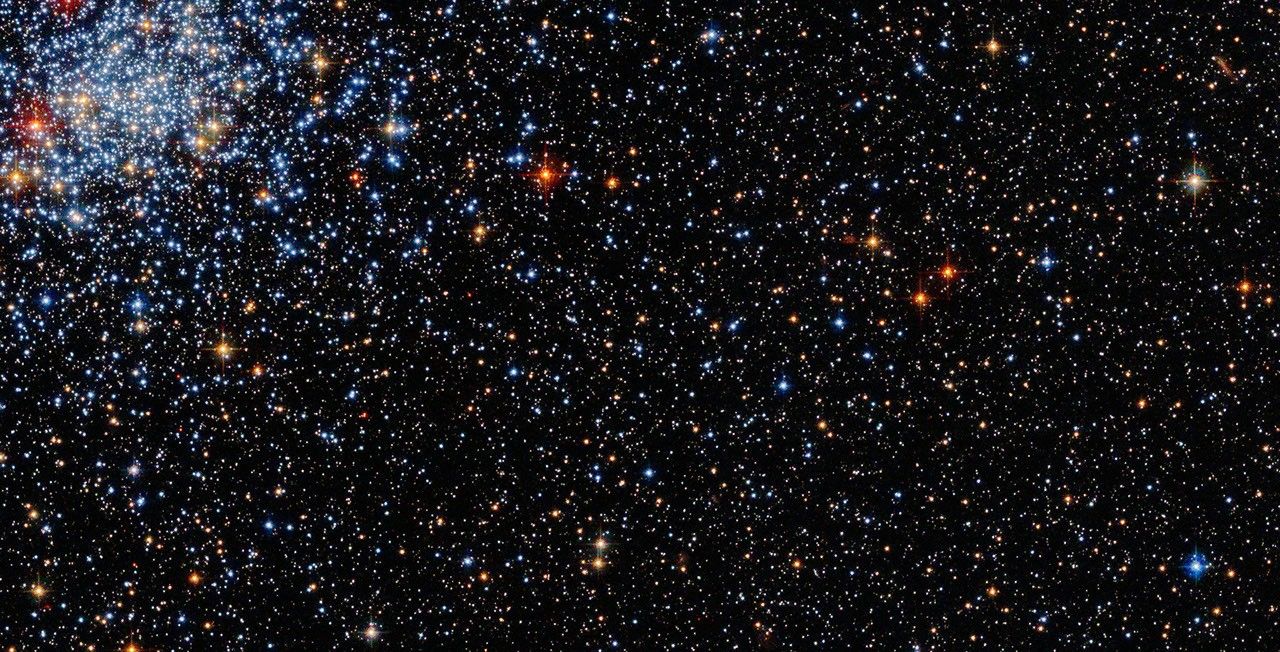
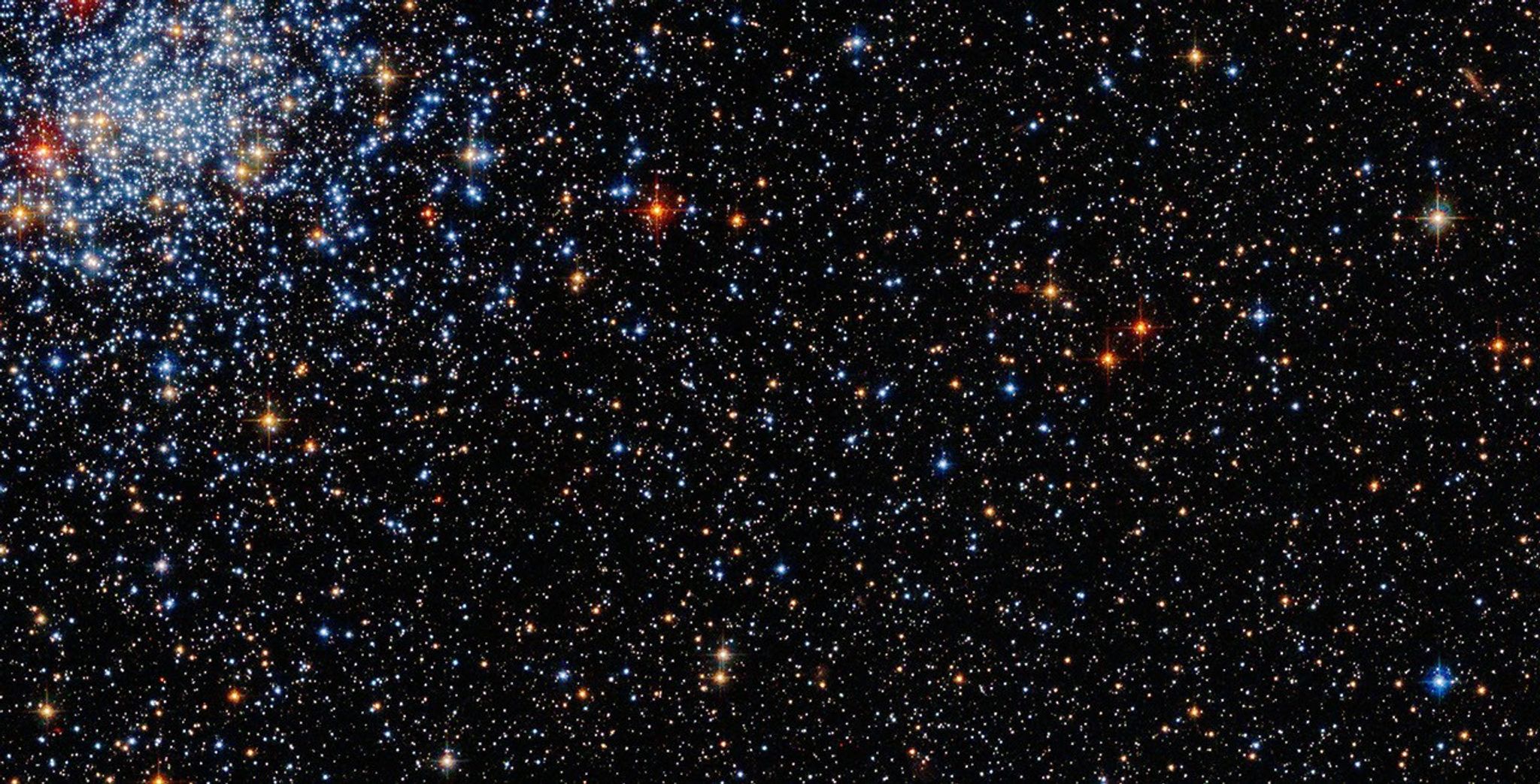
In the top left corner of this starry sight, the globular cluster NGC 2031 shines brilliantly. This dense group of thousands of stars is held together in a spherical shape by its stars’ mutual gravitational attraction. The cluster is located in the constellation Mensa in the Large Magellanic Cloud (LMC), a satellite galaxy of our Milky Way with many star-forming regions. It is visible from Earth’s southern hemisphere. NGC 2031 contains a sizable population of Cepheid variable stars (at least 14), which are stars that brighten and dim periodically. A Cepheid’s period between peak brightness, combined with measurements of brightness and some observations taken from Earth, can help astronomers determine the star’s distance from us. Using these measurements, scientists estimate the distance of NGC 2031 as roughly 150,000 light-years from Earth. NGC 2031 is estimated to be 140 million years old and has a mass more than 3,000 times that of our Sun. Astronomers studied this cluster using Hubble’s ultraviolet capabilities.
Image Credit: NASA, ESA and L. Bianchi (The Johns Hopkins University); Processing: Gladys Kober (NASA/Catholic University of America)
- X
https://science.nasa.gov/image-detail/amf-497b0c87-f99d-46db-a78c-de0bef5fb638/
Image CreditNASA, ESA and L. Bianchi (The Johns Hopkins University); Processing: Gladys Kober (NASA/Catholic University of America)
Size2048x1044px