

















NGC 6362’s Unexpected Population of Young-looking Stars
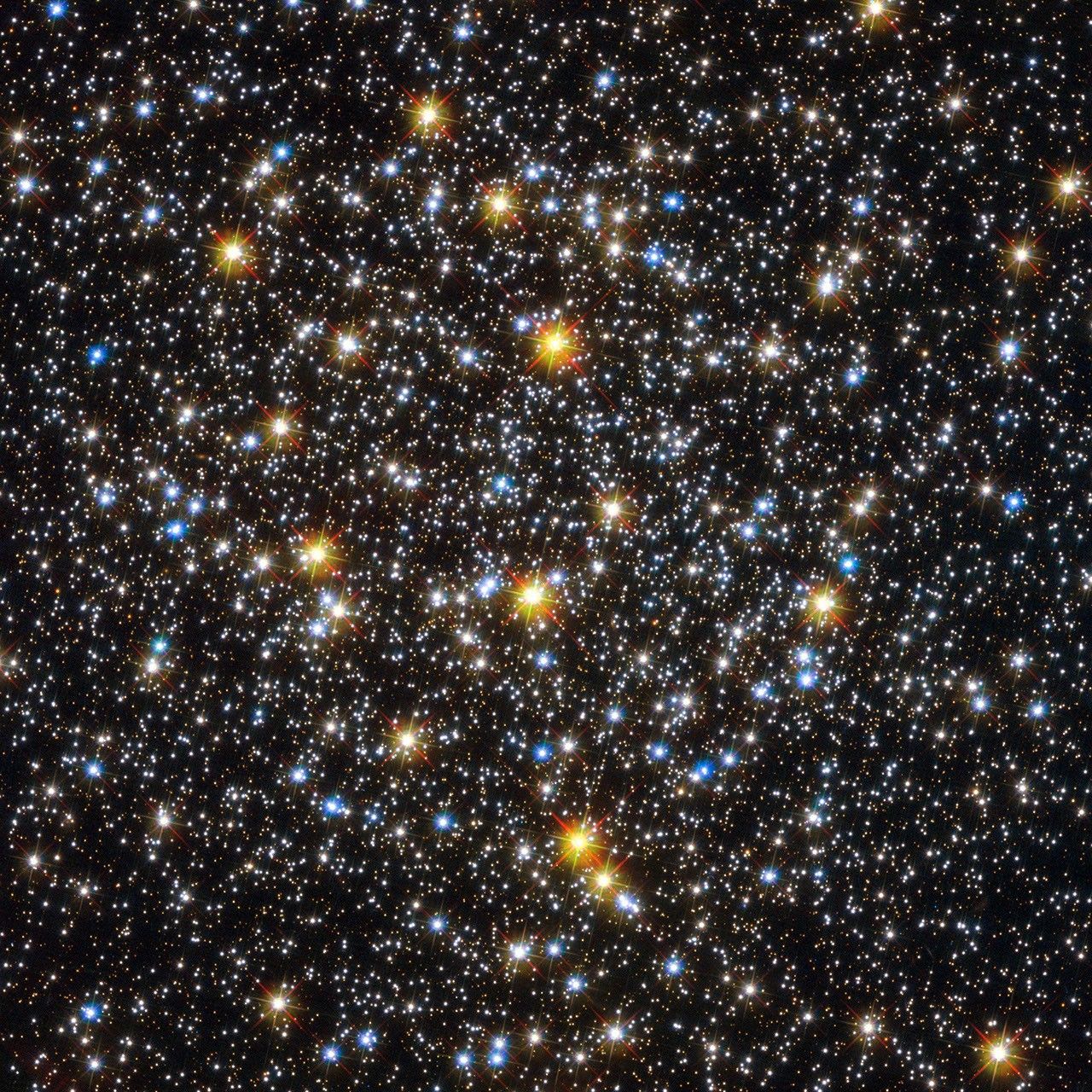
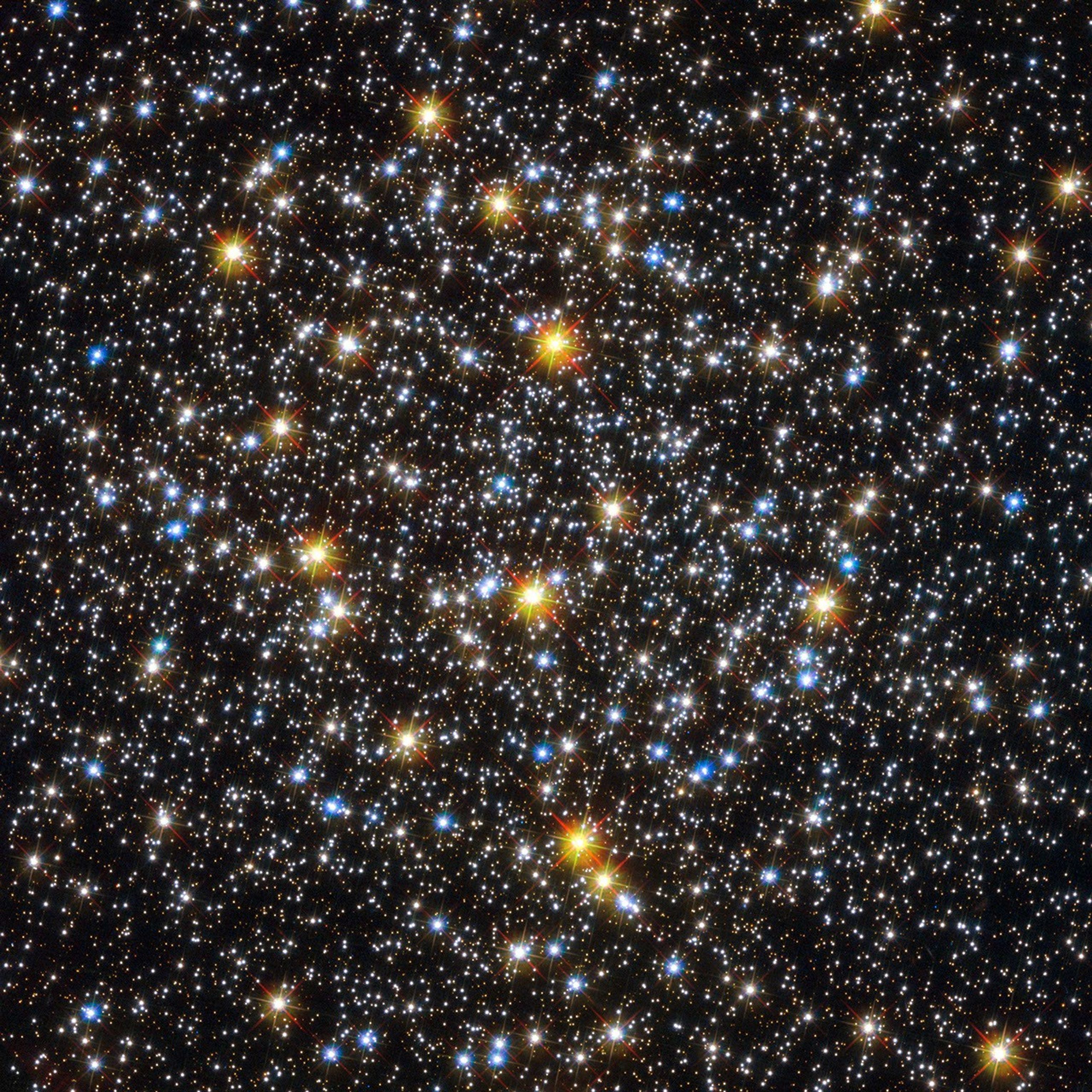
The Hubble Space Telescope offers here an impressive view of the center of globular cluster NGC 6362. The image of this spherical collection of stars takes a deeper look at the core of the globular cluster, which contains a high concentration of stars with different colors. Globular clusters are among the oldest structures in the universe that are accessible to direct observational investigation, making them living fossils from the early years of the cosmos. Astronomers infer important properties of globular clusters by looking at the light from their constituent stars. For many years, they were regarded as ideal laboratories for testing the standard stellar evolution theory. Among other things, this theory suggests that most of the stars within a globular cluster should be of a similar age. Recently, however, high precision measurements performed in numerous globular clusters, primarily with Hubble, have led some to question this widely accepted theory. In particular, certain stars appear younger and bluer than their companions, and they have been dubbed "blue stragglers." NGC 6362 contains many of these stars. Since they are usually found in the core regions of clusters, where the concentration of stars is large, the most likely explanation for this unexpected population of objects is that they are either the result of stellar collisions or the transfer of material between stars in close binary systems. An influx of new material would heat up the star and make it appear younger than its neighbors.
Image Credit: ESA/Hubble & NASA
- X
https://science.nasa.gov/image-detail/amf-c3781bf8-ef7e-4242-bc7b-1d8da51bd2a4/
Image CreditESA/Hubble & NASA
Size3061x3061px