



















NGC 411’s Deceptive Appearance
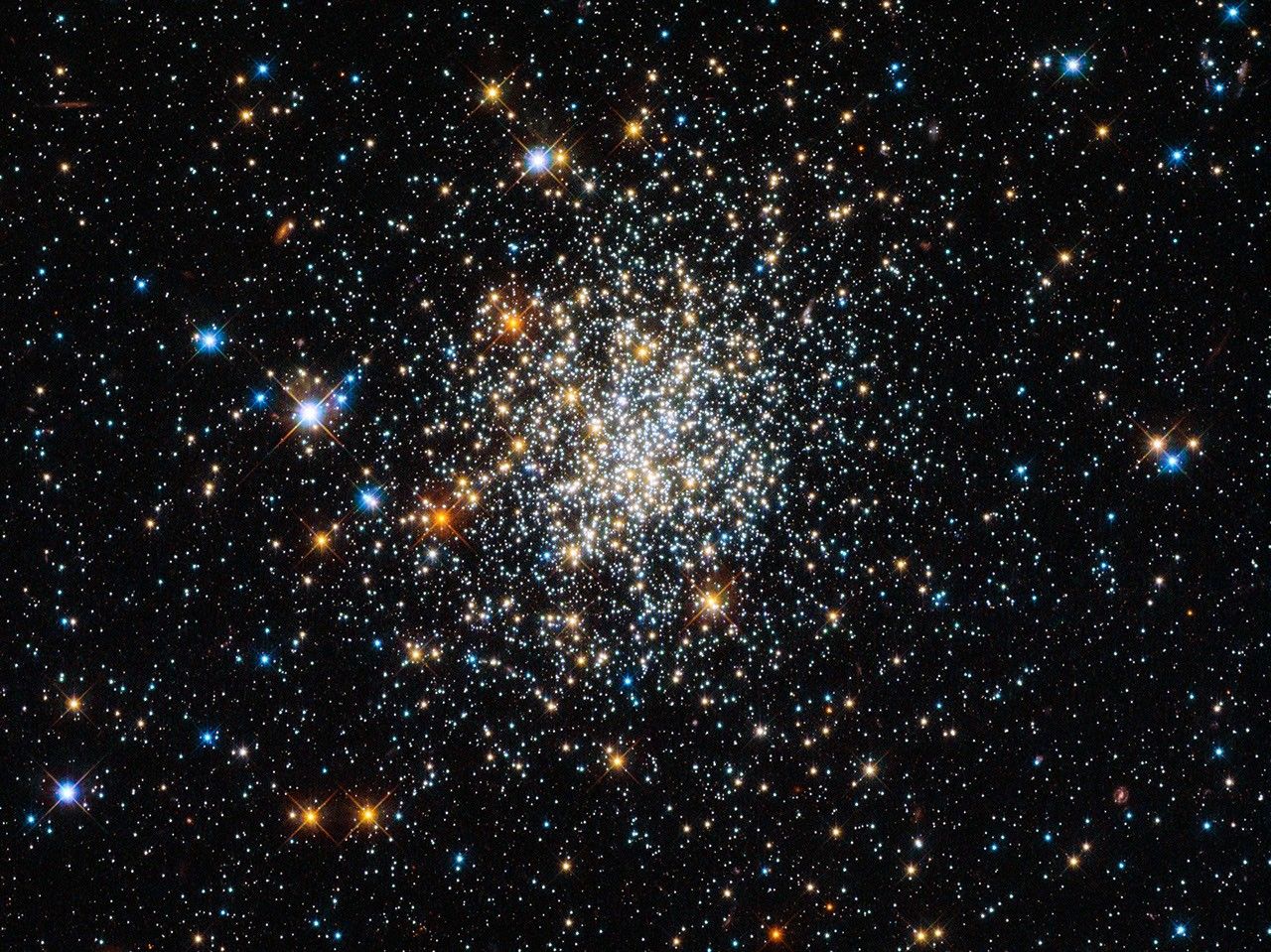
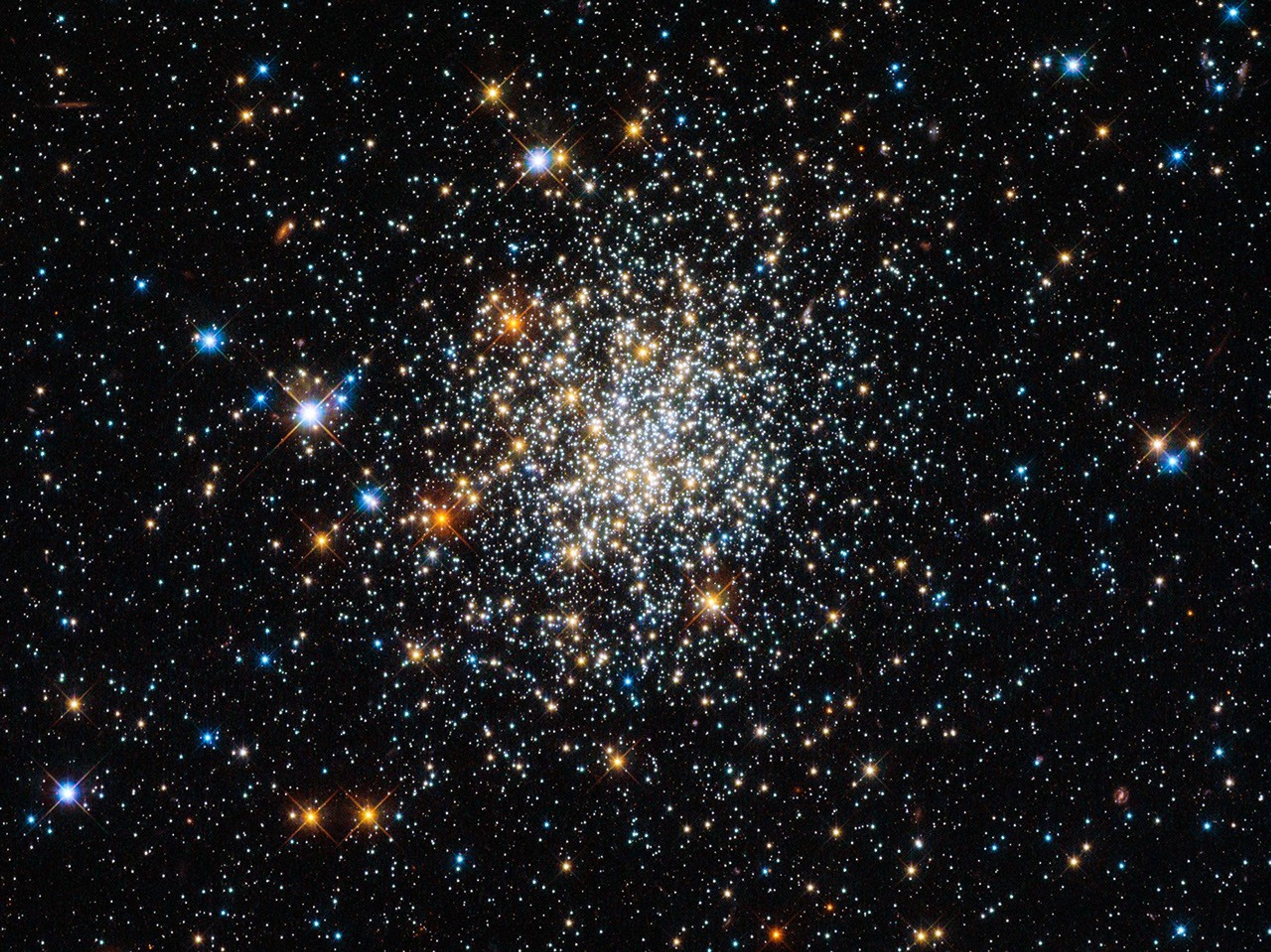
Globular clusters are roughly spherical collections of extremely old stars. The clusters all look very similar, and in Hubble’s images it can be quite hard to tell them apart — they all look much like NGC 411, pictured here. And yet appearances can be deceptive: NGC 411 is in fact not a globular cluster, and its stars are not old. It isn’t even in the Milky Way. NGC 411 is classified as an open cluster. Less tightly bound than a globular cluster, the stars in open clusters tend to drift apart over time as they age, whereas globulars have survived for well over 10 billion years of galactic history. NGC 411 is a relative youngster — not much more than a tenth of this age. Far from being a relic of the early years of the universe, the stars in NGC 411 are in fact a fraction of the age of the Sun. The stars in NGC 411 are all roughly the same age, having formed around the same time from one cloud of gas. But they are not all the same size. Hubble’s image shows a wide range of colors and brightnesses in the cluster’s stars. These tell astronomers many facts about the stars, including their mass, temperature, and evolutionary phase. Blue stars, for instance, have higher surface temperatures than red ones.
Image Credit: ESA/Hubble & NASA
- X
https://science.nasa.gov/image-detail/amf-645f6bf2-79c9-4851-97ef-e835ec5bd1a9/
Image CreditESA/Hubble & NASA
Size3675x2756px