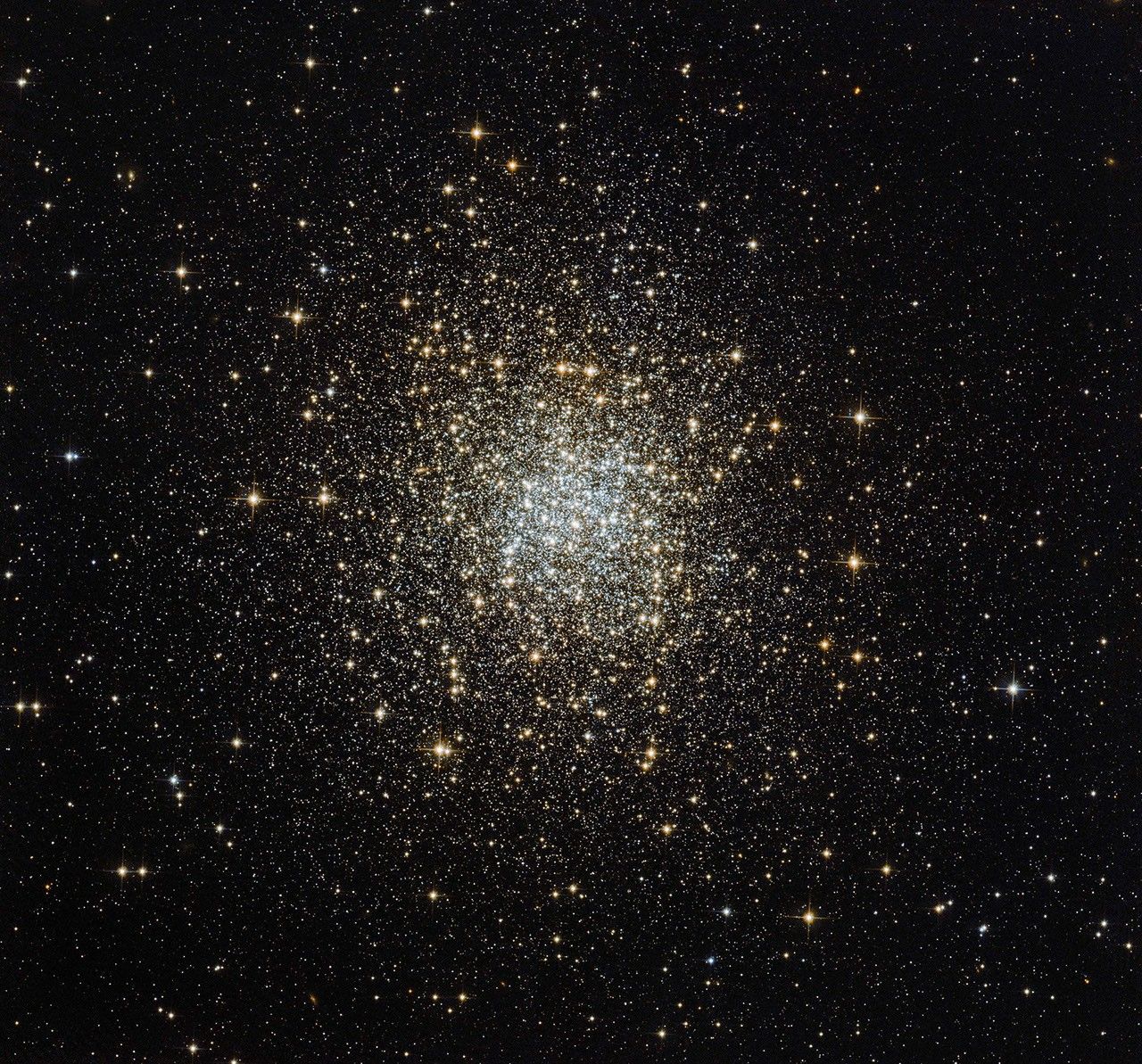

















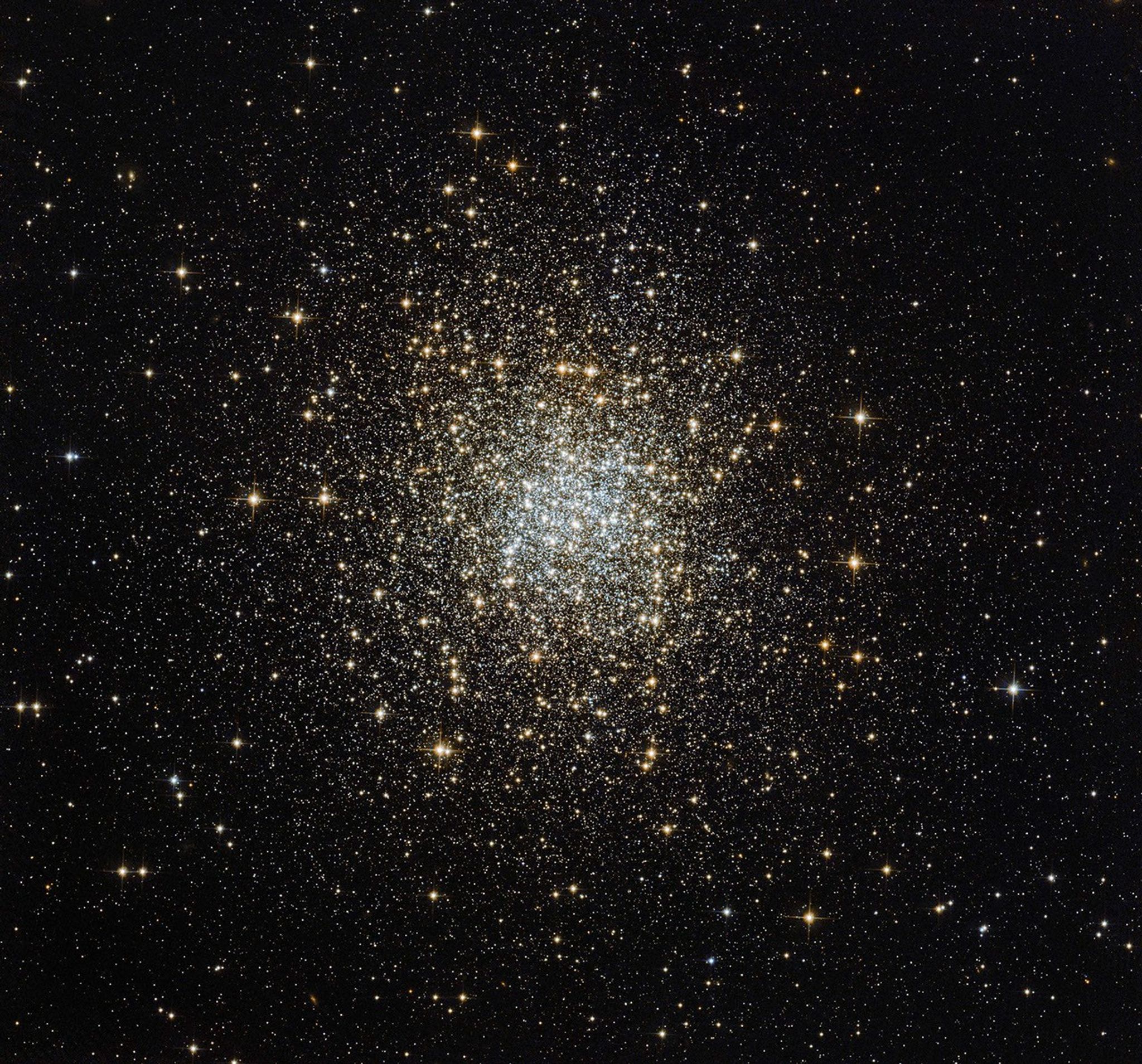
Unique Cluster Palomar 2
Globular clusters are relatively common in our sky, and generally look similar. However, this image shows a unique example of such a cluster: Palomar 2. Palomar 2 is part of a group of 15 globulars known as the Palomar clusters. These clusters were discovered in survey plates from the first Palomar Observatory Sky Survey in the 1950s, a project that involved some of the most well-known astronomers of the day, including Edwin Hubble. They were discovered quite late because they are so faint — each is either extremely remote, very heavily hidden behind blankets of dust, or has a very small number of remaining stars. This particular cluster is unique in more than one way. For one, it is the only globular cluster that we see in this part of the sky, the northern constellation of Auriga (the Charioteer). Globular clusters orbit the center of a galaxy like the Milky Way in the same way that satellites circle the Earth. This means that they normally lie closer in to the galactic center than we do, and so we almost always see them in the same region of the sky. Palomar 2 is an exception to this, as it is around five times farther away from the center of the Milky Way than other clusters. It also lies in the opposite direction — farther out than Earth — and so it is classed as an “outer halo” globular. Its brightness is also unusual. The cluster is veiled by a mask of dust, dampening the apparent brightness of the stars within it and making it appear as a very faint burst of stars.
Image Credit: ESA/Hubble & NASA
- X
https://science.nasa.gov/image-detail/amf-29f3c778-209a-4235-bb38-8e87b008f800/
Image CreditESA/Hubble & NASA
Size2048x1909px