
























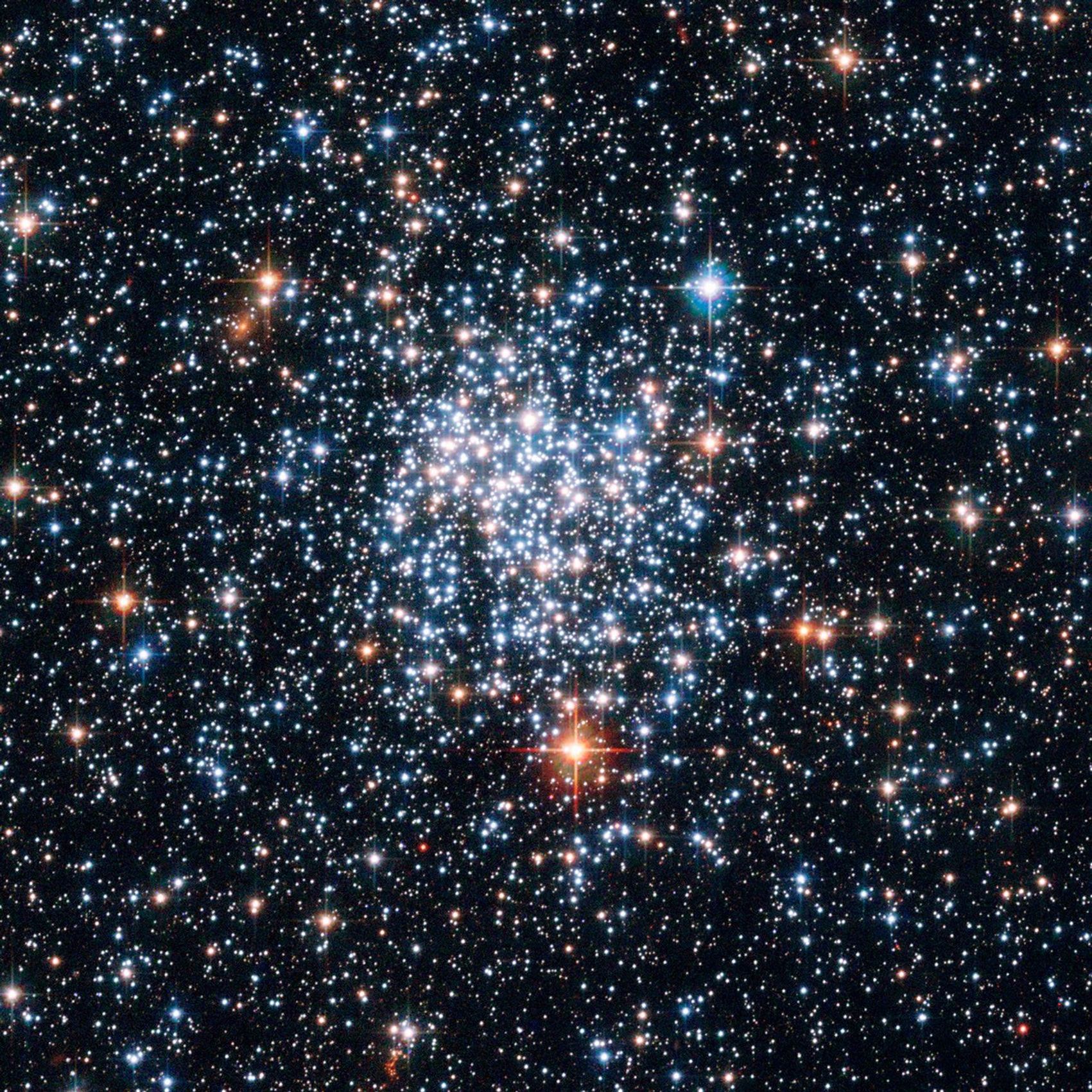
NGC 265
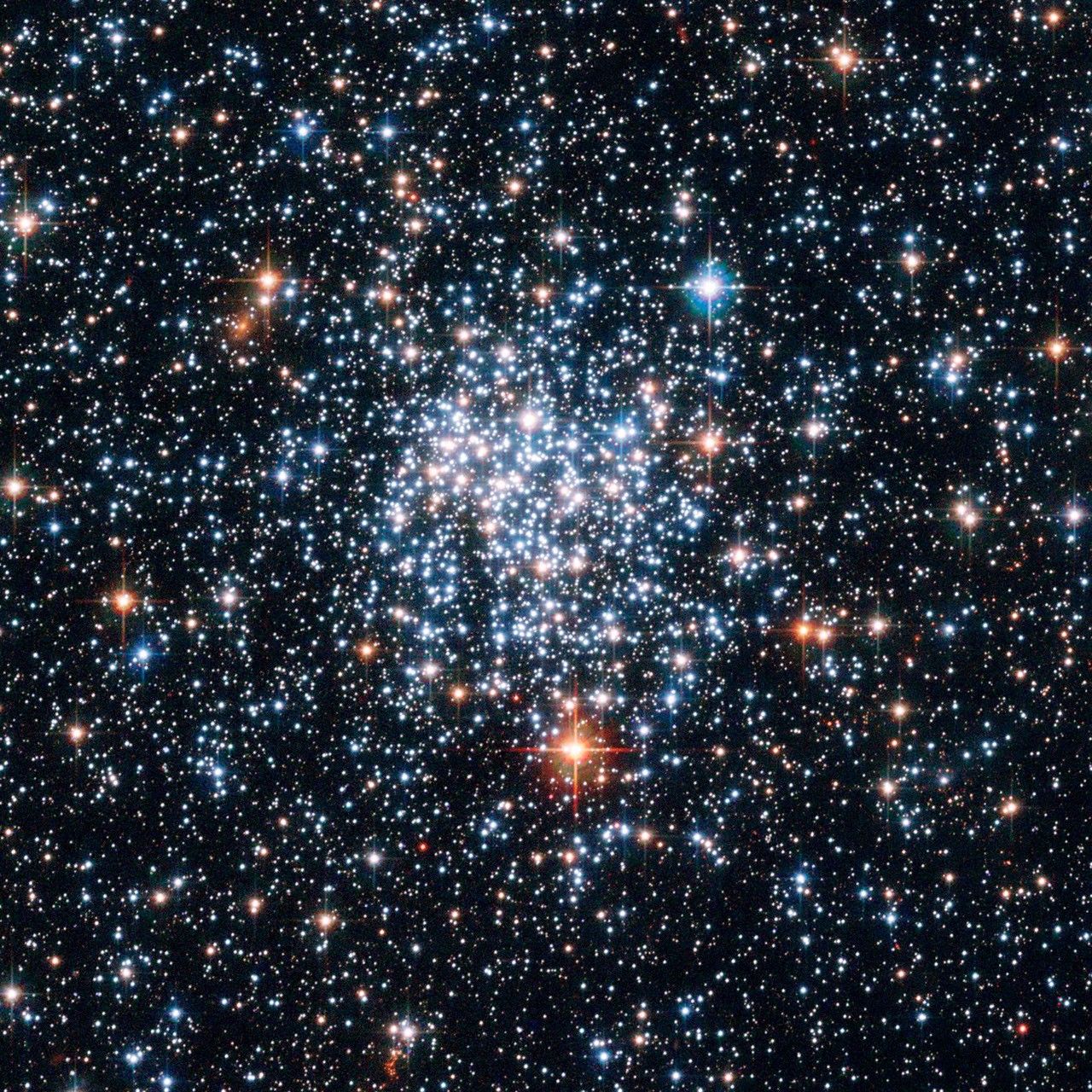
The Hubble Space Telescope captured this image of the open star cluster NGC 265 in the Small Magellanic Cloud in the southern sky. Star clusters can be held together tightly by gravity, as is the case with densely packed crowds of hundreds of thousands of stars, called globular clusters. Or, they can be more loosely bound, irregularly shaped groupings of up to several thousand stars, like the open cluster shown in this image. Open clusters will dissolve, their stars dispersing into space, within a few hundred million years. The Small Magellanic Cloud, which hosts this star cluster, is one of the small satellite galaxies of the Milky Way. The Small Magellanic Cloud is rich in gas nebulae and star clusters. It is most likely that this irregular galaxy has been disrupted through repeated interactions with the Milky Way, resulting in the vigorous star-forming activity seen throughout the cloud. NGC 265 and its twin, NGC 290, may very well owe its existence to these close encounters with the Milky Way.
Image Credit: European Space Agency & NASA; Acknowledgment: E. Olszewski (University of Arizona)
- X
https://science.nasa.gov/image-detail/amf-06fcaa6c-dcef-4f0a-b279-df7f721eaadb/
Image CreditEuropean Space Agency & NASA; Acknowledgment: E. Olszewski (University of Arizona)
Size1701x1701px