




















7.1. What is a biosignature?
A core learning question from the Astrobiology Learning Progressions
Astrobiology Learning Progressions Navigation


Grades K-2 or Adult Naive Learner
Have you ever been walking along and found a feather from a bird on the ground? If so, you would have known right away that a bird has been in that area. Maybe it flew by just recently or maybe a long time ago. You might be able to tell by the condition of the feather. You might also be able to tell what type of bird had been in the area by looking at the size and the color of the feather and matching it to what the feathers of some birds look like. There are lots of things that are left behind by animals and plants, and they let us know more about who was there. A feather, dog poop, deer footprints, the breathing holes on beaches for clams, spider webs, and pollen from flowers all help us to know about the life in an area without actually seeing the living things themselves. When we do this, we are using a scientific idea called inference. It is important to know the difference between observation using your senses and inferring when you use your thoughts. Both are very important for scientists to use to investigate nature. Keep exploring!
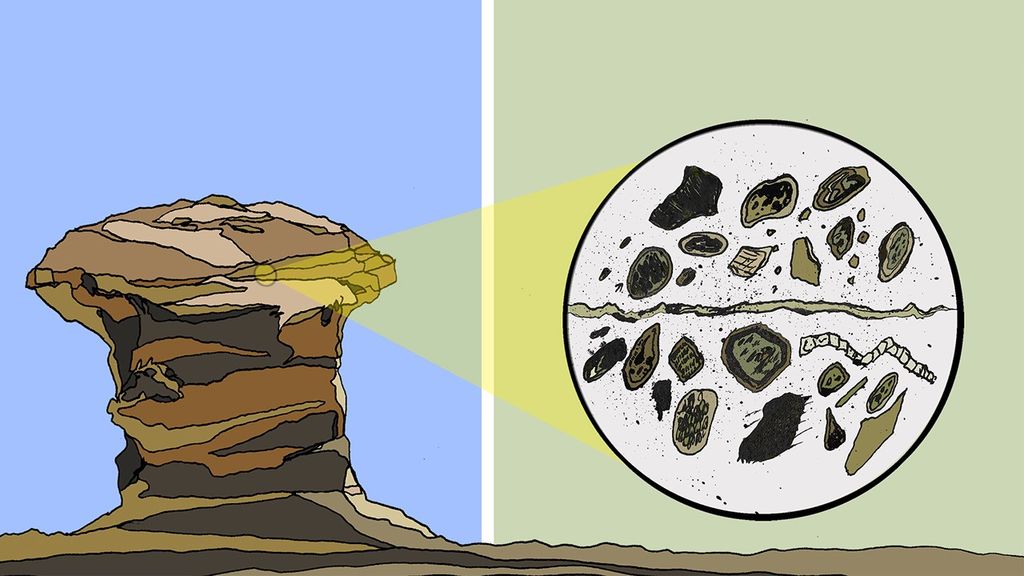
Disciplinary Core Ideas
LS1.A: Structure and Function: All organisms have external parts. Different animals use their body parts in different ways to see, hear, grasp objects, protect themselves, move from place to place, and seek, find, and take in food, water and air. Plants also have different parts (roots, stems, leaves, flowers, fruits) that help them survive and grow. (1-LS1-1)
LS4.D: Biodiversity and Humans: There are many different kinds of living things in any area, and they exist in different places on land and in water. (2-LS4-1)
ESS2.E: Biogeology: Plants and animals can change their environment. (K-ESS2-2)
Crosscutting Concepts
Cause and Effect: Events have causes that generate observable patterns. (2-LS2-1)
Structure and Function: The shape and stability of structures of natural and designed objects are related to their function(s). (2-LS2-2)
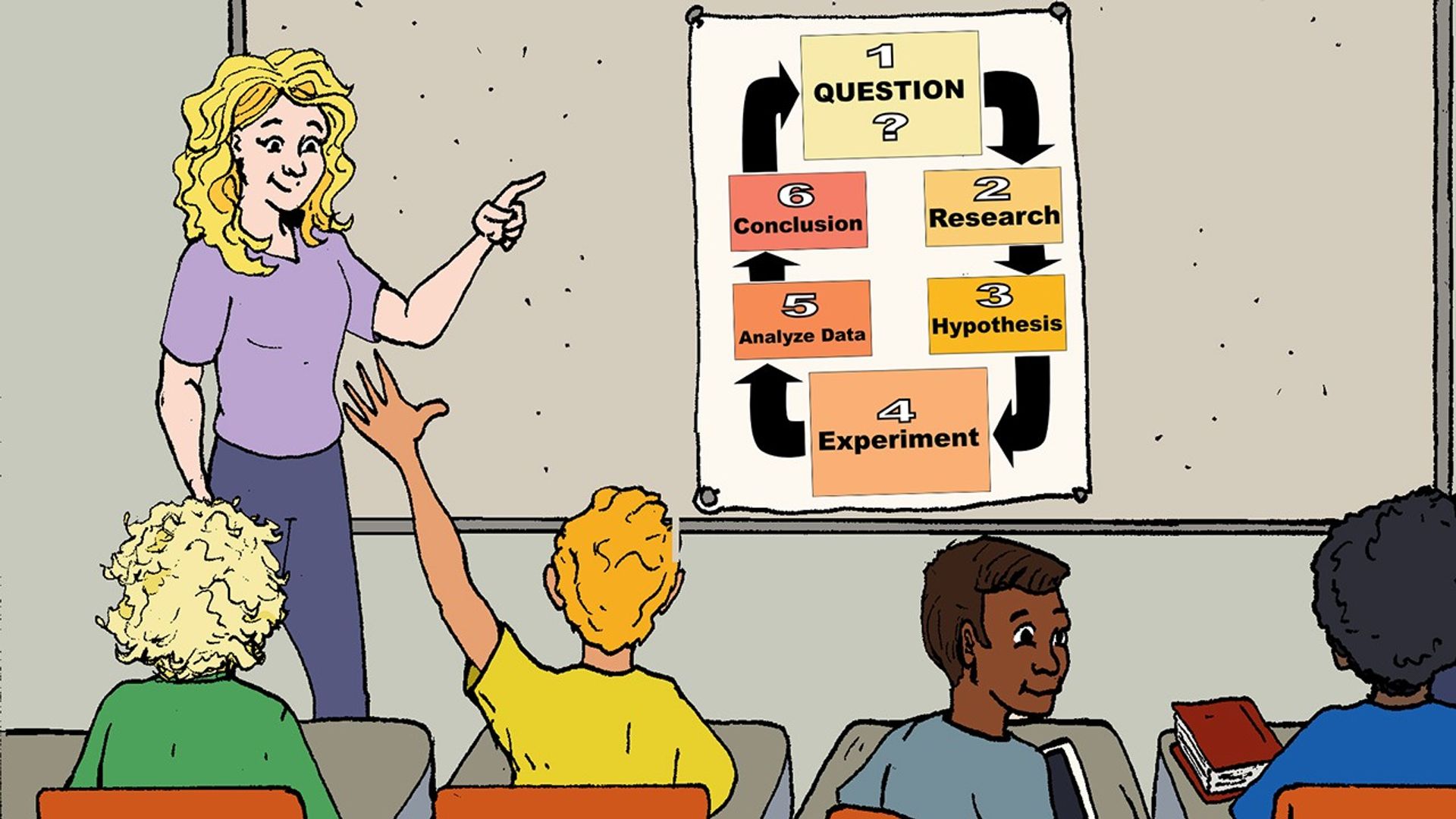
Big Ideas: Plants and animals have certain characteristics that help identify them. They leave traces of themselves in their environment. These signs of life are clues that something living was once there.
Boundaries: Students in this grade band make observations of plants and animals to compare the diversity of life in different habitats. Emphasis is on the diversity of living things in each of a variety of different habitats. Assessment does not include specific animal and plant names in specific habitats. (2-LS4-1)
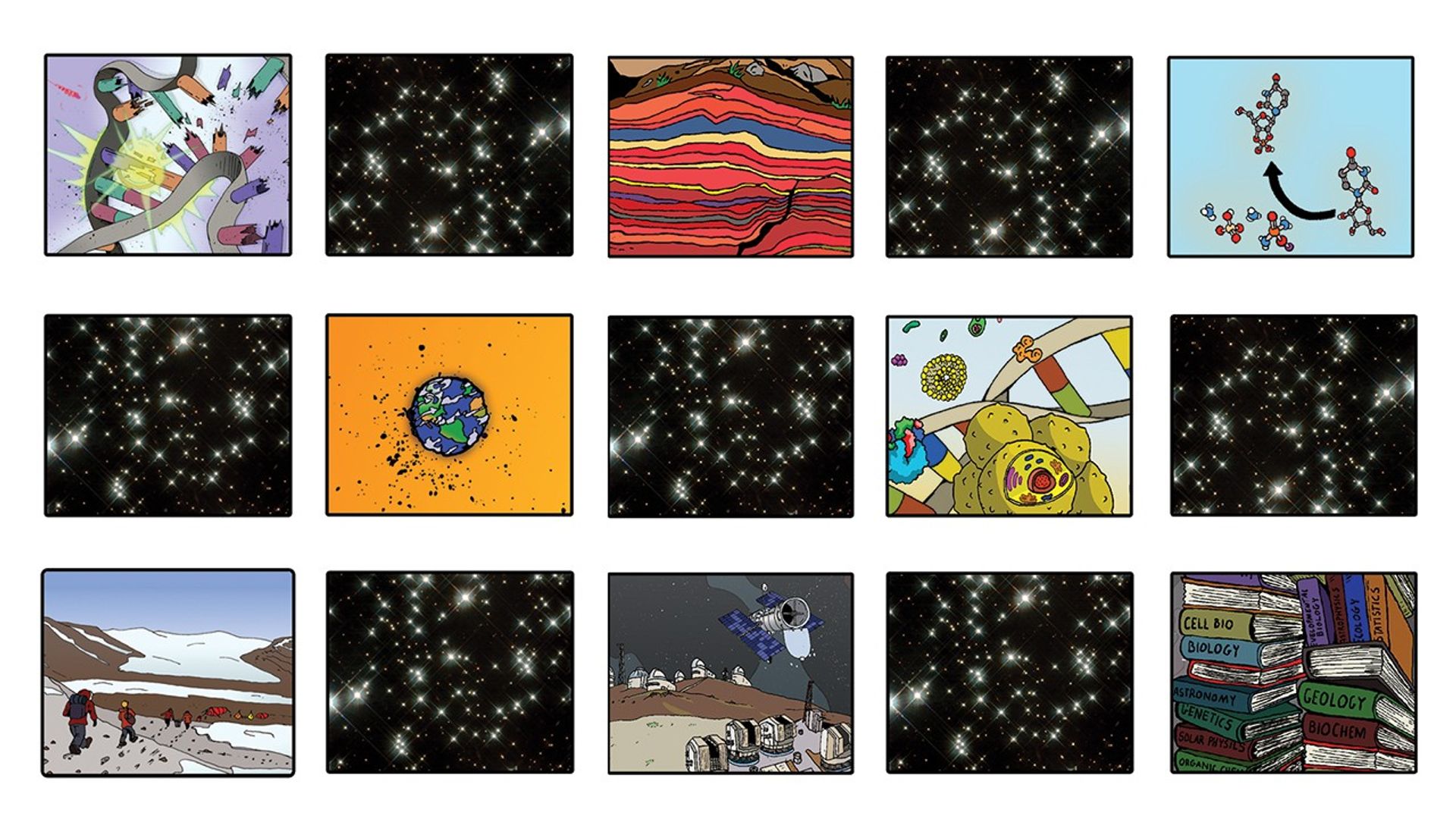
No appropriate content for this grade level. Please use the navigation arrows to switch levels.

Grades 3-5 or Adult Emerging Learner
Have you ever found a shell on a beach, seen the footprints left by a dog, or discovered a nest in a tree? Every time we see these things like these we think about the living creatures that created them. It would be great to see a living clam, dog, or baby bird, but that’s not always possible. There are lots of examples of things that are left behind by living creatures: birds’ feathers, dog poop, deer footprints, the holes on beaches made by clams, spider webs, and pollen from flowers are all examples. As we investigate the world around us we need to remember the importance of observations and inferences.
Observations are when we use our senses such as seeing, hearing, and touching to discover things in the world. For instance, maybe you picked up a glass of water and observed that the glass was really cold. Or maybe you looked up at night and happened to observe a shooting star streaking across the sky.
Inferences are when we use logic or common sense in order to figure out things from our observations. If you saw a rainbow in the sky, you might infer that it had recently rained. If you walk into your house and it smells like yummy food, you might infer that someone is probably cooking. If you kick a soccer ball and the ball feels too soft and squishy, you might infer that there’s not enough air in the ball. Inferences are how we use connect our observations to things that are happening.
For the people who want to know if there are other kinds of life in our universe, one thing they’re looking for are signs of life. Maybe finding something life left behind on another planet or Moon beyond Earth would help us understand if living things are there or were there in the past. It hasn’t been done yet, no life or evidence of life has been found so far on another world, but maybe that means we just need to do more exploring.
Disciplinary Core Ideas
LS1.A: Structure and Function: Plants and animals have both internal and external structures that serve various functions in growth, survival, behavior, and reproduction. (4-LS1-1)
LS4.A: Evidence of Common Ancestry and Diversity: Some kinds of plants and animals that once lived on Earth are no longer found anywhere. (3-LS4-1) ▪ Fossils provide evidence about the types of organisms that lived long ago and also about the nature of their environments. (3-LS4-1)
LS4.D: Biodiversity and Humans: Populations live in a variety of habitats, and change in those habitats affects the organisms living there. (3-LS4-4)
ESS1.C: The History of Planet Earth: Local, regional, and global patterns of rock formations reveal changes over time due to earth forces, such as earthquakes. The presence and location of certain fossil types indicate the order in which rock layers were formed. (4-ESS1-1)
ESS2.E: Biogeology: Living things affect the physical characteristics of their regions. (4-ESS2-1)
LS2.B: Cycles of Matter and Energy Transfer in Ecosystems: Matter cycles between the air and soil and among plants, animals, and microbes as these organisms live and die. Organisms obtain gases, and water, from the environment, and release waste matter (gas, liquid, or solid) back into the environment. (5-LS2-1)
Crosscutting Concepts
Cause and Effect: Cause and effect relationships are routinely identified and used to explain change. (5-PS2-1)
Scale, Proportion, and Quantity: Natural objects exist from the very small to the immensely large. (5-ESS1-1)
Big Ideas: There are signs of life all over the environment. Plants and animals have certain characteristics that indicate where when, and how they live(d). They leave traces of themselves in their environment. These signs of life are clues that something living was once there. These clues can be observed in the world and inferences can be made to figure out their meaning.
Boundaries: Students in this grade band analyze and interpret data from fossils to provide evidence of the organisms and the environments in which they lived long ago. Examples of data could include type, size, and distributions of fossil organisms. Examples of fossils and environments could include marine fossils found on dry land, tropical plant fossils found in Arctic areas, and fossils of extinct organisms. Assessment does not include identification of specific fossils or present plants and animals. Assessment is limited to major fossil types and relative ages. (3-LS4-1)
5-12 Astrobiology Graphic Histories. Issue 1: The Origin of Science. These astrobiology related graphic books are ingenious and artfully created to tell the story of astrobiology in a whole new way. The complete series illustrates the backbone of astrobiology from extremophiles, to exploration within and beyond the solar system. This issue traces the roots of Astrobiology in the search for life beyond Earth. NASA . https://astrobiology.nasa.gov/resources/graphic-histories/
Grades 6-8 or Adult Building Learner
Many of us have wondered whether or not there could be other living things out there in the universe. What do you think? Do you think we could find livings things on another planet, on a moon, or maybe even somewhere else? And, maybe a more important question, how might we find that life if it exists? The first and maybe simplest answer would be to just look with a good camera or even our eyes and if we see a big alien with legs walking about or one with wings flying around, then we know we’ve found it. But what if living things are different on other planets and not so easy to see? What if the alien life on another planet is all microbial and not easy to find? Or, what if life on another world had once been present but has now gone extinct? We can still use the tools of science to try to figure out if there are or were living things there.
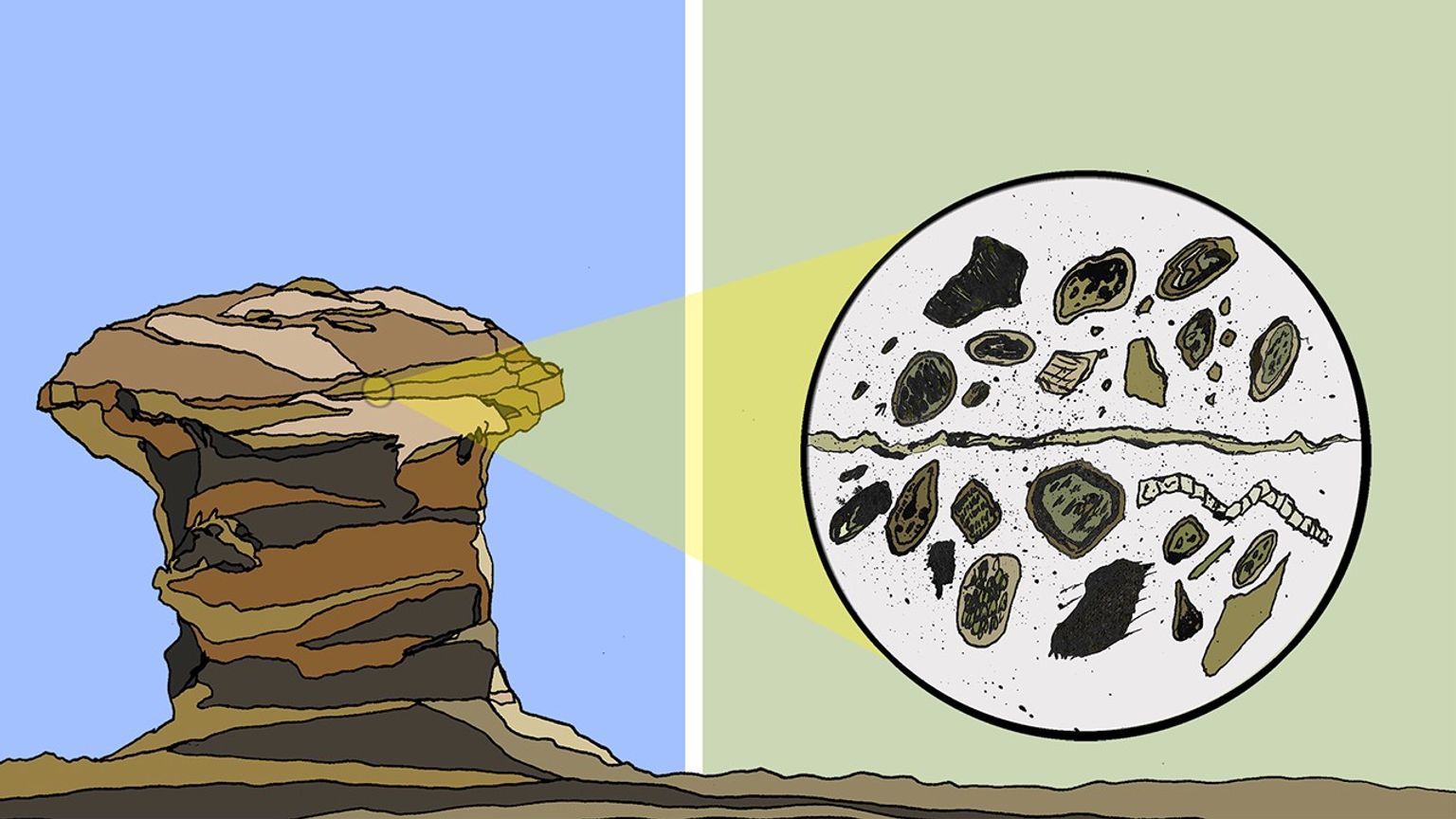
If you were to see a leaf on the ground, you probably would be able to guess that there is a tree somewhere nearby. If you know enough about leaves, you might even be able to say what kind of tree it is. Similarly, if you were out hiking and found a bird’s feather on the ground, not only could you guess that a bird had been somewhere nearby, but you might also be able to use that feather to figure out what species of bird it was. In these cases, the leaf and the feather are not a tree or a bird, but they’re things that are left behind from the tree and the bird that we can use to learn more about them. The leaf and the feather are signs that tell us about the life that was there. We call these kinds of things “biosignatures.” A biosignature is any characteristic, element, molecule, substance, or feature that can be used as evidence for past or present life. It also needs to be something that can’t be made without the presence of life. It can be something like a leaf or a feather, but also leftover footprints in the mud, fossils stored away in the rocks, organic molecules made by life, and even differences in the chemistry of an atmosphere or a body of water. For instance, early in our planet’s history our atmosphere didn’t have any of the oxygen that we breathe as O2\. Just how plants breathe in CO2 and breathe out O2 today, living things on Earth breathing out O2 are responsible for all of that oxygen we have in our atmosphere. So, it’s possible that oxygen or another gas used by life in an atmosphere might be a biosignature. Another type of biosignature could come from the way that minerals are shaped inside of rocks. For instance, microorganisms living together in goopy microbial mats in shallow waters can create layered structures of minerals called stromatolites. There are microbial mats that are doing this today and there are fossilized versions of microbial mats from billions of years ago. If we were to go exploring on another world like Mars and found layered minerals from stromatolites in a rock, then that might be a biosignature that suggests that life might have been present.
Another kind of biosignature could come from intelligent alien life if it exists out there. The same way that we’ve been beaming our television and radio waves into space for over a century, maybe some intelligent life out there has been transmitting messages into space as well. If we were to receive these messages with our radio telescopes we might be able to use them as a type of biosignature called a technosignature (one that shows us that technological life made it). While people have been actively listening with radio telescopes to see if they can find any of these technosignatures, we haven’t found any yet, and it’s possible that intelligent life is less common than microbial life. For most of Earth’s history, life was microbial, but we really don’t know if that would be the case for other worlds that could have life as well. Our continued efforts to study life here on Earth and learn about the kinds of biosignatures that life leaves behind will help us as we keep asking ourselves if we’re alone in the universe and whether or not we might find signs of alien life out there.
Disciplinary Core Ideas
PS1.A: Structure and Properties of Matter: Substances are made from different types of atoms, which combine with one another in various ways. Atoms form molecules that range in size from two to thousands of atoms. (MS-PS1-1) ▪ Each pure substance has characteristic physical and chemical properties (for any bulk quantity under given conditions) that can be used to identify it. (MS-PS1-3) Gases and liquids are made of molecules or inert atoms that are moving about relative to each other. (MS-PS1-4)
PS1.B: Chemical Reactions: Substances react chemically in characteristic ways. In a chemical process, the atoms that make up the original substances are regrouped into different molecules, and these new substances have different properties from those of the reactants. (MS-PS1-3, MS-PS1-2, MS-PS1-5)
LS1.A: Structure and Function: All living things are made up of cells, which is the smallest unit that can be said to be alive. An organism may consist of one single cell (unicellular) or many different numbers and types of cells (multicellular). (MS-LS1-1) ▪ Within cells, special structures are responsible for particular functions, and the cell membrane forms the boundary that controls what enters and leaves the cell. (MS-LS1-2) ▪ In multicellular organisms, the body is a system of multiple interacting subsystems. These subsystems are groups of cells that work together to form tissues and organs that are specialized for particular body functions. (MS-LS1-3)
LS1.C: Organization for Matter and Energy Flow in Organisms: Plants, algae (including phytoplankton), and many microorganisms use the energy from light to make sugars (food) from carbon dioxide from the atmosphere and water through the process of photosynthesis, which also releases oxygen. These sugars can be used immediately or stored for growth or later use. (MS-LS1-6) ▪ Within individual organisms, food moves through a series of chemical reactions in which it is broken down and rearranged to form new molecules, to support growth, or to release energy. (MS-LS1-7)
LS4.A: Evidence of Common Ancestry and Diversity: The collection of fossils and their placement in chronological order (e.g., through the location of the sedimentary layers in which they are found or through radioactive dating) is known as the fossil record. It documents the existence, diversity, extinction, and change of many life forms throughout the history of life on Earth. (MS-LS4-1) ▪ Anatomical similarities and differences between various organisms living today and between them and organisms in the fossil record, enable the reconstruction of evolutionary history and the inference of lines of evolutionary descent. (MS-LS4-2) ▪ Comparison of the embryological development of different species also reveals similarities that show relationships not evident in the fully-formed anatomy. (MS-LS4-3)
PS3.D: Energy in Chemical Processes and Everyday Life: The chemical reaction by which plants produce complex food molecules (sugars) requires an energy input (i.e., from sunlight) to occur. In this reaction, carbon dioxide and water combine to form carbon-based organic molecules and release oxygen. (secondary to MS-LS1-6) ▪ Cellular respiration in plants and animals involve chemical reactions with oxygen that release stored energy. In these processes, complex molecules containing carbon react with oxygen to produce carbon dioxide and other materials. (MS-LS1-7)
ESS1.C: The History of Planet Earth: The geologic time scale interpreted from rock strata provides a way to organize Earth’s history. Analyses of rock strata and the fossil record provide only relative dates, not an absolute scale. (MS-ESS1-4) ▪ Tectonic processes continually generate new ocean sea floor at ridges and destroy old sea floor at trenches. (HS.ESS1.C GBE )
Crosscutting Concepts
Cause and Effect: Cause and effect relationships may be used to predict phenomena in natural or designed systems. (MS-LS2-1)
Big Ideas: Living organisms leave traces of themselves in their environments. They can also change their environment in small ways like leaving footprints, or in big ways like changing the chemistry of the atmosphere. Scientific tools can be used to detect various signs of life. There are certain molecules, such as oxygen, that may be indicators that the conditions for life might exist on a planet or moon. A biosignature is any characteristic, element, molecule, substance, or feature that can be used as evidence for past or present life. Technosignatures show signs of technological life and would be evidence of intelligent alien life. Knowledge about life on Earth helps in the search for traces of life beyond Earth.
Boundaries: Students in this grade band analyze and interpret data for patterns in the fossil record that document the existence, diversity, extinction, and change of life forms throughout the history of life on Earth under the assumption that natural laws operate today as in the past. Emphasis is on finding patterns of changes in the level of complexity of anatomical structures in organisms and the chronological order of fossil appearance in the rock layers. Assessment does not include the names of individual species or geological eras in the fossil record. (MS-LS4-1)
5-12 Astrobiology Graphic Histories. Issue 1: The Origin of Science. These astrobiology related graphic books are ingenious and artfully created to tell the story of astrobiology in a whole new way. The complete series illustrates the backbone of astrobiology from extremophiles, to exploration within and beyond the solar system. This issue traces the roots of Astrobiology in the search for life beyond Earth. NASA . https://astrobiology.nasa.gov/resources/graphic-histories/
6-8 SpaceMath Problem 545: Measuring Atmospheric Trace Gases Using Parts Per Million. Students convert from percentage units to parts per million and compare trace gases in the atmospheres of various planets. [Topics: percentages; unit conversions] https://spacemath.gsfc.nasa.gov/astrob/10Page8.pdf
6-8 SpaceMath Problem 544:The Composition of Planetary Atmospheres. Students study the composition of planetary atmospheres and compare the amounts of certain compounds in them [Topics: pie graphs; percentages; scientific notation] https://spacemath.gsfc.nasa.gov/astrob/10Page7.pdf
6-8 SpaceMath Problem 391: Investigating the atmosphere of Super-Earth GJ-1214b. Students investigate a simple model for the interior of an exoplanet to estimate the thickness of its atmosphere given the mass size and density of the planet. [Topics: graphing functions; evaluating functions for given values; volume of a sphere; mass = density x volume] https://spacemath.gsfc.nasa.gov/astrob/7Page55.pdf
6-12 Astrobiology Math. This collection of math problems provides an authentic glimpse of modern astrobiology science and engineering issues, often involving actual research data. Students explore concepts in astrobiology through calculations. Relevant topics include Organic Molecules Detected on a Distant Planet (page 93) and Estimating the Temperatures of Exoplanets (page 101). NASA . https://www.nasa.gov/pdf/637832main_Astrobiology_Math.pdf
Grades 9-12 or Adult Sophisticated Learner
Many of us have wondered whether or not there could be other living things out there in the universe. Do you think we could find livings things on another planet, on a moon, or maybe even somewhere else? And, maybe a more important question, how might we find that life if it exists?
The first and maybe simplest answer would be to just look with a good camera or even our eyes and if we see a big alien with legs walking about or one with wings flying around, then we know we’ve found it. But what if the life on another planet is all microbial and not easy to find? Or, what if life on another world has now gone extinct? We can still use the tools of science to try to figure out if there are or were living things there.
Often in our daily lives we can find signs of life and know that a plant or an animal was present without really seeing it. A bird’s feather, some dog poop, dandelion seeds flying through the air, and a person’s footprints leftover in some mud are all signs of living things. Being able to find such signs is so important for astrobiology that we even have a word to describe them: we call these kinds of things “biosignatures”. A biosignature is any characteristic, element, molecule, substance, or feature that can be used as evidence for past or present life. It also needs to be something that can’t be made without the presence of life. It can be something like a leaf or a feather, but could also be fossils stored away in the rocks, organic molecules made by life, and even differences in the chemistry of an atmosphere or a body of water.
A morphological biosignature is one that we can tell was made from life based on its shape and size. The word “morphology” comes from the Ancient Greek words “morphé” (for “form”) and “lógos” (for “study” or “research”). So, morphology is really about studying the form of living things, and a morphological biosignature is one that’s a formation or structure leftover from living things. For instance, microorganisms living together in goopy microbial mats in shallow waters can create layered structures of minerals called stromatolites. There are microbial mats that are doing this today and there are fossilized versions of microbial mats from billions of years ago. If we were to go exploring on another world like Mars and found layered minerals from stromatolites in a rock, then that might be a biosignature. There are a bunch of morphological biosignatures that we might consider, including various types of fossils, etchings or layering in rocks, and even direct observations of cells or active living things.
Chemical biosignatures include a huge range of possible ways that life can leave its mark within the chemistry of rocks, bodies of water, and even atmospheres. For instance, biological macromolecules such as lipids, carbohydrates, nucleic acids, and proteins might all be used as biosignatures. Looking on alien worlds for DNA and RNA might be a little too Earth-centric, since we’re really not sure if alien life would use the same information storage molecules as us, but if we find those or other nucleic acids on an alien worlds then they could be important for us to consider as possible signs of life. We could also look for the kinds of lipids (fats) that are used to make up the membranes of living cells. On Earth, leftover lipids from life that existed long ago has allowed some scientists to piece together the kinds of organisms that were alive in certain places long before we humans were around.
It turns out that many molecules have two or more versions, based on how the chemical bonds form inside of them. We call these versions “chiral”. Chiral comes from the Greek word for “hand”. This is because chiral molecules are mirror images of each other, just like your hands. Your left hand and right hand are mirror images of each other; they have the same shape and structure, but if you lay your left hand on top of your right hand you can see that they are obviously different (the thumbs stick out in opposite directions). Our studies of non-living materials both on Earth and from asteroids and comets shows us that non-living things tend to have an equal mix of left-handed and right-handed chiral molecules. But all living things on our planet prefer one or the other when making biological molecules. Inside of your cells, all of the amino acids in your proteins are of the left-handed form (we call them “L” form, from the Latin word “Laevo” (on the left)), while all of your simple sugars inside of your body are of the right-handed form (we call them “D” form, from the Latin word “Dexter” (on the right)). Although life here on Earth is our only example of life so far, it’s possible that alien life would also pick either the L or the D form for its organic molecules, and this is something we can search for as a chemical biosignature.
Another chemical biosignature is the ratio of isotopes of chemical elements. An isotope of an element is the same element, but with a different number of neutrons in the nucleus. For instance, carbon-12 and carbon-14 are both carbon atoms, but carbon-12 has 6 neutrons and carbon-14 has 8 neutrons. It turns out that life as we know it really prefers using lighter isotopes of chemical elements (those with less neutrons). When an organism is catalyzing a chemical reaction, more energy can be used for metabolism and growth if the organism uses molecules in the reaction that have lighter isotopes. We’ve discovered that we can use measurements of the ratios of the lighter isotopes to the heavier isotopes within samples from nature as biosignatures.
What if we can’t get to the surface of a planet or moon to study the rocks there? For instance, what kinds of biosignatures might we look for on exoplanets? Using our telescopes on the Earth and in orbit of our planet, we can now look at the atmospheres of exoplanets to see what kinds of gas molecules are abundant there. One thing we look for, are gases that might be signs of life. For instance, early in our planet’s history our atmosphere didn’t have any of the oxygen that we breathe as O2\. Just how plants breathe in CO2 and breathe out O2 today, living things on Earth breathing out O2 are responsible for all of that oxygen we have in our atmosphere. So, it’s possible that oxygen or another gas used by life in an atmosphere might be a biosignature.
What if there are other forms of life out there in the universe that have developed civilizations and technology? The same way that we’ve been beaming our television and radio waves into space for over a century, maybe some intelligent life out there has been transmitting messages into space as well. If we were to receive these messages with our radio telescopes we might be able to use them as a type of biosignature called a technosignature (one that shows us that technological life made it). Looking for such technosignatures is part of something called SETI , or the Search for Extraterrestrial Intelligence. Not only does work in SETI involve listening for radio waves, but also considers many other ways that an intelligent alien civilization may be detectable. That includes looking for gas molecules in an exoplanet atmosphere that indicate industrial activity, looking for emissions of light from traveling spacecraft, and looking for signs that a civilization is advancing to a point where they are consuming energy from stars. That might sound like science fiction, but some scientists are considering how we might observe giant arrays of solar panels or other, perhaps way more advance, technologies that are collecting energy from a star.
Our continued efforts to study life here on Earth and learn about the kinds of biosignatures that life leaves behind will help us as we keep asking ourselves if we’re alone in the universe and whether or not we might find signs of alien life. Finding stromatolites in ancient rocks on Mars, measuring isotope ratios that signify life in a lake on the moon Titan, detecting what could be biological activity in gas compositions on exoplanets, or receiving a message from an extraterrestrial civilization would be monumental discoveries for all of us. However, if we do find potential biosignatures from alien life, we’ll certainly want to do the best job we can in making sure it’s a real biosignature and not something created abiotically.
Disciplinary Core Ideas
ESS1.A: The Universe and Its Stars: The star called the Sun is changing and will burn out over a lifespan of approximately 10 billion years. (HS-ESS1-1) ▪ The study of stars’ light spectra and brightness is used to identify compositional elements of stars, their movements, and their distances from Earth. (HS-ESS1-2, HS-ESS1-3)
ESS2.E: Biogeology: The many dynamic and delicate feedbacks between the biosphere and other Earth systems cause a continual coevolution of Earth’s surface and the life that exists on it. (HS-ESS2-7)
LS4.C: Adaptation: Changes in the physical environment, whether naturally occurring or human induced, have thus contributed to the expansion of some species, the emergence of new distinct species as populations diverge under different conditions, and the decline – and sometimes the extinction – of some species. (HS-LS4-6)
PS1.A: Structure and Properties of Matter: Each atom has a charged substructure consisting of a nucleus, which is made of protons and neutrons, surrounded by electrons. (HS-PS1-1) ▪ The periodic table orders elements horizontally by the number of protons in the atom’s nucleus and places those with similar chemical properties in columns. The repeating patterns of this table reflect patterns of outer electron states. (HS-PS1-1) ▪ The structure and interactions of matter at the bulk scale are determined by electrical forces within and between atoms. (HS-PS1-3)
PS1.B: Chemical Reactions: Chemical processes, their rates, and whether or not energy is stored or released can be understood in terms of the collisions of molecules and the rearrangements of atoms into new molecules, with consequent changes in the sum of all bond energies in the set of molecules that are matched by changes in kinetic energy. (HS-PS1-4, HS-PS1-5) In many situations, a dynamic and condition-dependent balance between a reaction and the reverse reaction determines the numbers of all types of molecules present. (HS-PS1-6) The fact that atoms are conserved, together with knowledge of the chemical properties of the elements involved, can be used to describe and predict chemical reactions. (HS-PS1-2, HS-PS1-7)
PS3.A: Definitions of Energy: Energy is a quantitative property of a system that depends on the motion and interactions of matter and radiation within that system. That there is a single quantity called energy is due to the fact that a system’s total energy is conserved, even as, within the system, energy is continually transferred from one object to another and between its various possible forms. (HS-PS3-1, HS-PS3-2) ▪ At the macroscopic scale, energy manifests itself in multiple ways, such as in motion, sound, light, and thermal energy. (HS-PS3-2, HS-PS3-3) These relationships are better understood at the microscopic scale, at which all of the different manifestations of energy can be modeled as a combination of energy associated with the motion of particles and energy associated with the configuration (relative position of the particles). In some cases, the relative position energy can be thought of as stored in fields (which mediate interactions between particles). This last concept includes radiation, a phenomenon in which energy stored in fields moves across space. (HS-PS3-2)
LS1.A: Structure and Function: Systems of specialized cells within organisms help them perform the essential functions of life. (HS-LS1-1) ▪ All cells contain genetic information in the form of DNA molecules. Genes are regions in the DNA that contain the instructions that code for the formation of proteins, which carry out most of the work of cells. (HS-LS1-1) ▪ Multicellular organisms have a hierarchical structural organization, in which any one system is made up of numerous parts and is itself a component of the next level. (HS-LS1-2)
LS1.C: Organization for Matter and Energy Flow in Organisms: The process of photosynthesis converts light energy to stored chemical energy by converting carbon dioxide plus water into sugars plus released oxygen. (HS-LS1-5) ▪ The sugar molecules thus formed contain carbon, hydrogen, and oxygen: their hydrocarbon backbones are used to make amino acids and other carbon-based molecules that can be assembled into larger molecules (such as proteins or DNA ), used for example to form new cells. (HS-LS1-6)
LS3.A: Inheritance of Traits: Each chromosome consists of a single very long DNA molecule, and each gene on the chromosome is a particular segment of that DNA . The instructions for forming species’ characteristics are carried in DNA . (HS-LS3-1)
LS4.A: Evidence of Common Ancestry and Diversity: Genetic information provides evidence of evolution. DNA sequences vary among species, but there are many overlaps; in fact, the ongoing branching that produces multiple lines of descent can be inferred by comparing the DNA sequences of different organisms. Such information is also derivable from the similarities and differences in amino acid sequences and from anatomical and embryological evidence. (HS-LS4-1)
ESS1.C: The History of Planet Earth: Continental rocks, which can be older than 4 billion years, are generally much older than the rocks of the ocean floor, which are less than 200 million years old. (HS-ESS1-5) Although active geologic processes, such as plate tectonics and erosion, have destroyed or altered most of the very early rock record on Earth, other objects in the solar system, such as lunar rocks, asteroids, and meteorites, have changed little over billions of years. Studying these objects can provide information about Earth’s formation and early history. (HS-ESS1-6)
Crosscutting Concepts
Patterns: Different patterns may be observed at each of the scales at which a system is studied and can provide evidence for causality in explanations of phenomena. (HS-PS1-2, HS-PS1-5)
Big Ideas: Living organisms leave traces of themselves in their environments. They can also change their environment in a variety of ways. Chemical biosignatures include a wide range of possible ways that life can leave its mark within the chemistry of rocks, bodies of water, and even atmospheres. There are certain molecules, such as oxygen, that may be indicators that the conditions for life might exist on a planet or moon. A biosignature is any characteristic, element, molecule, substance, or feature that can be used as evidence for past or present life. Technosignatures show signs of technological life and would be evidence of intelligent alien life. A morphological biosignature, like a fossil, is one that indicates it came from something living based on its shape and size. Scientific tools can be used to detect various signs of life. Knowledge about life on Earth helps in the search for traces of life beyond Earth.
Boundaries: Students in this grade band use mathematical representations to support and revise explanations based on evidence about factors affecting biodiversity and populations in ecosystems of different scales. Examples of mathematical representations include finding the average, determining trends, and using graphical comparisons of multiple sets of data. Mathematical representations are limited to provided data. (HS-LS2-2)
5-12 Astrobiology Graphic Histories. Issue 1: The Origin of Science. These astrobiology related graphic books are ingenious and artfully created to tell the story of astrobiology in a whole new way. The complete series illustrates the backbone of astrobiology from extremophiles, to exploration within and beyond the solar system. This issue traces the roots of Astrobiology in the search for life beyond Earth. NASA . https://astrobiology.nasa.gov/resources/graphic-histories/
6-12 Astrobiology Math. This collection of math problems provides an authentic glimpse of modern astrobiology science and engineering issues, often involving actual research data. Students explore concepts in astrobiology through calculations. Relevant topics include Organic Molecules Detected on a Distant Planet (page 93) and Estimating the Temperatures of Exoplanets (page 101). NASA . https://www.nasa.gov/pdf/637832main_Astrobiology_Math.pdf
9-12 SpaceMath Problem 349: Exoplanet Orbits and the Properties of Ellipses. Given the formula for the orbits of newly-discovered planets, students determine the basic properties of the elliptical orbits for the planets. [Topics: properties of ellipses] https://spacemath.gsfc.nasa.gov/astrob/7Page13.pdf
9-12 SpaceMath Problem 338: Asteroids and Ice. Students calculate how much ice may be present on the asteroid 24-Themis based on recent discoveries by NASA [Topics: mass=density x volume; volume of a spherical shell] https://spacemath.gsfc.nasa.gov/astrob/6Page154.pdf
9-12 Second Genesis: The Quest for Life Beyond Earth. Second Genesis is a 20 minute digital short that follows planetary scientist Carolyn Porco as she explores what it takes to look for life beyond Earth, and what conditions are required for life to exist. This short offers explanations and examples of chemical and physical signatures of life (or biosignatures). PBS . http://www.pbs.org/the-farthest/second-genesis/
9-12 Mission: Find Life. Extreme Biosignatures with Niki Parenteau. These videos clips (8) are from The Mission: Find Life! exhibit at the Pacific Science Center in Seattle, WA. They show how astrobiologists search for life elsewhere in the Universe, studying extreme environments to understand the potential habitability of extraterrestrial environments, and examining how life might arise on planets orbiting stars different from our Sun. The exhibit features research at the Virtual Planetary Laboratory and ran March 18-September 4, 2017. VPL . https://www.youtube.com/watch?v=fsSnLthHqPY&list=PLaKWGoQCqpVDiJl9NBwJ4E7Nwf3tn-yzB&index=3