















DGCE SIG Seminar
Diffuse Gas in Cosmic Ecosystems Science Interest Group
DATE
Apr 25, 2024
TIME
4:00 pm EST
COMMUNITY
DGCE SIG
TYPE
Seminar
The Nexus of Cosmic Ecosystems
Joe Burchett, New Mexico State University
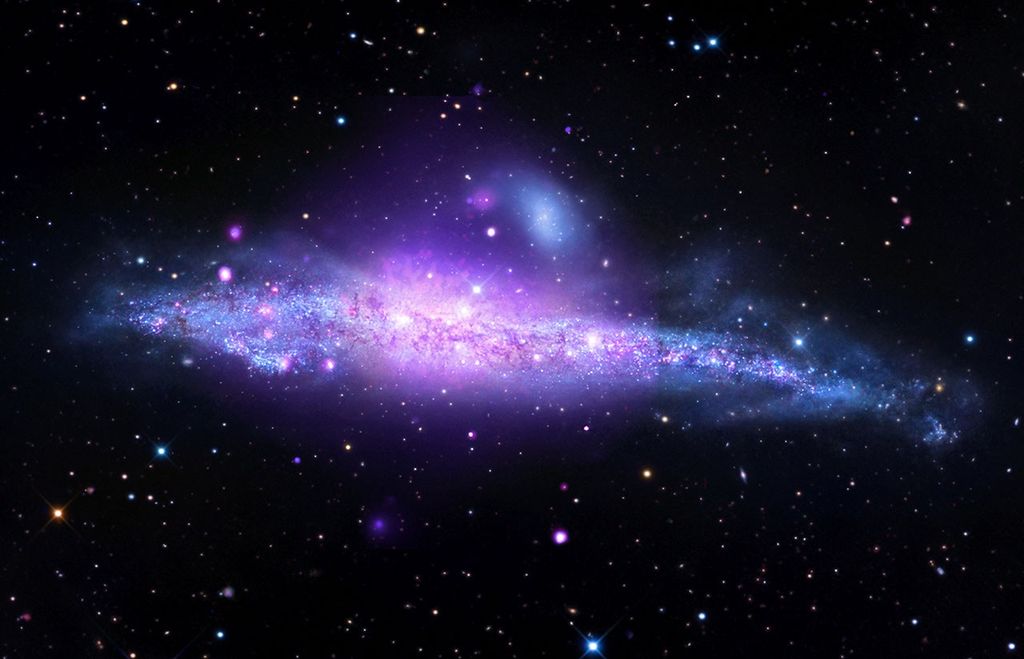
The interconnectedness among galaxies, their circumgalactic media (CGM), and the intergalactic medium (IGM) that permeates the cosmic web has come in ever sharper focus, as it is now clear that star formation and the enrichment of heavy elements critically depends on the exchange of matter and energy from one to the other. While it is well accepted that the direct flows between galaxies and their local CGM determine their fates, it is less clear what factors impact the mass and energy budget of the CGM and IGM reservoirs that must ultimately fuel star formation. I will present work from my group investigating the impacts of environment on these reservoirs from the perspectives of both local halo scales and the cosmic web. Within local groups and clusters, our observations show that galaxies' cool CGM are progressively depleted as the mass of their parent halo increases, either through ram-pressure stripping or ionization, possibly to a greater effect than is captured in hydrodynamical simulations. Using our Monte Carlo Physarum Machine (MCPM) cosmic web reconstruction framework to extend our investigations to the largest scales, we demonstrate the highly improved fidelity of filament identification from MCPM density fields over the currently prevalent methodology. Applying this to the TNG100 simulations, we find a striking prediction that the correlations between star formation and local environment (e.g., galaxy groups and clusters) extend to and are connected to the large scale structure of the universe in the current epoch; however, the environmental dependence declines with redshift is essentially nonexistent at z>2. The suppressed star formation is apparently due to a decreased gas to stellar mass ratio within galaxies that reside nearer to cosmic web filaments even when controlling for variables such as halo mass. This work sets the stage for further developments on both the observational and theoretical fronts towards understanding the intimate connections within and between cosmic ecosystems.
News Straight to Your Inbox
Subscribe to your community email news list
We will never share your email address.
