

















Galaxies SIG Seminar: October 2, 11:00a – 12:00p ET
26 September 2024
October 2nd 2024, 11:00 am – 12:00 noon ET
Mapping Dust Attenuation from Overlapping Galaxy Pairs
Speaker
Clayton Robertson (University of Louisville)
Abstract
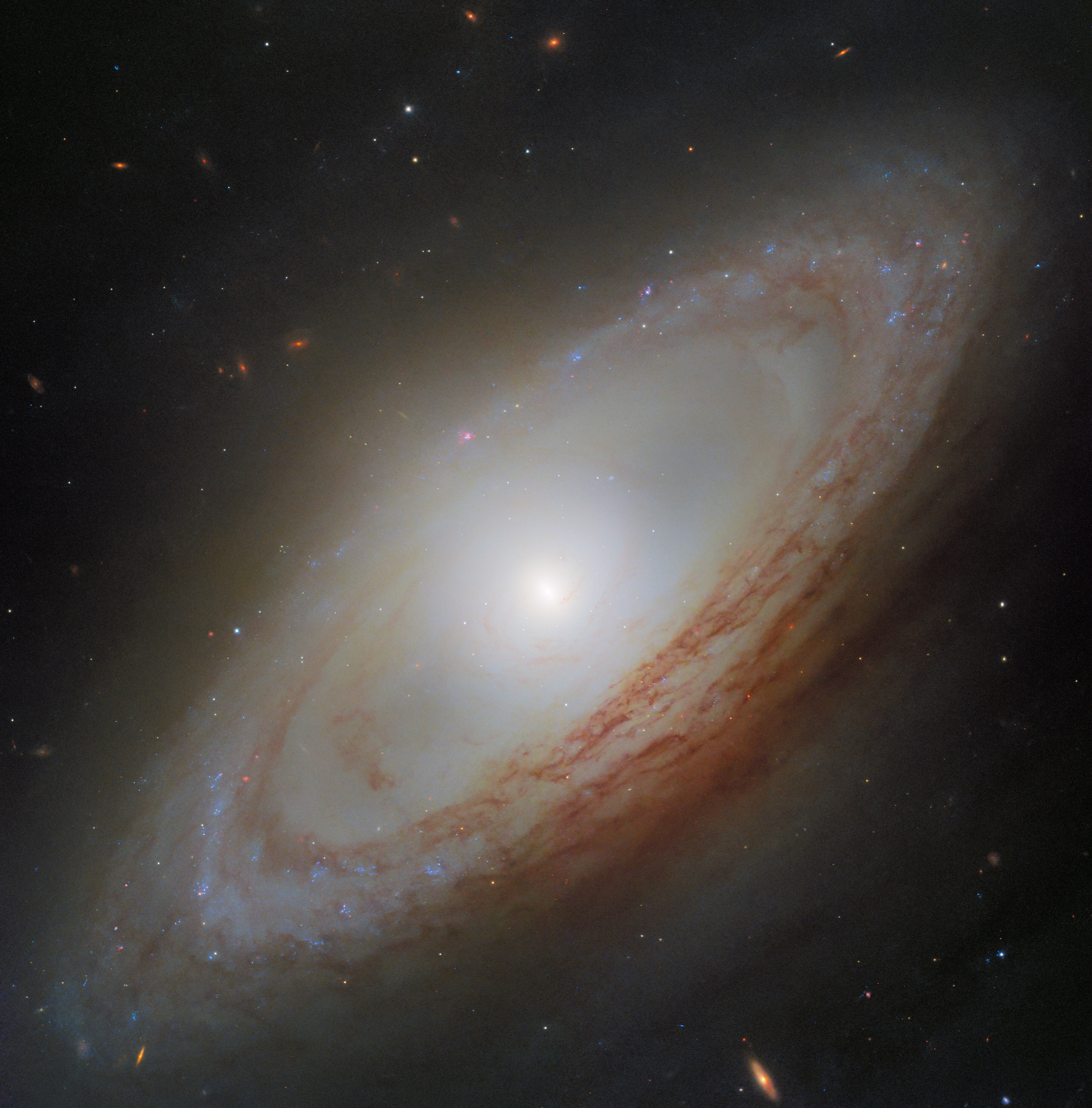
The combination of extinction and scattering combined (i.e., attenuation) due to dust grains remain a critical uncertainty; for nearly all astronomical measurements, one needs to account for the dust in space. A technique to obtain extra-galactic spatially resolved attenuation measurements is to use partially overlapping — occulting — galaxy pairs: an astrophysical experiment in the optical properties of the interstellar medium that models the light of both galaxies and infers the missing light in the regions of overlap. We present attenuation measurements mapped pixel-by-pixel within the overlap of geometrically ideal occulting galaxy pair VV191, a face-on foreground spiral galaxy (VV191b; z = 0.0514) and a smooth elliptical background galaxy (VV191a; z = 0.0513) with data from HST and JWST NIRCam. We also complement attenuation from occulting galaxies with ground-based emission line IFU spectroscopy of the Balmer decrement to derive nebular dust attenuation in the visible optical bands. Detailed dust attenuation measurements for this pair will give a statistical encyclopedia of reddening and attenuation slopes that will include a mean attenuation law for arbitrary regions in this galaxy pair and variance throughout the VV191b that will give detailed insight on its dust content, distribution, and symmetries.
YouTube playlist for recorded talks
Galaxies SIG Announcements:
- 2024 – 2025 Seminars are happening on the first Wednesdays of every month at 11am – 12pm
News Straight to Your Inbox
Subscribe to your community email news list
We will never share your email address.
