















NASA Astrophysics Science Highlights
26 March 2024
- NASA’s Tiny BurstCube Mission Launches to Study Cosmic Blasts
- NASA’s BurstCube, a shoebox-sized satellite designed to study the universe’s most powerful explosions, is on its way to the International Space Station.
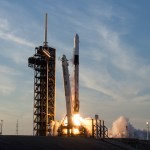
- The spacecraft travels aboard SpaceX’s 30th Commercial Resupply Services mission, which lifted off at 4:55 p.m. EDT on Thursday, March 21, from Launch Complex 40 at Cape Canaveral Space Force Station in Florida. After arriving at the station, BurstCube will be unpacked and later released into orbit, where it will detect, locate, and study short gamma-ray bursts – brief flashes of high-energy light.
- BurstCube belongs to a class of spacecraft called CubeSats. These small satellites come in a range of standard sizes based on a cube measuring 10 centimeters (3.9 inches) across. CubeSats provide cost-effective access to space to facilitate groundbreaking science, test new technologies, and help educate the next generation of scientists and engineers in mission development, construction, and testing.
- Read the full article about BurstCube.
- NASA’s Chandra Identifies an Underachieving Black Hole
- Astronomers have found a rapidly growing supermassive black hole (quasar) not achieving what they expect from it. Quasars are rapidly growing supermassive black holes that pull material in at a very high rate.
- H1821+643 is the closest quasar to Earth located in a galaxy cluster, at a distance of about 3.4 billion light-years. Using NASA’s Chandra X-ray Observatory and the VLA, researchers found H1821+643 was less influential than many giant black holes in other clusters.
- Read more about this science highlight/
News Straight to Your Inbox
Subscribe to your community email news list
We will never share your email address.
